Which Camera Handles Low Light Best Indoors?
Sony a7 IV ranks as the strongest indoor camera overall, pairing a full frame sensor with clean high ISO and dependable autofocus in dim rooms. Canon EOS R6 Mark II wins on outright low light focusing, while Nikon Z6 III offers the best value full frame body for indoor events.
Rooms lit by a single lamp favor the Sony a7 IV, which pairs a full frame sensor with dependable autofocus and stays sharp without flash. Canon’s EOS R6 Mark II leads when a room goes nearly dark, and the Nikon Z6 III offers the best value path into full frame. Every camera below combines a large sensor with the stabilization and autofocus that indoor light demands.
Living rooms and venues run far darker than eyes suggest, which pushes small sensor cameras into noisy, blurry results. We compared sensor area, published high ISO behavior, autofocus in low contrast light and support for fast primes. Owner feedback on handling and reliability shaped the final ranking.
What to look for
Why living rooms fool your eyes Human eyes adapt to dim rooms so gradually that a lamp lit living room feels brighter than it is. Camera sensors get no such adjustment, so they lean on sensor size, lens speed or high ISO to keep a shot sharp. Megapixel count matters far less indoors than how much light the sensor can gather.
Sensor size sets the high ISO ceiling Full frame sensors collect roughly double the light of APS-C chips, which shows up directly as cleaner high ISO images. That gap narrows once a fast prime lens is added, but it never fully closes. Buyers chasing the cleanest indoor files should treat sensor size as the first filter, not megapixels.
A fast prime is the cheapest low light fix An f1.8 or f1.4 lens lets in several times more light than a typical kit zoom. That extra light keeps shutter speed high enough to freeze movement without pushing ISO into noisy territory. Pairing any body above with a bright prime often beats spending more on the camera itself.
Stabilization helps still subjects, not moving ones In body stabilization allows slower shutter speeds for portraits, food and static interiors without blur. It does nothing for a child running across a room, where a fast shutter and wider aperture matter more. Six of the seven cameras here include it, and the Canon R8 relies on a stabilized lens instead.
The shortlist, ranked
Sony a7 IV
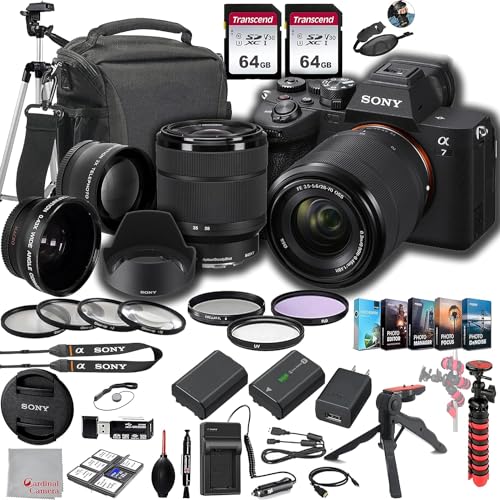
A 33 megapixel full frame sensor and in body stabilization give this camera an edge in rooms lit by a single lamp. High ISO detail stays clean well past the point where crop sensors turn to mush. Eye autofocus keeps locking through warm household light, and owners often name it their go to body for flash free indoor events.
Pros
- Clean high ISO detail past ISO 6400
- Eye autofocus tracks through warm indoor light
- In body stabilization steadies handheld low light shots
Cons
- Rolling shutter appears during fast pans
- 33MP files fill memory cards quickly

Canon EOS R6 Mark II
Autofocus keeps locking in near total darkness, a genuine advantage once a room goes fully dim. A 24.2 megapixel sensor holds noise low at the high ISO settings indoor scenes force. Colour rendering needs little correction under mixed household bulbs, according to owner feedback.
Pros
- Focuses reliably in near darkness
- Eye and subject tracking stays sticky indoors
- Colour needs minimal correction under mixed bulbs
Cons
- 24.2MP limits heavy cropping
- Battery drains faster with tracking active

Nikon Z6 III
A partially stacked 24.5 megapixel sensor freezes indoor motion better than most rivals at this price. Kids or pets crossing a lit room stay sharp instead of smeared. Composing in a dark room also gets easier, since the electronic viewfinder is unusually bright for its class.
Pros
- Fast sensor freezes indoor motion
- Bright electronic viewfinder aids dark rooms
- Strong in body stabilization for handheld shots
Cons
- Heavier than the compact bodies here
- RAW video files consume storage quickly

Sony a7C II
Full frame low light quality fits into a rangefinder shaped shell barely larger than an APS-C body. Sharing the a7 IV’s 33 megapixel sensor, it delivers the same clean high ISO in a lighter package. A compact grip suits smaller hands during everyday indoor shooting, per owner reports.
Pros
- Full frame sensor in a compact shell
- Inherits the same autofocus as pricier bodies
- In body stabilization for handheld interiors
Cons
- Single memory card slot
- Small viewfinder eyepiece strains longer sessions

Fujifilm X-T5
A 40.2 megapixel APS-C sensor packs unusual resolution into a lighter body than the full frame options here. Pairing it with a fast Fujifilm prime closes much of the low light gap. Film simulation colour renders warm indoor light pleasingly straight out of camera, owners note.
Pros
- High resolution captures fine indoor detail
- In body stabilization supports handheld shooting
- Film simulations flatter warm household light
Cons
- Crop sensor trails full frame at extreme ISO
- Dense dial layout can overwhelm new users
Canon EOS R8
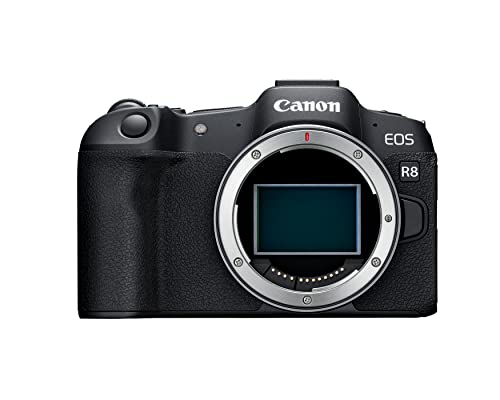
Stripping out in body stabilization keeps this full frame body light and its price low. It carries the same 24.2 megapixel sensor and autofocus system found in the R6 Mark II. Pairing it with a stabilized or fast prime lens gives the steadiest indoor results.
Pros
- Full frame low light quality at a lower price
- Very light for a full frame body
- Inherits fast, sticky autofocus tracking
Cons
- No in body stabilization included
- Small battery needs a spare for long sessions

Panasonic Lumix S5 II
Dual native ISO and strong stabilization make this a hybrid pick for people shooting both stills and video indoors. Long interviews and events benefit from a body that runs cool under extended recording. Dual card slots and a deep grip add reliability owners value during regular indoor use.
Pros
- Excellent in body stabilization for stills and video
- Runs cool through long indoor recordings
- Dual card slots plus a deep, secure grip
Cons
- Heaviest body among the seven here
- Autofocus trails Sony and Canon slightly
Compared at a glance
| # | Model | Sensor | Best for | Score | Price |
|---|---|---|---|---|---|
| 1 | Sony a7 IV | Full frame CMOS, 33MP | Best overall | 9.4 | Check price |
| 2 | Canon EOS R6 Mark II | Full frame CMOS, 24.2MP | Best for low light | 9.2 | Check price |
| 3 | Nikon Z6 III | Full frame partially stacked CMOS, 24.5MP | Best value full frame | 9.0 | Check price |
| 4 | Sony a7C II | Full frame CMOS, 33MP | Best compact full frame | 8.8 | Check price |
| 5 | Fujifilm X-T5 | APS-C X-Trans, 40.2MP | Best APS-C image quality | 8.5 | Check price |
| 6 | Canon EOS R8 | Full frame CMOS, 24.2MP | Best value | 8.2 | Check price |
| 7 | Panasonic Lumix S5 II | Full frame CMOS, 24.2MP | Best for hybrid photo and video | 8.0 | Check price |
Common questions
Do you need a full frame camera for indoor photos?
Not strictly, but it helps a lot. Full frame bodies like the Sony a7 IV stay clean at the high ISO settings dim rooms demand. A Fujifilm X-T5 with a fast prime is a smaller, capable alternative.
What ISO is normal for shooting indoors without flash?
Most lamp lit rooms push ISO into the 1600 to 6400 range. Full frame sensors stay clean through that band, while smaller sensors show noise sooner.
Is a fast prime lens worth it indoors?
Yes, often more than upgrading the camera body. An f1.8 prime gathers far more light than a kit zoom, keeping shutter speed high and ISO lower.
Which camera focuses fastest in a dark room?
The Canon EOS R6 Mark II is rated to focus in near darkness while holding eye tracking. The Sony a7 IV and Nikon Z6 III follow closely.
Does in body stabilization matter for indoor shots?
For still subjects, yes. It lets you shoot portraits and interiors at slower shutter speeds without blur, though it cannot freeze a moving pet or child.
Can indoor photography avoid using flash entirely?
Often, with a large sensor and a fast lens. All seven cameras here are built to shoot clean low light images, which reduces or removes the need for flash.
Which camera suits indoor video as well as photos?
The Panasonic Lumix S5 II is built for hybrid shooters and runs cool through long takes. The Nikon Z6 III and Sony a7 IV also perform well for indoor video.
Do these cameras all shoot RAW files?
Yes, every camera on this list captures RAW. That matters indoors, where mixed lighting often throws off white balance and needs correcting later.
Full frame vs APS-C, which is better for dim rooms?
Full frame gathers more light and stays cleaner at high ISO. APS-C bodies like the X-T5 close some of the gap with a fast prime and cost less.
Is a compact camera good enough for indoor family photos?
The Sony a7C II proves a compact body can match a larger one, packing the same 33 megapixel full frame sensor into a smaller shell.
Our take
Most buyers do best with the Sony a7 IV, since its full frame sensor and dependable autofocus handle lamp lit rooms without a flash. Pick the Canon EOS R6 Mark II when focusing in near darkness matters most, or the Nikon Z6 III for a strong value full frame option. Anyone wanting a smaller body should look at the Sony a7C II, which keeps the same low light quality in less bulk.