Small Mirrorless Cameras That Deliver on a Budget
The Sony Alpha a6000 is the best affordable mirrorless camera overall, pairing quick autofocus with a viewfinder and the widest lens choice. The Canon EOS M50 Mark II is the pick for content creators, and the Nikon Z30 suits video first shooters who want a modern body without overspending.
For most people wanting mirrorless without spending heavily, the Sony Alpha a6000 is the pick, with the Canon EOS M50 Mark II better for content creators and the Nikon Z30 the choice for video first shooters who frame on the rear screen.
Buying mirrorless on a modest budget is tricky because some of the best value bodies use lens mounts the makers have since moved on from, which affects how the system grows. Autofocus and video also vary more here than raw image quality does. We compared focusing, video, size and the health of each lens mount across seven affordable mirrorless cameras so the trade offs are clear before you commit.
The shortlist, ranked

Sony Alpha a6000
The a6000 has stayed a value benchmark for years because it combines quick, reliable autofocus with a viewfinder at a price nothing modern matches. Its subject tracking still beats many newer budget rivals. The E mount is very much alive, giving it the widest choice of affordable native and third party lenses of any camera in this group, so the kit can grow cheaply.
Pros
- Quick, reliable autofocus
- Viewfinder plus a tilting screen
- Widest choice of cheap lenses
Cons
- No 4K video
- Dense, dated menus
Canon EOS M50 Mark II
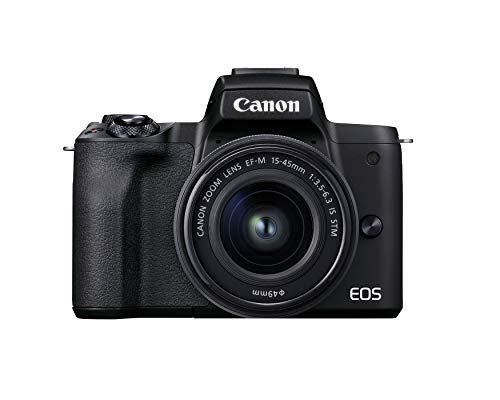
The M50 Mark II became a creator favourite for good reason, pairing a fully articulating screen with a viewfinder and Canon’s easy, dependable autofocus. It works well for both stills and casual video, and vertical video support suits social clips. The main caveat is the EF-M mount, which Canon is winding down, so treat it as a self contained kit rather than one to expand far.
Pros
- Articulating screen and viewfinder
- Easy, dependable autofocus
- Good for stills and casual video
Cons
- EF-M mount is being wound down
- 4K is cropped and lacks tracking

Nikon Z30
The Z30 drops the viewfinder to reach its price, which suits video first shooters who frame on the rear screen and want a modern, growing system. It offers uncropped 4K, a comfortable grip and a front recording light for solo filming. The Z mount is Nikon’s future, so unlike some rivals here the lens path is expanding rather than closing.
Pros
- Uncropped 4K for the class
- Growing, future proof lens mount
- Comfortable grip and tally light
Cons
- No viewfinder
- Native lens range still building

Panasonic Lumix G7
For real 4K at the lowest outlay, the G7 is hard to beat, and it brings a viewfinder, a fully articulating screen and a proper grip along with it. The Micro Four Thirds mount is mature and shared with Olympus, so the choice of small, affordable lenses is deep. The smaller sensor is the trade, costing a little low light reach for a lot of flexibility.
Pros
- Genuine 4K at a low price
- Deep, shared lens catalogue
- Viewfinder and articulating screen
Cons
- Smaller sensor limits low light
- Lower resolution than APS-C rivals

Olympus OM-D E-M10 Mark IV
Rare at this price, the E-M10 Mark IV includes in body stabilisation, which steadies handheld video and lets you shoot in dim light without a tripod. It looks the part with a compact metal body and dial driven controls, and it taps the large Micro Four Thirds lens range. It is a stills first camera, with video that is capable rather than a headline feature.
Pros
- In body stabilisation at this price
- Compact, attractive build
- Large Micro Four Thirds lens range
Cons
- Smaller sensor limits low light
- Video is capable rather than a focus

Canon EOS M200
The M200 is about as small as an interchangeable lens camera gets, easy to slip into a jacket pocket with its kit lens attached. A flip up screen and Canon’s friendly, reliable autofocus make it a simple companion for travel and everyday snaps. Like the M50 it uses the EF-M mount, so it is best seen as a compact, self contained kit rather than a system to build out.
Pros
- Extremely small and pocketable
- Friendly, reliable autofocus
- Good image quality for the size
Cons
- EF-M mount is being wound down
- No viewfinder and cropped 4K

Panasonic Lumix GX85
The GX85, sold as the GX80 in some regions, packs in body stabilisation and a rangefinder style layout that suits street and travel photography. The viewfinder sits in the corner rather than on top, keeping the body flat and discreet. It shares the mature Micro Four Thirds mount, so small, affordable primes are easy to find to complete a light, capable stills kit.
Pros
- In body stabilisation for handheld work
- Discreet rangefinder style body
- Great match with small primes
Cons
- Smaller sensor limits low light
- Corner viewfinder suits some eyes better
How they compare
| # | Model | Sensor | Best for | Score | Price |
|---|---|---|---|---|---|
| 1 | Sony Alpha a6000 | 24 megapixel APS-C | Best overall | 9.0 | Check price |
| 2 | Canon EOS M50 Mark II | 24 megapixel APS-C | Best for content | 8.7 | Check price |
| 3 | Nikon Z30 | 21 megapixel APS-C | Best for video | 8.6 | Check price |
| 4 | Panasonic Lumix G7 | 16 megapixel Micro Four Thirds | Best for 4K value | 8.5 | Check price |
| 5 | Olympus OM-D E-M10 Mark IV | 20 megapixel Micro Four Thirds | Best stabilisation | 8.4 | Check price |
| 6 | Canon EOS M200 | 24 megapixel APS-C | Best pocketable | 8.0 | Check price |
| 7 | Panasonic Lumix GX85 | 16 megapixel Micro Four Thirds | Best for stills | 8.3 | Check price |
What matters most
Why mirrorless suits a tight budget Mirrorless bodies deliver fast autofocus, live exposure previews and interchangeable lenses in a smaller, lighter package than a DSLR, and the used market has made capable ones very affordable. Losing the optical viewfinder mirror trims size and often cost. For most buyers the electronic preview, showing the exposure before you press the shutter, is a genuine aid to learning rather than a compromise.
Autofocus and video set these cameras apart Image quality is broadly similar across this group, so focusing and video are where real differences show. Sony and Canon lead for dependable tracking, the Nikon Z30 offers the cleanest uncropped 4K, and the Panasonic bodies pair good video with in body stabilisation. Decide whether stills tracking or video features matter more, because that split does more to guide the choice than the sensor does.
Watch the health of the lens mount A mirrorless camera is a lens system, and some of the best value bodies here sit on mounts the makers are retiring. Canon’s EF-M, used by the M50 and M200, is being wound down, so those are best as self contained kits. Sony E, Nikon Z and Micro Four Thirds are all active and growing, which matters if you plan to add lenses over the years.
Small sensors, real advantages Several picks here use Micro Four Thirds sensors, which are smaller than APS-C and give up a little low light reach. In return the bodies and lenses shrink, stabilisation is often included and the whole kit gets lighter and cheaper. For travel, street and daytime shooting that is frequently the better trade, so do not dismiss the smaller sensor on specifications alone.
Frequently asked questions
Is a budget mirrorless camera better than a DSLR?
For most people, yes. Mirrorless brings faster autofocus, live exposure previews and a smaller body, though a DSLR still wins on battery life and offers an optical viewfinder some shooters prefer.
What does the lens mount being wound down mean for me?
It means fewer new lenses will appear for that mount, though existing ones keep working. Treat those cameras as complete kits rather than systems you expect to expand widely.
Do these mirrorless cameras shoot 4K video?
Several do, including the Nikon Z30 and the Panasonic bodies. Some Canon options crop the frame in 4K, so check the details if video is a priority rather than trusting the label.
Will a smaller sensor hurt my photos?
Only a little, and mainly in low light. In good conditions the difference is hard to see, and the smaller Micro Four Thirds bodies reward you with lighter, cheaper and often stabilised kits.
Can I use older lenses on these bodies?
Often yes, through an adapter, which is a cheap way to access older glass. Native lenses are simpler, but adapters expand your options on most of these mounts.
Do any of these include in body stabilisation?
Yes, the Olympus E-M10 Mark IV and the Panasonic GX85 both do, which is unusual at this price and a real help for handheld video and low light stills.
Is a viewfinder worth it on a budget mirrorless?
It helps in bright light and steadies the camera, but several fine options here rely on the rear screen to save size and cost. Choose by how and where you shoot.
Which of these is best for a first mirrorless camera?
The Sony Alpha a6000 for its balance of autofocus, viewfinder and cheap lenses, or the Canon EOS M50 Mark II if you want an articulating screen for casual video.
Our take
A modest budget buys a genuinely good mirrorless camera. The Sony Alpha a6000 is the best all round pick, with quick autofocus, a viewfinder and the widest lens choice, while the Canon EOS M50 Mark II suits creators who want an articulating screen. Choose the Nikon Z30 if video comes first and you want a growing lens mount, or the Panasonic and Olympus bodies if in body stabilisation and small, affordable lenses appeal most.