Compact Cameras That Beat Your Phone in Low Light
The Sony ZV-1 II is our top compact camera overall thanks to its wide zoom, fast lens and creator friendly video. The Canon PowerShot G7 X Mark III is the better value for vlogging and stills, while the Ricoh GR III remains the sharpest true pocket camera for street work.
If you want one compact camera that clearly improves on a phone, the Sony ZV-1 II is the safest pick, with the Canon PowerShot G7 X Mark III close behind on value and the Ricoh GR III leading for pure street photography. Each of the seven models below solves a different problem, from long zoom travel to shallow depth of field portraits.
Compact cameras are tricky because the marketing headline is megapixels while the real difference comes from sensor area and lens aperture. We compared published sensor specifications, lens speed at both ends of the zoom, autofocus systems, video modes and body weight, then weighed what owners report about battery life and menu depth to rank the list.
How to choose
Sensor size matters more than megapixels A one inch sensor gathers roughly four times the light of the 1/2.3 inch chips used in cheap superzooms, and APS-C models gather more again. That difference shows up as cleaner images indoors and at dusk, which is exactly where a phone starts to smear detail. If your main reason for buying is low light, prioritise sensor area and lens aperture over zoom range.
Zoom range always costs you aperture Long zoom compacts squeeze more glass into the same barrel, so the maximum aperture drops as you extend. A camera that starts at f1.8 may end at f6.4, meaning the long end needs bright daylight or a higher ISO. Decide honestly whether you need reach or need speed, because very few compacts deliver both.
Video features separate creators from photographers If you plan to publish clips, check for uncropped 4K, a microphone input, a screen that faces forward and reliable continuous autofocus. Cameras aimed at stills often crop 4K heavily or overheat on longer takes. Based on specifications, the creator focused models here also handle vertical framing and live streaming with less fuss.
Handling decides whether you carry it The best compact camera is the one that fits the bag or pocket you already use. Weigh the body with battery and card, check whether the grip suits your hand, and consider whether a viewfinder matters for shooting in bright sun. Owners report that a camera left at home because it is awkward loses to a phone every time.
The top picks, ranked

Sony ZV-1 II
The ZV-1 II pairs a one inch stacked sensor with an unusually wide 18mm equivalent lens, which is the single biggest upgrade for handheld vlogging and tight interiors. Its side flip screen, directional microphone and product showcase mode make it a genuine hybrid rather than a stills camera with video bolted on. Owners report that the wide end reduces the need for a gimbal or selfie stick.
Pros
- Widest lens in this class for handheld video
- Excellent face and eye autofocus
- Flip out screen and built in windscreen mount
Cons
- No electronic viewfinder
- Battery life is short on long shoot days

Canon PowerShot G7 X Mark III
Canon’s G7 X Mark III keeps the bright f1.8 to f2.8 zoom that made this line popular and adds uncropped 4K plus live streaming. Colour straight out of camera is the reason many owners keep it over newer rivals, since skin tones need very little editing. It is small enough for a jacket pocket while still offering a useful 100mm equivalent reach.
Pros
- Bright lens through the whole zoom range
- Pleasing Canon colour with minimal editing
- Microphone input for interviews
Cons
- Autofocus in video trails Sony
- Touchscreen tilts up only

Ricoh GR III
The GR III puts an APS-C sensor behind a fixed 28mm equivalent lens in a body that genuinely disappears into a front pocket. There is no zoom and no viewfinder, which is exactly the point, because the snap focus system lets you shoot at arm’s length without hunting. Owners report it is the compact they actually carry every day.
Pros
- Largest sensor in a shirt pocket body
- Snap focus is superb for candid work
- Excellent JPEG image controls
Cons
- Dust on the sensor is a known complaint
- Weak video and short battery life

Fujifilm X100VI
The X100VI is the enthusiast choice, combining a 40MP APS-C sensor, in body stabilisation and a hybrid optical and electronic viewfinder in a fixed lens rangefinder style body. Film simulations mean many owners never open editing software. It is larger than a true pocket camera, so treat it as a jacket or bag camera you will want to use daily.
Pros
- Outstanding detail and film simulation colour
- Hybrid viewfinder is unique at this size
- In body stabilisation helps handheld low light
Cons
- Bulkier than the rest of this list
- Stock is frequently limited
Panasonic Lumix ZS200
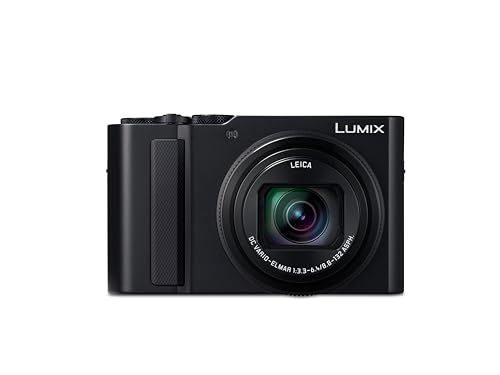
The ZS200 is the compromise camera for travellers who refuse to carry a second lens, offering a 15x zoom in front of a one inch sensor. That reach costs you aperture at the long end, so it is happiest in daylight. Its built in electronic viewfinder is a real advantage in bright sun where rear screens wash out.
Pros
- Huge zoom range for the sensor size
- Built in electronic viewfinder
- Reliable in body zoom stabilisation
Cons
- Slow lens beyond mid zoom
- Small viewfinder eyepiece

Sony RX100 VII
The RX100 VII squeezes a 200mm equivalent zoom, a pop up viewfinder and Sony’s tracking autofocus into a body barely larger than a deck of cards. Burst shooting and subject tracking are its headline strengths, which suits kids, pets and sport from the sidelines. The trade off is a slower lens at the long end and dense menus.
Pros
- Class leading subject tracking
- Pop up viewfinder in a tiny body
- Very fast burst shooting
Cons
- Menus are dense for beginners
- Grip is slippery without an add on

Canon PowerShot SX740 HS
The SX740 HS uses a smaller sensor than everything above, so it will not match them after dark, but its 40x zoom reaches subjects no other pocket camera here can. For daytime travel, wildlife glimpses and stadium seats it is a sensible starter. Owners report the tilting screen and light body make it easy to hand to family members.
Pros
- Enormous zoom reach for the size
- Light and simple to operate
- Tilting screen for selfies
Cons
- Small sensor struggles in low light
- No microphone input
Side by side
| # | Model | Sensor | Best for | Score | Price |
|---|---|---|---|---|---|
| 1 | Sony ZV-1 II | 1 inch stacked CMOS, 20.1MP | Best overall | 9.4 | Check price |
| 2 | Canon PowerShot G7 X Mark III | 1 inch CMOS, 20.1MP | Best value | 9.2 | Check price |
| 3 | Ricoh GR III | APS-C CMOS, 24.2MP | Best for street photography | 9.0 | Check price |
| 4 | Fujifilm X100VI | APS-C X-Trans, 40.2MP | Best for image quality | 8.8 | Check price |
| 5 | Panasonic Lumix ZS200 | 1 inch MOS, 20.1MP | Best for travel zoom | 8.5 | Check price |
| 6 | Sony RX100 VII | 1 inch stacked CMOS, 20.1MP | Best for fast action | 8.2 | Check price |
| 7 | Canon PowerShot SX740 HS | 1/2.3 inch CMOS, 20.3MP | Best budget option | 8.0 | Check price |
Questions worth asking
Is a compact camera still worth buying over a phone?
Yes, if you choose one with a one inch or larger sensor. Those models hold detail in shadows, produce natural background blur and handle zoom without the heavy processing that gives phone photos a synthetic look.
What sensor size should I look for?
One inch is the practical minimum for a clear step up from a modern phone. APS-C compacts like the Ricoh GR III and Fujifilm X100VI go further, though they usually give up zoom to do it.
Which compact camera is best for vlogging?
The Sony ZV-1 II leads because of its 18mm equivalent wide end, forward facing screen and strong face tracking. The Canon PowerShot G7 X Mark III is the alternative if you prefer Canon colour.
Do any of these have a viewfinder?
The Panasonic Lumix ZS200, Sony RX100 VII and Fujifilm X100VI include viewfinders. The Sony ZV-1 II, Canon G7 X Mark III, Ricoh GR III and Canon SX740 HS rely on the rear screen.
How important is optical zoom?
It depends on your subject. Travel and wildlife shooters benefit from the long reach of the ZS200 or SX740 HS, while street and portrait shooters usually prefer a fast prime such as the Ricoh GR III.
Will these cameras shoot RAW?
All seven capture RAW files apart from the entry level Canon SX740 HS, which is JPEG only. RAW gives you far more room to recover highlights and adjust white balance later.
How long do the batteries last?
Compact camera batteries are small, so most of these are rated for roughly 250 to 400 stills per charge. Owners report carrying a spare battery or a USB power bank for full days out.
Can I use a compact camera as a webcam?
Several models, including the Canon PowerShot G7 X Mark III and Sony ZV-1 II, support USB webcam use with the manufacturer software. Check the current firmware notes for your specific body before relying on it.
The verdict
The Sony ZV-1 II is the compact camera we would recommend to most buyers because its wide fast lens and dependable autofocus cover stills and video without compromise. Choose the Canon PowerShot G7 X Mark III if you want the same one inch quality with more zoom reach, or the Ricoh GR III if the camera has to vanish into a pocket. For daylight travel on a tight budget, the Canon PowerShot SX740 HS still earns its spot.