Baby Bottles for Fussy Feeders and Easy Cleaning
Dr. Brown’s Natural Flow Options+ leads for its internal vent system and adjustable setup as feeding develops. Philips Avent Natural Response is the easiest choice for babies who also breastfeed, and Comotomo suits a baby who refuses firmer silicone nipples.
Dr. Brown’s Natural Flow Options+ is the bottle most parents end up recommending, because the vent system is genuinely effective and the bottle can be simplified once feeding settles down. Philips Avent Natural Response is the smoother option for babies who move between breast and bottle, and Comotomo’s soft squeezable body wins over babies that reject firmer nipples.
Bottles are frustrating to shop for because the thing that decides success, whether your particular baby accepts the nipple, cannot be predicted from any specification sheet. We compared nipple shapes and available flow rates, venting and anti colic designs, part counts, materials and pump compatibility, alongside what owners report about leaking, cloudy plastic and how quickly each design becomes tedious to wash. Speak to your health visitor or paediatrician about feeding concerns.
Our top picks

Dr. Brown’s Natural Flow Options+ Anti-Colic Baby Bottle
The internal vent tube channels air to the back of the bottle rather than through the milk, which is the mechanism behind the brand’s long standing reputation. The Options+ version lets you remove that vent once your baby no longer needs it, turning it into a simpler bottle. The trade is more parts to wash while the vent is in use.
Pros
- Effective vent system reduces air intake
- Converts to a simpler bottle later
- Wide range of flow rates available
Cons
- Most parts to clean of any bottle here
- Vent pieces can leak if assembled wrongly

Philips Avent Natural Response Baby Bottle
The wide, gently sloped nipple encourages a latch closer to breastfeeding, and the Natural Response tip only releases milk when the baby actively drinks. That flow behaviour is the reason many parents find the switch between breast and bottle less disruptive. Only three parts go in the steriliser, which counts for a lot at night.
Pros
- Wide nipple suits babies who also breastfeed
- Only three parts to clean
- Compatible with Avent pumps
Cons
- Wide base does not fit narrow bottle warmers
- Some babies find the flow too slow at first
Comotomo Baby Bottle
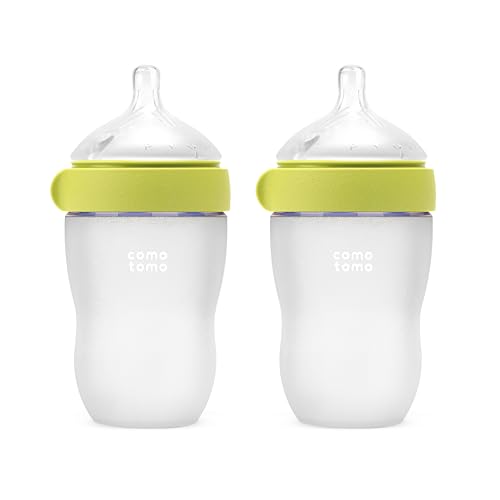
The entire body is soft silicone that squeezes like a breast, and the nipple is far more pliable than the firm ones used on most bottles. Babies who reject rigid plastic nipples often accept this one. The extremely wide neck means you can reach in and wash it by hand without a brush, though the squat shape does not fit every warmer.
Pros
- Soft body and nipple win over refusers
- Wide neck cleans without a brush
- Naturally grippy for small hands
Cons
- Squat shape does not fit many warmers
- Silicone attracts dust and lint

MAM Easy Start Anti-Colic Baby Bottle
MAM’s bottle takes apart and self sterilises in a microwave with a small amount of water, which is genuinely useful when travelling or staying somewhere without a steriliser. The vented base draws air in through the bottom rather than the milk. The textured surface is easy to hold, though the base seal needs care on assembly.
Pros
- Self sterilising is handy away from home
- Vented base reduces swallowed air
- Textured body is easy to grip
Cons
- Base can leak if not tightened properly
- Extra parts compared with simple bottles

Tommee Tippee Closer to Nature Baby Bottle
The Closer to Nature range pairs a wide, flexible nipple with a simple three part design and is stocked almost everywhere, which makes replacing a lost nipple straightforward. The shape is easy for a baby to hold as they get older. It is a practical, unfussy choice for parents who do not want to think about the bottle much.
Pros
- Simple three part assembly
- Spares are easy to find
- Shape suits older babies holding the bottle
Cons
- Venting is less effective than dedicated systems
- Nipples soften and need replacing regularly

Lansinoh Baby Bottle with NaturalWave Nipple
Lansinoh designed the NaturalWave nipple around the tongue movement used at the breast, aiming for a consistent latch between feeding methods. The bottle itself is narrow and light, so it fits standard warmers and bags easily. It is a sensible pick for parents pumping regularly, since it works with Lansinoh pumps.
Pros
- Nipple shape supports a consistent latch
- Narrow body fits standard warmers
- Pairs directly with matching pumps
Cons
- Narrow neck is harder to hand wash
- Smaller range of flow rates

Nanobebe Flexy Silicone Baby Bottle
The Flexy is made entirely of soft silicone with a pinched waist that a baby can grip once they start holding their own bottle. It is very light and it stands up to being dropped without cracking. The soft body means it can flex when full, so it takes a little getting used to when pouring.
Pros
- Very light and easy for babies to hold
- Survives repeated drops
- Simple to disassemble and clean
Cons
- Flexible body makes pouring awkward
- Fewer accessories than mainstream ranges
Before you buy
Nipple shape and flow rate come first The nipple is the part of the bottle your baby actually engages with, so it decides acceptance more than any other feature. Wide, gently sloped nipples generally suit babies who also breastfeed, while narrower shapes fit smaller mouths and standard warmers better. Flow rate matters just as much, since a rate that is too fast causes gulping and dribbling and one that is too slow leads to frustration. Start with the slowest rate and move up only when your baby is clearly working too hard.
Venting systems and swallowed air Every bottle claims to reduce colic, but the underlying mechanism varies. Internal vent tubes route air away from the milk entirely, vented bases let air in through the bottom as milk leaves, and simple valve rings sit in the collar. More complex systems generally handle air better but add parts to wash. If your baby feeds comfortably with a simple bottle, there is no benefit to the extra components.
Count the parts before you commit to a set At three in the morning, part count is not a trivial detail. A three piece bottle is quick to rinse, sterilise and reassemble, while a five piece system with a narrow vent tube needs a dedicated brush and careful drying. Buy one or two bottles first rather than a full starter set, confirm your baby takes to the nipple, and only then buy enough to get through a day of feeds.
Materials, warmers and sterilising Plastic bottles are light and hard to break, glass bottles resist scratching and staining but weigh more, and full silicone bottles sit between the two while surviving drops. Check that whichever you choose fits your steriliser and bottle warmer, since wide neck bottles frequently do not. Replace nipples when they discolour, swell or show any tearing, and follow the manufacturer’s cleaning and sterilising guidance rather than improvising.
Compared at a glance
| # | Model | Venting | Best for | Score | Price |
|---|---|---|---|---|---|
| 1 | Dr. Brown’s Natural Flow Options+ Anti-Colic Baby Bottle | Internal vent tube, removable | Best overall | 9.4 | Check price |
| 2 | Philips Avent Natural Response Baby Bottle | Wide, breast shaped | Best for combination feeding | 9.2 | Check price |
| 3 | Comotomo Baby Bottle | Soft squeezable silicone | Best for bottle refusers | 9.0 | Check price |
| 4 | MAM Easy Start Anti-Colic Baby Bottle | Self sterilises in a microwave | Best for quick sterilising | 8.8 | Check price |
| 5 | Tommee Tippee Closer to Nature Baby Bottle | Wide neck, flexible silicone | Best value | 8.6 | Check price |
| 6 | Lansinoh Baby Bottle with NaturalWave Nipple | NaturalWave shaped | Best for latch consistency | 8.3 | Check price |
| 7 | Nanobebe Flexy Silicone Baby Bottle | Food grade silicone | Best for small hands | 8.0 | Check price |
Frequently asked questions
How many bottles do I need?
Most parents find four to six covers a day of feeds with time to wash and sterilise between uses, though exclusively bottle feeding families often prefer eight. Buy one or two of your chosen design first to be sure your baby accepts the nipple.
When should I move up a nipple flow rate?
Watch your baby rather than the calendar. Signs that the flow is too slow include working hard, becoming frustrated or taking a very long time over a feed. Signs it is too fast include gulping, coughing, dribbling and pulling away.
Do anti colic bottles actually help?
Venting systems reduce the amount of air a baby swallows during a feed, which many parents find helps with wind and fussiness. Results vary between babies, and persistent feeding discomfort is worth raising with your health visitor or doctor rather than solving by bottle alone.
Glass or plastic bottles?
Glass does not scratch, stain or absorb odours and can be sterilised endlessly, but it is heavier and can break. Plastic is lighter and more practical out of the house. Many families use glass at home and plastic or silicone in the changing bag.
How often should nipples be replaced?
Manufacturers generally suggest every two to three months, and sooner if you see discolouration, thinning, stickiness, swelling or any tear. Check the tip for damage each time you wash, since a split nipple releases milk too fast.
Can I put bottles in the dishwasher?
Most modern bottles are dishwasher safe on the top rack, though repeated hot cycles can cloud plastic over time. Small vent parts wash more reliably by hand with a dedicated brush, and a dishwasher cycle is not a substitute for sterilising newborn equipment.
Why is my bottle leaking?
Leaks almost always come from over tightening the collar, a misaligned vent piece or a nipple that has been stretched out of shape. Loosen the collar slightly, check every seal is seated flat, and replace nipples that no longer sit snugly.
Will my breastfed baby take a bottle?
Many do, particularly with a wide nipple and a slow flow rate that requires active sucking. It often helps if someone other than the breastfeeding parent offers the first bottles. If your baby continues to refuse, your health visitor or a lactation consultant can suggest approaches for your situation.
Our take
Dr. Brown’s Natural Flow Options+ is the bottle we would start with, since the vent system is well proven and the design simplifies as your baby grows. Families moving between breast and bottle should try Philips Avent Natural Response first, and Comotomo is the one to reach for if your baby has already refused firmer nipples.