Choosing a Baby Carrier That Actually Fits Right
Ergobaby Omni 360 takes the top spot, with four carry positions and newborn fit without an insert. LILLEbaby Complete offers six positions and an adjustable lumbar panel. BabyBjorn Harmony focuses on parent comfort, using a padded waist belt and breathable 3D mesh for front carries.
Ergobaby Omni 360 is the carrier most parents can settle on, covering front, hip and back carries from 7 to 45 pounds. LILLEbaby Complete adds two more positions for anyone who wants every option. BabyBjorn Harmony puts comfort first, with 3D mesh for warm days.
Fit is what makes a carrier work, and fit is hard to judge from a listing. Weight has to sit on your hips rather than hang from your neck, and a wrap that cradles a newborn can feel unsupportive under a heavy toddler. We compared published weight ranges, panel and belt design, position counts and fabric. Owner reports across years of use decided the ranking.
What to look for
Wrap, ready to wear or structured carrier? Three styles cover the market. Stretchy wraps such as the Boba Wrap cradle a newborn closely and cost the least, but tying takes practice and support fades with weight. Ready to wear slings like the Baby K’tan trade adjustability for speed, slipping on in seconds. Structured carriers use buckled straps and a firm waist belt, which is what makes a 30 pound toddler bearable on a long walk.
How do you get a comfortable carrier fit? Weight should sit on your hips, not hang from your neck. Set the waist belt across the top of your hips and tighten it before the shoulder straps. Wide padded straps and lumbar support, as on the BabyBjorn Harmony and LILLEbaby Complete, spread what is left across your back. If your shoulders ache after twenty minutes, the belt is too loose or too low.
Which carry positions suit which age? Newborns ride facing in, high and snug, with the head supported. Once head and neck control is steady, many babies enjoy facing out to watch the world, though sessions should stay short. Hip and back carries come later and suit heavier babies on longer outings. Multi position carriers like the LILLEbaby Complete and Infantino Flip cover several stages, so check the maker’s guidance for each one.
Do newborns need an infant insert? Not with most current carriers. Ergobaby Omni 360 and Tula Free-to-Grow narrow the panel instead, which supports a small baby without extra padding. Whatever you use, the safe position is the same: high enough to kiss, chin off the chest, face visible, back supported and knees above hips. Check the fit every single time you put the carrier on.
The top picks, ranked
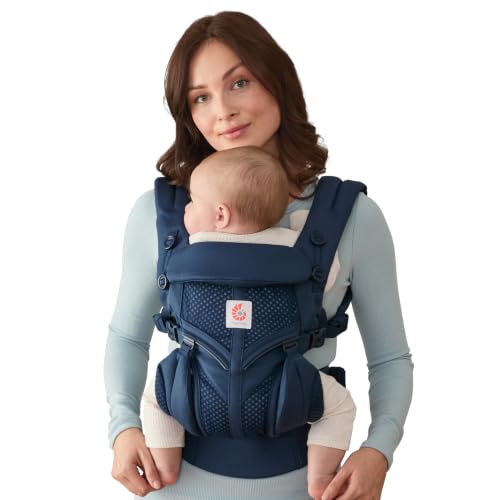
Ergobaby Omni 360
Four carry positions cover facing in, facing out, hip and back, and the panel narrows for a newborn without a separate insert. A padded lumbar pad spreads load across the hips on longer walks. Rated from 7 to 45 pounds by the maker, it can be the only carrier you buy. Buckles and adjustment points take a few goes to learn.
Pros
- Four positions cover newborn to toddler
- Fits a newborn with no separate insert
- Padded lumbar eases long walks
Cons
- Several buckles to learn at first
- Warmer against the body than mesh carriers
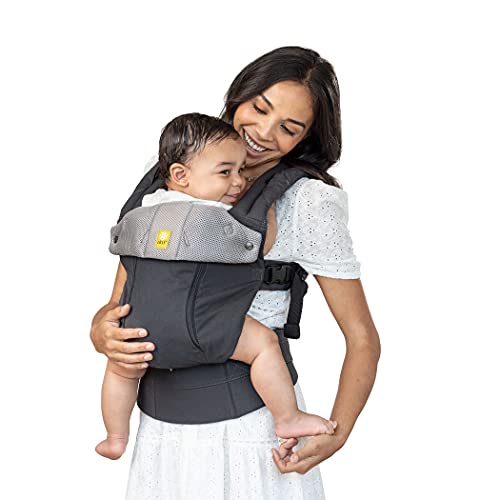
LILLEbaby Complete
Six carry positions run from a newborn facing in to a toddler on your back, more than anything else here. Panel height adjusts, which changes how high a baby rides on your chest. Adjustable lumbar support and airflow options handle long wears and warm days. Dialling in that many settings takes a few sessions.
Pros
- Six positions cover every stage
- Panel height and lumbar both adjust
- Airflow panel helps in warm weather
Cons
- Many settings take practice to get right
- Runs warm in some configurations

BabyBjorn Harmony
Parent comfort drives this design, with a padded waist belt and wide shoulder straps spreading weight off the neck. Its 3D mesh breathes better than cotton on a warm day. Front carries face in or out, plus a back carry. Rated to 33 pounds by the maker, it tops out sooner than the 45 pound carriers here.
Pros
- Padded belt and wide straps spread weight
- 3D mesh stays cooler than cotton
- Structured back support suits long wears
Cons
- Built mainly around front carrying
- Lower weight ceiling than rival carriers

Tula Free-to-Grow
Panel width and height both adjust, so a newborn sits supported without an insert and a toddler still fits at 45 pounds. Cotton fabric softens with washing and keeps the classic seated position, knees above hips. Front and back carries are covered. No face out setting exists, which some babies miss during the curious months.
Pros
- Newborn fit without a separate insert
- Adjusts through to a 45 pound toddler
- Cotton softens with every wash
Cons
- No forward facing out position
- Cotton holds heat more than mesh

Boba Wrap
Roughly five metres of cotton and spandex ties around the body to hold a newborn high against the chest. Fabric spread wide across both shoulders takes the pressure off any single point. Owners describe the closeness as the point of the early weeks. Tying takes practice, and stretch gives way as a baby passes 20 pounds.
Pros
- Holds a newborn snug and high on the chest
- Wide fabric spreads load across the back
- Breathable cotton blend washes easily
Cons
- Tying technique takes practice
- Stretch fabric sags under a heavier baby

Baby K’tan
Two loops of cotton slip on like a shirt, giving a wrap feel with no tying at all. Sizing follows the wearer’s shirt size, which is what makes it so fast for a school run or a quick shop. Rated from 8 to 35 pounds by the maker. Sharing between caregivers of different sizes is where it falls down.
Pros
- Goes on in seconds with no tying
- Wrap style closeness for newborns
- Packs small for short trips
Cons
- Sized to one wearer, so sharing is hard
- Support fades as a baby gains weight
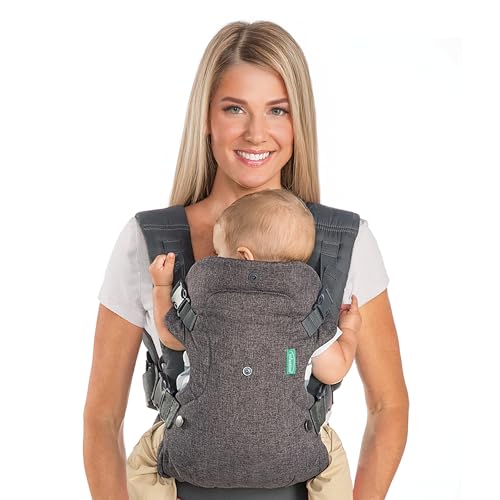
Infantino Flip 4-in-1
Four positions include facing in and facing out, and a convertible seat narrows for a newborn then widens for an older baby. Machine washable fabric handles the messes of the first year. Rated from 8 to 32 pounds by the maker. Padding runs thinner than premium carriers, so shoulders notice it on a long outing.
Pros
- Four positions including face in and face out
- Convertible seat widens as baby grows
- Entry level way into babywearing
Cons
- Thinner padding than premium carriers
- Better for short outings than all day wear
Compared at a glance
| # | Model | Carry positions | Best for | Score | Price |
|---|---|---|---|---|---|
| 1 | Ergobaby Omni 360 | 4 | Best overall | 9.4 | Check price |
| 2 | LILLEbaby Complete | 6 | Best for versatility | 9.2 | Check price |
| 3 | BabyBjorn Harmony | 4 | Best for comfort | 9.0 | Check price |
| 4 | Tula Free-to-Grow | 3 | Best from newborn to toddler | 8.7 | Check price |
| 5 | Boba Wrap | Stretchy wrap | Best stretchy wrap | 8.5 | Check price |
| 6 | Baby K’tan | Ready-to-wear wrap | Best no-wrap wrap | 8.3 | Check price |
| 7 | Infantino Flip 4-in-1 | 4 | Best budget pick | 8.0 | Check price |
Common questions
What is the best baby carrier overall?
Based on specifications and long term owner reports, Ergobaby Omni 360 covers the most ground. Four positions, a 7 to 45 pound range and newborn fit without an insert make it a single purchase for the whole babywearing stretch.
What is the best baby carrier for a newborn?
Newborns need a snug fit that supports the head and keeps the airway clear. Boba Wrap cradles them in soft stretch fabric, while Tula Free-to-Grow and Ergobaby Omni 360 narrow the panel to fit. Follow the maker’s newborn positioning guidance either way.
When can a baby face outward in a carrier?
Most makers advise waiting for strong, steady head and neck control, which many babies reach around four to six months. Keep face out sessions shorter, since babies get overstimulated and cannot turn away. BabyBjorn Harmony and Infantino Flip both support facing out.
Which baby carrier is most comfortable for long walks?
Look for a padded hip belt, wide shoulder straps and lumbar support. BabyBjorn Harmony and LILLEbaby Complete both spread load across the hips and shoulders, which is what separates a comfortable hour from a sore neck.
Is a wrap or a structured carrier better?
Neither wins outright. Stretchy wraps suit the newborn weeks and the closeness of those first months. Structured carriers handle toddlers, back carries and long outings with far less fuss. Many families end up owning one of each across the first two years.
How long can a baby stay in a carrier?
No fixed limit applies, though breaks matter. Check position and comfort often, keep the airway clear, and make sure your baby stays high and upright rather than curled with chin on chest. Follow the manufacturer’s guidance for each position.
Do you need an infant insert for a baby carrier?
Rarely now. Ergobaby Omni 360 and Tula Free-to-Grow adjust the panel to fit a newborn directly. Some simpler or older designs still require one, so confirm in the specifications before ordering.
What is the best budget baby carrier?
Infantino Flip 4-in-1 gives four positions, a convertible seat and both facing directions at entry level. Padding is thinner than premium models, which makes it better suited to short outings than all day wear.
How do you wash a baby carrier?
Check the care label first, since settings vary by brand. Generally, fasten every buckle, run a gentle cycle with mild detergent, and air dry to protect straps and foam padding. Spot clean small messes between full washes.
Can two caregivers share one baby carrier?
Buckle carriers such as Ergobaby Omni 360 and LILLEbaby Complete adjust across a wide range of body sizes, so swapping takes seconds. Sized wraps like the Baby K’tan fit one wearer, which makes sharing between different builds impractical.
Our pick
Ergobaby Omni 360 is the carrier to buy if you want one purchase to last from the newborn weeks to a 45 pound toddler, with lumbar support that holds up on long walks. Choose LILLEbaby Complete for the widest set of positions and the most adjustment. Boba Wrap remains the softest option for the first few months, when closeness matters more than structure.


