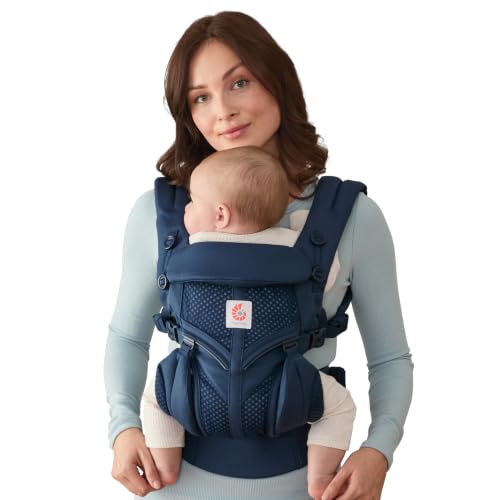
How Long Can a Baby Stay in a Carrier?
Most manufacturers and pediatric guidance recommend limiting continuous carrier time to one to two hours at a stretch, with a break afterward to change position, stretch, and check for pressure marks. Total daily use can add up to several hours across a day as long as the baby is given regular breaks. There is no single fixed maximum, since the safe duration depends on the baby’s age, the carrier’s design, and how closely a caregiver monitors comfort and hip position.
Why there is no single “safe” number of hours
Baby carrier manufacturers rarely publish an exact hourly limit, and published safety standards (such as ASTM F2907 in the United States) focus on structural safety, buckle strength, and hip positioning rather than a strict time cap. Based on aggregated owner reviews and manufacturer guidance, the consistent theme is that carriers are meant for active, supervised use, not as a substitute for a crib, bassinet, or car seat during sleep. A newborn’s tolerance for being upright in a carrier is different from a toddler’s, so age is one of the biggest variables in how long a session should last.
Newborns and younger infants generally need shorter, more frequent breaks because their neck and spine muscles are still developing and their hip joints are more sensitive to prolonged positioning. Older infants and toddlers who have full head and neck control typically tolerate longer stretches, though comfort still varies by child.
Signs it is time for a break
Rather than watching the clock, most guidance points caregivers toward physical cues that a break is needed. These commonly include:
- Red marks, indentations, or skin irritation where straps or fabric press against the baby
- The baby arching, squirming, or pulling at the carrier straps
- Excessive sweating or overheating, especially in warm weather or with heavier fabrics
- Signs of leg or hip stiffness after being removed from the carrier
- The caregiver’s own back, shoulder, or neck fatigue, which often signals the load has been carried too long without adjustment
If any of these appear, aggregated owner feedback consistently recommends stopping, removing the baby, and letting both baby and caregiver reset before resuming.
Hip position and healthy carrying duration
Published hip-health guidance from pediatric orthopedic organizations emphasizes the “M-shaped” or spread-squat position, where the baby’s knees sit higher than the hips and are spread around the wearer’s body. Carriers that maintain this position properly are generally considered more comfortable for extended wear because they distribute weight without concentrating pressure on the crotch or spine. Narrow-based or improperly adjusted carriers, by contrast, are more often associated in owner reviews with complaints of discomfort after shorter periods of use. For families who plan to carry a baby for extended stretches, such as during airport layovers or long walking days on vacation, choosing from the best baby carriers for travel can make a meaningful difference in how long both baby and caregiver can comfortably continue.
Naps and sleep in a carrier
Many babies do fall asleep in a carrier, and manufacturer instructions typically allow this as long as the baby’s airway stays clear and the head is not slumped forward against the chest in a way that restricts breathing. Guidance generally recommends keeping the baby’s chin off the chest, with enough space to fit a finger between chin and chest, and checking on a sleeping baby periodically. Carrier naps are usually treated as shorter, supervised rest periods rather than a replacement for a full sleep session in a crib or bassinet.
Frequently asked questions
Can a baby stay in a carrier all day?
Extended use is generally discouraged without breaks. Most guidance supports carrying in sessions of one to two hours with pauses in between, rather than one continuous all-day stretch.
Is it safe for a baby to sleep in a carrier for a nap?
Short naps in a carrier are commonly considered acceptable as long as the baby’s chin is kept off the chest and the airway remains unobstructed, with periodic checks from the caregiver.
Does carrier type affect how long a baby can comfortably stay in it?
Yes. Carriers that support proper hip and spine positioning, with wide, padded straps and a structured seat, are generally associated with longer comfortable wear times in owner reviews compared to minimal or improperly fitted designs.
How often should a baby be taken out of a carrier?
A common approach based on aggregated guidance is to check in every hour or so, looking for skin marks, overheating, or fussiness, and to remove the baby for a stretch break before continuing.