Balance Bikes Sized by Seat Height and Frame Weight
Strider 12 Sport wins on fit, with a minimum seat height low enough for eighteen month olds and adjustment lasting to around five. Retrospec Cub adds pneumatic tyres for gravel and grass. Radio Flyer Glide and Go is the simplest starting point for a cautious beginner.
Fit beats every other feature on a balance bike. Strider 12 Sport starts lower than most rivals and keeps adjusting until about age five, which is why it suits the widest range of children. Retrospec Cub is the pick if your paths are gravel or grass, and Radio Flyer Glide and Go answers the question of whether your toddler will take to it at all.
Two failures account for most abandoned balance bikes: a seat too high to plant both feet, and a frame too heavy to carry home. Both are measurable before you buy. We compared published seat height ranges against typical toddler inseams, frame material and weight, tyre construction, brake fitment, and how much of the growth range is genuinely usable.
The shortlist, ranked

Strider 12 Sport Balance Bike
Minimum seat height drops far enough for a child of around eighteen months to sit with both feet flat, and the post keeps rising until roughly age five. Aluminium keeps the frame light, which decides whether a tired toddler carries it or abandons it on the pavement. Foam tyres never puncture and never need a pump.
Pros
- Starts lower than almost any rival at 18 months
- Aluminium frame is light enough to carry
- Foam tyres remove punctures and pumping entirely
Cons
- Foam tyres transmit more shock on gravel
- No handbrake fitted as standard

Retrospec Cub Balance Bike
Pneumatic tyres appear here where most competitors fit foam, and the difference shows on gravel paths and cut grass. Air absorbs the bumps that foam passes straight up through the frame. Steel construction adds weight over aluminium, though most children past two handle it, and seat and bars adjust without tools on current versions.
Pros
- Air tyres smooth gravel and grass noticeably
- Seat and handlebar both adjust without tools
- Three year fit range from a steel frame
Cons
- Steel weighs more than aluminium rivals
- Tyres need occasional inflation and can puncture

Radio Flyer Glide and Go Balance Bike
Depending on version you get a steel or wooden frame with a simple adjustable seat post and nothing else to configure. Fewer moving parts means fewer things a toddler can break or a parent has to tighten. Weight sits above the specialist bikes, so it suits a child already walking confidently rather than a very early starter.
Pros
- Simple design with very little to go wrong
- Puncture proof tyres need no maintenance
- Sensible way to test whether a child takes to riding
Cons
- Heavier than aluminium specialist frames
- Adjustment range starts later than the Strider

Chillafish BMXie Balance Bike
Composite construction strips weight out of the frame, which matters because toddlers carry these bikes as often as they ride them. An integrated footrest sits where feet naturally land during a glide, encouraging the posture you actually want. Assembly takes minutes and the seat moves without tools.
Pros
- Composite frame is among the lightest here
- Footrest teaches feet up gliding posture
- Tool free seat adjustment through growth spurts
Cons
- Composite looks less durable than metal to some parents
- Solid tyres pass bumps through to the rider
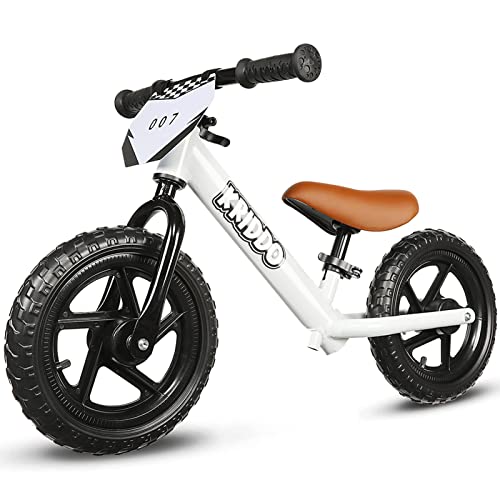
KRIDDO Toddler Balance Bike
Seat height starts very low, aimed squarely at children whose inseam rules out most other bikes. Stable geometry gives a wobbly beginner something predictable underneath them. Adjustment runs out by around three, so it works as a first bike rather than a bike for several years.
Pros
- Fits small toddlers other bikes leave on tiptoes
- Predictable geometry suits an unsteady beginner
- Puncture proof tyres for driveways and paths
Cons
- Short adjustment range means it is outgrown by three
- Steel frame is heavier than composite options
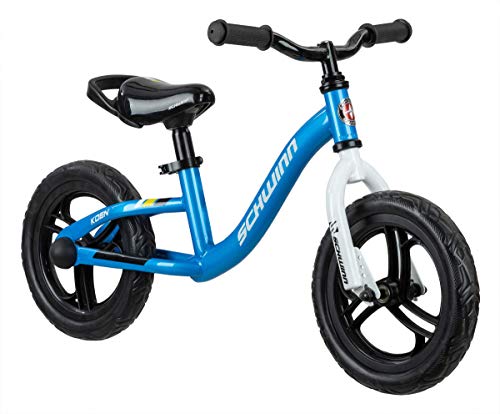
Schwinn Skip Balance Bike
A rear handbrake plus pneumatic tyres points this at older toddlers riding real paths rather than a flat driveway. Learning to squeeze a lever before the first pedal bike removes one thing to teach later. Height and weight both sit at the upper end, which rules it out for beginners still finding their feet.
Pros
- Handbrake builds a skill needed for a pedal bike
- Air tyres cope with paths and light off road
- Sized for confident three to five year olds
Cons
- Minimum seat height is too tall for beginners
- Steel frame and air tyres add carrying weight

Banana Bike LT Balance Bike
A curved top tube drops the seat lower while keeping ground clearance underneath, so small children get both feet flat without the frame in the way. Aluminium keeps it light and assembly is straightforward. Handlebar height barely adjusts, leaving the seat post to absorb all the growth.
Pros
- Curved frame keeps the seat low without losing clearance
- Aluminium build stays light for small riders
- Simple assembly out of the box
Cons
- Handlebar height adjustment is minimal
- Two year fit range is shorter than the Strider
How to choose
How do you size a balance bike to a toddler? Everything starts with inseam. A balance bike works because a child sits, plants both feet flat, pushes, then lifts and glides. Raise the seat above their inseam and none of that happens. Measure from crotch to floor with the shoes they will actually wear, then look for a minimum seat height at or just below that figure. Age labels are close to useless here, because leg length varies enormously between two children of the same age. A slight knee bend when seated is the target.
Why frame weight decides whether the bike gets ridden Toddlers lift these bikes up kerbs, over grass and back to the front door when energy runs out. A bike weighing a large fraction of the child’s own body weight becomes something they refuse to fetch. Aluminium frames like the Strider 12 Sport and composite frames like the Chillafish BMXie shed noticeable weight against steel. That difference does not show up on a spec sheet as a feature, but it shows up in how many hours the bike actually gets used.
Air tyres or foam tyres: which should you choose? Foam and solid tyres never puncture, never need inflating and never mark a hallway floor, which makes them right for driveways, pavements and indoor practice. Pneumatic tyres, fitted to the Retrospec Cub and Schwinn Skip, cushion gravel and grass and grip loose surfaces far better. Their cost is maintenance: occasional pumping and the odd puncture. Match the choice to where the child will ride most, not to which sounds more capable.
Do balance bikes need brakes, and when do pedals come next? Young beginners stop with their feet, so a handbrake sits unused and adds weight. It earns its place once a child rides fast or tackles slopes, and squeezing a lever is one less skill to learn on a pedal bike later. Watch for the transition signal: confident gliding with both feet up for long stretches while steering. That commonly arrives after six months to two years on a balance bike, and many children skip stabilisers entirely. Helmets apply from the first session, fitted level on the head.
The lineup, side by side
| # | Model | Seat height | Best for | Score | Price |
|---|---|---|---|---|---|
| 1 | Strider 12 Sport Balance Bike | Very low minimum, wide adjustment range | Best overall | 9.4 | Check price |
| 2 | Retrospec Cub Balance Bike | Pneumatic air filled | Best value | 9.2 | Check price |
| 3 | Radio Flyer Glide and Go Balance Bike | Steel or wood depending on version | Best budget | 9.0 | Check price |
| 4 | Chillafish BMXie Balance Bike | Lightweight composite | Best lightweight frame | 8.8 | Check price |
| 5 | KRIDDO Toddler Balance Bike | Very low minimum | Best for very young toddlers | 8.6 | Check price |
| 6 | Schwinn Skip Balance Bike | Pneumatic air filled | Best for hills and paths | 8.3 | Check price |
| 7 | Banana Bike LT Balance Bike | Curved lightweight aluminium | Best low frame design | 8.0 | Check price |
Common questions
What age can a child start on a balance bike?
Some manage from around eighteen months given a low enough seat, and most are ready between two and three. Inseam length and confidence on their feet matter far more than the birthday date.
How do I know what size balance bike to buy?
Measure your child’s inseam in shoes, then pick a bike whose minimum seat height matches or sits just below it. They should sit with both feet flat and a slight knee bend, never on tiptoes.
Do balance bikes need brakes?
Not for beginners, who stop with their feet instinctively. A handbrake becomes worthwhile for faster riding and slopes, and it teaches a skill needed on the first pedal bike.
Are air tyres worth it over foam on a balance bike?
On pavements and driveways, foam is fine and needs no attention. On gravel, grass or bumpy paths, air tyres are clearly more comfortable and grip better, at the cost of occasional pumping.
Is a balance bike better than stabilisers?
Most parents and cycling coaches think so. Balance bikes teach balance and steering first, which are the hard parts. Stabilisers teach pedalling while actively preventing balance, so the real lesson gets postponed.
How long before a child moves to a pedal bike?
Typically six months to two years of balance bike use. Confident gliding with feet up while steering is the signal, and children who reach that point usually skip stabilisers altogether.
Should a child wear a helmet on a balance bike?
Yes. Speeds are low but falls still happen, and the habit is far easier to establish now than later. Fit it level on the head with the strap snug under the chin.
Can a balance bike be used indoors?
Foam and solid tyres generally work indoors and make a useful wet weather option. Air tyres can leave marks on floors, and any bike will find the skirting boards, so clear a run first.
What is the best balance bike for an 18 month old?
You need a very low minimum seat height and the lightest frame you can find. Strider 12 Sport and the KRIDDO both start around this age, where taller bikes leave a child stranded on tiptoes.
How much should a balance bike weigh?
Lighter is genuinely better, and aluminium or composite frames beat steel here. As a rough guide, a bike a toddler cannot lift and carry unaided is a bike they will stop using.
Our take
Strider 12 Sport takes the top spot because its low starting seat and aluminium frame let a child begin earlier and keep going longer than most rivals allow. Pick the Retrospec Cub when gravel and grass make air tyres worth the extra weight. Radio Flyer Glide and Go remains the straightforward way to find out whether your toddler takes to riding at all.