8 Basketballs That Grip Well on Indoor and Outdoor Courts
Wilson Evolution ranks first for indoor play, gripping from the first possession on a wood floor. Spalding NBA Street handles asphalt and concrete with a rubber cover. Spalding TF-1000 Legacy suits indoor players who want a tackier, softer surface.
Wilson Evolution is the indoor pick, using a microfibre composite that grips with no break in. Outdoor courts call for the rubber covered Spalding NBA Street. Players who find the Evolution firm should try the Spalding TF-1000 Legacy instead.
Most people buy the wrong ball by taking a composite indoor cover onto a playground, where a few weeks of concrete leaves it bald. Cover construction drives feel, wet hand grip and lifespan more than any other factor. Seven current balls were compared on cover type, official size and weight, channel design and air retention, alongside what players report about grip and wear after a full season.
What to look for
What cover material should you buy? Cover material settles almost the whole decision. Composite leather, also sold as microfibre composite, grips varnished wood and feels controlled, which is why serious indoor balls use it. Asphalt strips it in weeks, leaving a slick surface. Rubber covers such as the Spalding NBA Street invert those traits: tough outdoors, dead indoors. Indoor outdoor composites like the Wilson NBA Forge Pro sit between the two and reward players who really do use both.
What size basketball do you need for each player? Size 7 at 29.5 inches is the men’s and high school standard. Size 6 at 28.5 inches serves women’s, girls’ and many youth leagues. Size 5 at 27.5 inches fits younger children. Oversized balls teach poor shooting mechanics because the hand cannot control the release. Match the size to the league the player is actually in rather than buying ahead.
How much air should a basketball have? Most balls specify seven to nine pounds per square inch, printed near the valve. Underinflation makes dribbling feel dead and low. Overinflation sends shots skidding off the rim unpredictably. A gauge and a needle pump handle both problems, and every ball leaks slowly, so a check every few weeks is realistic.
How do you make a basketball last longer? Dust and grit fill composite pebbling and dull the grip well before anything wears through. A barely damp cloth after each session restores most of it. Never leave a ball in a hot car, since expanding air stresses the seams. Store at a stable temperature rather than a freezing garage, where the bladder turns brittle, and keep indoor balls off asphalt entirely.
What we recommend

Wilson Evolution Indoor Game Basketball
Microfibre composite grips from the first possession, skipping the break in a leather ball demands. Deep laid in channels guide hand placement, and a cushioned core softens the catch. Sizes 5, 6 and 7 cover every age grade, and players report the grip holding once palms turn damp, which is where budget composites slip.
Pros
- Grips immediately with no break in period
- Cushioned core softens hard passes
- Stocked across school and club programmes
Cons
- Outdoor surfaces wear the cover through quickly
- Soaks up moisture from a damp floor
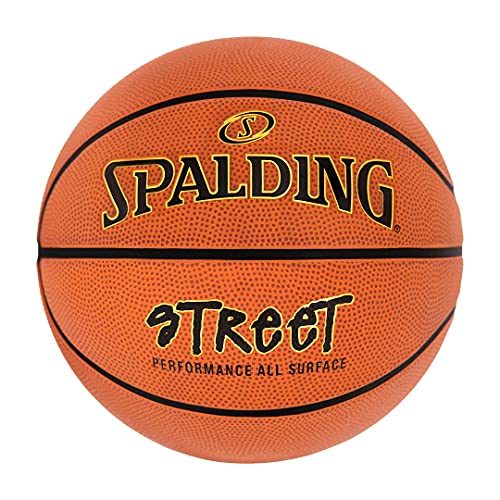
Spalding NBA Street Outdoor Basketball
Rubber shrugs off the asphalt and concrete that destroy every composite in this roundup. Deep pebbling keeps enough grip for confident handling on a dusty playground court. Owners report seasons of outdoor use with reliable air retention, accepting that rubber never matches composite for refinement in the hand.
Pros
- Survives asphalt and concrete across seasons
- Deep pebbling holds grip on dusty courts
- Keeps pressure well between sessions
Cons
- Feel stays firm and less refined than composite
- Leaves marks on indoor court floors

Spalding TF-1000 Legacy Indoor Basketball
Players who find the Evolution too firm usually land here, on a microfibre composite with a tackier, softer surface. Official size and weight specifications apply, and many high school and college leagues approve it for competition. Grip reaches its peak after a handful of sessions, and wood floors remain its only home.
Pros
- Tacky surface that improves over a few sessions
- Built to official size and weight standards
- Approved for competition in many leagues
Cons
- Ruled out entirely for outdoor courts
- Needs a short break in before best grip
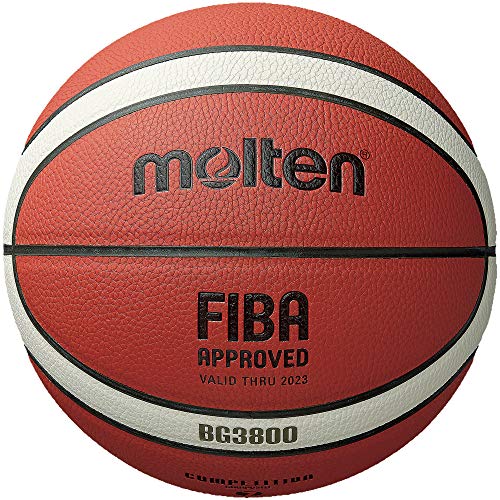
Molten BG3800 Basketball
Twelve panels create a visual pattern that makes backspin easy to read on shots and passes. International competition standardised on this layout, so it doubles as training for players moving up. Composite leather suits indoor floors, and both indoor and indoor outdoor variants exist, so check the listing before ordering.
Pros
- Panel pattern makes rotation easy to read
- Matches the layout used in international play
- Bounce and construction stay consistent
Cons
- Feel differs from familiar eight panel balls
- Variant names make ordering confusing

Wilson NBA Forge Pro Basketball
Wilson rates this composite for both surfaces, tough enough for a driveway hoop yet still pleasant on varnished wood. Moulded channels give clear finger placement in sizes 6 and 7. Players who split time between a gym and a driveway avoid buying two balls, though frequent outdoor sessions still wear it faster than rubber.
Pros
- Genuinely rated for wood and outdoor surfaces
- Better indoor feel than any rubber ball
- One ball covers driveway and gym sessions
Cons
- Wears faster outdoors than a rubber cover
- Less grip indoors than a dedicated indoor ball

Under Armour 495 Indoor/Outdoor Basketball
Recreational players wanting more than a basic rubber ball are the target here. A moisture wicking treatment on the composite cover keeps grip steady through longer pickup games. Sizes 6 and 7 are offered, and it ships deflated, so budget a needle pump into the order.
Pros
- Grips better than most dual surface balls
- Moisture wicking cover copes with sweaty hands
- Solid choice for pickup games and driveway shooting
Cons
- Not built to competition specification
- Arrives deflated and needs a pump

Nike Elite Championship Basketball
Pronounced pebbling and deep channels feed a lot of tactile information back to the fingers. Shooters who put heavy spin on the ball tend to appreciate that feedback most. Clean wood is where it performs, and players report the texture feeling abrasive to some hands during the first few sessions.
Pros
- Strongest hand feedback in this group
- Deep channels lock in finger placement
- Bounce stays consistent on wood
Cons
- Texture reads as abrasive to some players
- Indoor only, with fast wear outdoors
Side by side
| # | Model | Cover | Best for | Score | Price |
|---|---|---|---|---|---|
| 1 | Wilson Evolution Indoor Game Basketball | Microfibre composite | Best overall | 9.4 | Check price |
| 2 | Spalding NBA Street Outdoor Basketball | Durable rubber | Best outdoor | 9.2 | Check price |
| 3 | Spalding TF-1000 Legacy Indoor Basketball | Microfibre composite | Best indoor alternative | 9.0 | Check price |
| 4 | Molten BG3800 Basketball | Composite leather | Best for international play | 8.8 | Check price |
| 5 | Wilson NBA Forge Pro Basketball | Composite, indoor outdoor rated | Best all surface | 8.6 | Check price |
| 6 | Under Armour 495 Indoor/Outdoor Basketball | Composite with moisture wicking | Best value | 8.3 | Check price |
| 7 | Nike Elite Championship Basketball | Composite leather | Best grip | 8.0 | Check price |
Questions worth asking
Can I use an indoor basketball outdoors?
Briefly, at a cost. Composite covers on the Wilson Evolution and Spalding TF-1000 Legacy abrade on concrete and lose grip within weeks. Regular outdoor play needs rubber like the Spalding NBA Street or a rated indoor outdoor ball.
What size basketball should I buy?
Size 7 for men’s and high school play, size 6 for women’s, girls’ and most youth leagues, size 5 for younger children. Competitive play follows league rules, which vary by age group and organisation.
How much air should a basketball have?
Seven to nine pounds per square inch covers nearly every model, with the figure printed by the valve. Dropped from shoulder height, a correctly inflated ball returns to about waist height. Moisten the needle before inserting it to protect the valve.
Why do new basketballs feel slippery?
Some composites carry a factory finish that wears off over a few sessions, which owners note on the Spalding TF-1000 Legacy. Wilson’s Evolution grips from the start. Dust also causes it, and a damp cloth fixes that in seconds.
Leather vs composite basketballs, what is the difference?
Genuine leather is a professional level cover with excellent feel, a long break in and strict indoor use. Composite delivers most of that feel immediately, tolerates moisture better and dominates school and club play for exactly those reasons.
Do 12 panel balls play differently?
Somewhat. Molten’s BG3800 pattern makes rotation easier to see and puts seams under the fingers in more positions. Adjustment usually takes a session or two coming from eight panel balls.
Which basketball is best for outdoor courts?
Rubber wins outdoors, and the Spalding NBA Street is the reference choice with deep pebbling for dusty asphalt. Players splitting time between surfaces should look at the Wilson NBA Forge Pro.
How long should a basketball last?
Indoor composite on clean wood runs for several years. Take that same ball outdoors and months is realistic. Rubber outdoor balls handle multiple playground seasons, with storage and inflation discipline affecting all three.
Can basketballs be cleaned?
Yes, and they should be. Wipe composite covers with a water dampened cloth and dry before storing. Skip soaking and solvents, which damage covers and seams. Rubber outdoor balls tolerate mild soap far better.
Our pick
Wilson Evolution is the strongest indoor basketball here, gripping from the first possession and staying that way through a season on clean wood. Anyone playing on asphalt should buy the Spalding NBA Street and keep composite for the gym. One ball for both surfaces means the Wilson NBA Forge Pro, which trades a little indoor grip for real outdoor durability.


