Charcoal, Gas or Pellet: Choosing the Right BBQ Grill
Weber’s Spirit II E-310 leads for weeknight gas cooking, since three separate burners build proper hot and cool zones. Charcoal buyers should start with the Weber Original Kettle Premium 22-Inch. For overnight brisket held at one temperature, the Traeger Pro 575 runs on hardwood pellets.
Fuel decides this purchase before any model does. Weber’s Spirit II E-310 covers weeknight gas cooking with three controlled burners, while the Weber Original Kettle Premium 22-Inch delivers charcoal searing heat in a simple 22 inch bowl. Long smoking sessions belong to the Traeger Pro 575 and its pellet auger.
Comparing across fuels is awkward, because each type wins at something the others cannot do. A cooker built for a nine hour brisket is the wrong tool for Tuesday burgers. We compared primary grate area, how finely heat divides across burners or vents, lid and firebox materials, the fuel supply each model commits you to, and the cleanup each one demands. Manufacturer specifications supplied the numbers, and owner reports across several seasons filled in durability.
How to pick the right one
How do you choose between gas, charcoal and pellet grills? Gas lights in seconds and shuts off just as fast, which is why it gets used on a Tuesday. Charcoal needs roughly twenty minutes to reach cooking temperature, then repays that with searing heat above what most gas burners produce. Pellet cookers feed wood into a fire pot automatically, so an eight hour cook needs almost no attention. Ask how often you will really cook, and at what hour. That answer picks the category, and the category cuts the shortlist to a handful of models.
What size cooking area do you actually need? Listed totals often fold in warming racks, which inflates the figure. Look for primary grate area instead. Around 400 square inches suits a family of four and still leaves room for an indirect zone. Portables near 150 to 200 square inches cover two or three servings. Groups of eight or more, cooked for regularly, justify 500 square inches or above. Remember that empty grate space still burns fuel every time you light up.
Which grill materials survive years outdoors? Cast iron grates store and transfer heat far better than thin plated wire. Porcelain enamel over steel resists rust where painted panels blister and flake. Check firebox thickness, whether burner tubes are stainless steel, and whether the brand still lists replacement parts for older model years. Weber and Blackstone both keep parts catalogs running well past the warranty period. A vented cover, plus brushing the grates while they are still warm, adds more life than any single feature.
Best grills for balconies, campsites and tailgates Space rules change the answer completely. Many apartment buildings ban charcoal on balconies, which eliminates a kettle before size ever comes up. Weber’s Q1200 runs from a one pound cylinder and carries in one hand, with cast iron grates that are unusual at that size. Cuisinart’s CGG-180T brings its own folding stand, useful where no table exists. Measure clearance from railings and siding, and confirm building rules before ordering.
What we recommend

Weber Spirit II E-310 Gas Grill
Three burners run on separate valves, so one half of the grate can idle low while the other half sears. Porcelain enameled cast iron grates recover heat quickly after the lid opens, and GS4 ignition fires from a single push. Owners report this is the grill that gets lit midweek rather than saved for holidays.
Pros
- Separate burner valves make two zone cooking simple
- Cast iron grates leave clean sear marks on steak
- Narrow cart footprint fits a small patio
Cons
- No sear station or side burner in this trim
- Assembly runs to roughly two hours
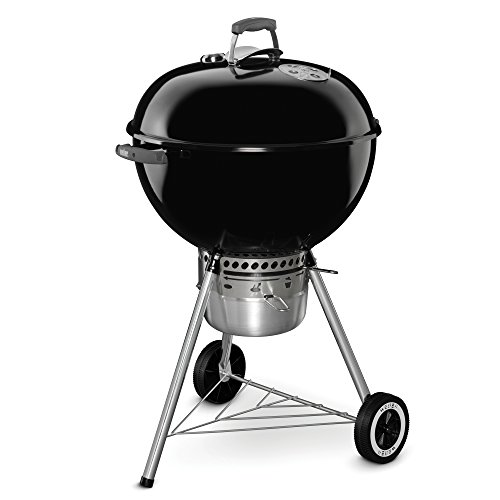
Weber Original Kettle Premium 22-Inch Charcoal Grill
One 22 inch bowl sears steaks over direct coals, roasts a whole chicken indirectly, then holds low temperatures for hours using the snake method. Premium trim adds a hinged grate for topping up fuel plus a One-Touch sweep that drops ash into a covered catcher. Heat lives entirely in two dampers, so expect several cooks before the settings feel obvious.
Pros
- Sears, roasts and smokes from the same bowl
- Covered ash catcher empties without a shovel
- Rotisserie rings and baskets fit the 22 inch size
Cons
- Damper control takes practice to read
- Chimney lighting adds about twenty minutes

Traeger Pro 575 Wood Pellet Grill
An auger feeds hardwood pellets into a fire pot while a controller keeps the chamber within a narrow band of the setpoint. Wi-Fi monitoring and a bundled meat probe let you watch a brisket from the kitchen table. Searing is the weak spot, since a ceiling near 450 degrees Fahrenheit sits below what a hot coal bed reaches.
Pros
- Holds smoking temperatures overnight without tending
- App alerts replace standing beside the cooker
- Pellet variety changes the smoke profile easily
Cons
- Peak heat falls short of a proper hard sear
- Needs a power outlet and a dry pellet store

Blackstone 28 Inch Outdoor Griddle
Solid rolled steel replaces grates, which puts smash burgers, diced onions, eggs and fried rice on the menu. Two burners create a hot half and a holding half across the plate, and a rear channel drains grease into a cup. Seasoning the surface with thin oil layers is ongoing maintenance rather than a one-time setup step.
Pros
- Cooks small food that falls straight through grates
- Breakfast for eight comes off one surface
- Wide plate keeps a warm zone free at all times
Cons
- Bare steel rusts without regular oiling
- No lid, so roasting and smoking are out

Char-Broil Performance Series 4-Burner Gas Grill
A fourth burner and a swing-away warming rack push capacity past the Spirit II without matching its construction. Porcelain coated grates and two side shelves cover the basics for feeding a group. Burner tubes and firebox panels use thinner steel, so corrosion appears sooner in coastal or high rainfall areas.
Pros
- Four zones give more flexibility when hosting
- Warming rack holds finished food off the flame
- Assembly is shorter than most cart grills
Cons
- Hot spots appear across the wider firebox
- Burner tubes corrode faster than stainless ones

Weber Q1200 Portable Gas Grill
Cast aluminum housing, cast iron grates and a single infinite-control burner pack into something one adult can carry to a campsite. Fold-out side tables create a landing spot for a plate on a crowded picnic table. 189 square inches feeds two or three people comfortably.
Pros
- Cast iron grates are rare at this size
- Cast aluminum body shrugs off rain and salt air
- Folding tables make a balcony workable
Cons
- Grate area caps you at three servings
- One pound cylinders need replacing often
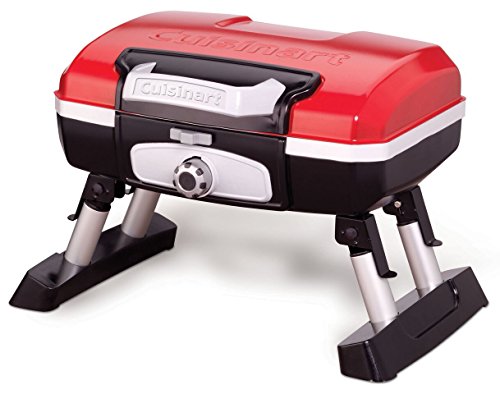
Cuisinart CGG-180T Petit Gourmet Portable Gas Grill
Telescoping legs unfold to bring the grate up to standing height, so a campsite needs no separate table. 145 square inches handles burgers and sausages for two or three people. Thinner panels shed heat in wind, which makes this a summer and holiday cooker rather than a year round one.
Pros
- Built-in stand removes the need for a table
- Light enough to carry with one hand
- Packs flat into a car trunk
Cons
- Thin materials lose heat on a breezy day
- Small grate limits it to a few portions
The lineup, side by side
| # | Model | Fuel | Best for | Score | Price |
|---|---|---|---|---|---|
| 1 | Weber Spirit II E-310 Gas Grill | Propane, with separate natural gas versions sold | Best overall | 9.4 | Check price |
| 2 | Weber Original Kettle Premium 22-Inch Charcoal Grill | Charcoal briquettes or lump | Best charcoal | 9.2 | Check price |
| 3 | Traeger Pro 575 Wood Pellet Grill | Hardwood pellets | Best pellet grill | 9.0 | Check price |
| 4 | Blackstone 28 Inch Outdoor Griddle | Propane | Best flat top | 8.8 | Check price |
| 5 | Char-Broil Performance Series 4-Burner Gas Grill | Propane | Best value gas | 8.6 | Check price |
| 6 | Weber Q1200 Portable Gas Grill | One pound propane cylinders, adapter hose available | Best portable | 8.3 | Check price |
| 7 | Cuisinart CGG-180T Petit Gourmet Portable Gas Grill | One pound propane cylinders | Best budget portable | 8.0 | Check price |
Common questions
Which is better for flavor, gas or charcoal?
Charcoal wins on flavor and peak searing heat, because burning fuel drips and smokes under the food. Gas is faster to start, easier to hold steady and quicker to shut down. Plenty of people who cook often keep both, since a kettle takes little space beside a gas cart.
Are pellet grills worth it for a beginner?
Yes, if smoking is the reason you are buying. A controller and auger hold the setpoint, so nobody has to manage a fire for eight hours. Look elsewhere if steaks are the main event, because most pellet cookers peak well below a hot coal bed.
How many square inches do I need for a family of four?
Roughly 400 square inches of primary grate handles four people with room for an indirect zone. Couples and campers do fine on 150 to 200 square inches. Move above 500 square inches only if large gatherings are routine, since a bigger firebox burns more fuel.
How do you set up two zone cooking?
On gas, light only one or two burners and place food over the unlit side. On charcoal, bank the coals against one half of the bowl. Sear over the hot side first, then slide food across and close the lid to finish gently.
How often should you clean a gas grill?
Brush the grates while warm after every cook, which takes under a minute. Twice a season, pull the grates and flavorizer bars, then scrape the firebox and empty the grease tray. Accumulated grease is the usual cause of sudden flare ups.
Does a grill need a cover if it lives outside?
Yes. A cover keeps rain and pollen out of burner tubes and slows rust around the firebox and lid seams. Let everything cool fully first, and choose a vented cover so trapped moisture can escape.
Can a propane grill be converted to natural gas?
Only with a conversion kit the manufacturer sells for that exact model. Many brands now supply separate natural gas versions instead. Fitting an unapproved kit creates a genuine gas hazard and voids the warranty, so verify the model first.
What is the difference between a griddle and a grill?
Grates hold food above direct flame, letting fat drip and leaving char lines. A griddle is one solid steel plate, so food cooks in its own fat and nothing falls through. Eggs, onions and shrimp suit the plate, while thick steaks suit grates.
Is a portable grill enough for a small balcony?
For two or three servings, yes. Check your building rules first, since charcoal is banned on many balconies and some cities restrict open flame near siding. Cast aluminum and cast iron portables handle weather better than thin stamped steel.
How long does charcoal take before you can cook?
Allow about twenty minutes from lighting a chimney to spreading coals covered in grey ash. Add another five minutes for the grate to heat through. Skipping that wait puts food over raw fuel and leaves an acrid taste.
Our take
Most households should start with the Weber Spirit II E-310, because three controlled burners and enameled cast iron grates make midweek cooking easy enough to actually happen. Add the Weber Original Kettle Premium 22-Inch when charcoal flavor matters and space allows a second cooker. Choose the Traeger Pro 575 instead if unattended overnight smoking is the whole reason you are shopping.


