8 Board Games That Teach New Players the Ropes
Ticket to Ride wins for beginners because colored routes match colored cards, a rule anyone grasps in one round. Sushi Go Party suits groups wary of commitment, since rounds finish in twenty minutes. Catan fits players ready for light strategy, trading resources at a pace still easy to follow.
Ticket to Ride, Sushi Go Party and Catan sit at three different starting points, from purely visual rules to short card rounds to light strategy. Each teaches a beginner group something different about how board games work.
New buyers often choose by box art, then stall on a rulebook nobody wants to read aloud. We compared setup time, rulebook length, average round length and player count range, then checked that against how often first-time groups report finishing a full game.
The best picks, ranked

Ticket to Ride
Colored cards match colored routes on the map, so new players learn the core rule by watching one turn. Sessions run thirty to sixty minutes, short enough to hold attention through a first game. Claiming a route before a rival does adds tension without direct conflict.
Pros
- Route matching needs almost no explanation
- Runs short enough for one evening
- Friendly tension without direct conflict
Cons
- Extra maps require separate expansions
- Offers less depth for veteran strategy players

Catan
Trading resources with other players adds negotiation on top of dice rolls, a step beyond simple visual games. Hex tiles get reshuffled every setup, so no two matches repeat the same map. Sessions run sixty to ninety minutes, longer than the lighter titles here.
Pros
- Trading creates genuine player interaction
- Randomized tiles keep every replay different
- Expands to six players with an add-on
Cons
- Longer rulebook than card-only games
- A losing streak on dice rolls can frustrate new players

Sushi Go Party
Card drafting, pick one card and pass the rest, explains itself in under a minute. Rounds wrap in about twenty minutes, short enough for a group still deciding if board games interest them. Multiple menu variants change scoring without buying new content.
Pros
- Core rule explained in under a minute
- Short rounds suit a hesitant group
- Scales comfortably up to eight players
Cons
- Repetition may feel thin for strategy fans
- Small cards misplace easily

Qwirkle
Matching shapes and colors on a grid borrows the familiar structure of dominoes, easing new players in fast. Scoring rewards planning ahead without demanding a dense rulebook first. Games wrap in about forty five minutes, fitting a family night without running past bedtime.
Pros
- Tile matching feels familiar from other games
- Rewards planning without complex rules
- Works well across a wide age range
Cons
- Caps player count lower than card games
- Abstract theme will not appeal to every group
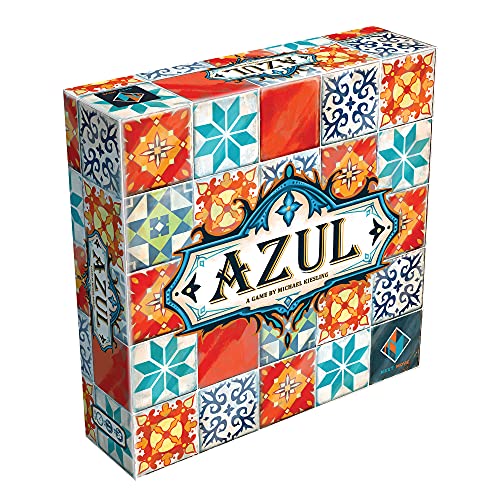
Azul
Drafting colored tiles to complete a wall pattern teaches spatial planning without a heavy rulebook. Every player draws from the same shared pool, so turns move fast. Rounds run thirty to forty five minutes, short enough to hold new players before fatigue sets in.
Pros
- Shared tile pool keeps turns quick
- Introduces spatial planning gently
- Components look good on the table
Cons
- Scoring rules take a full round to click
- Limited to four players

Sequence
A card and chip based row forming game costs less than most modern titles while still teaching basic strategy. Rules mirror card games most adults already know, cutting the learning curve to minutes. Team play lets larger groups pair up instead of sitting out.
Pros
- Costs less than most modern board games
- Familiar card rules learn fast
- Team play welcomes large groups
Cons
- Feels basic to players wanting more depth
- Less strategic depth than tile or trading games

Codenames
Two team leaders give one word clues to guide teammates toward matching cards, a rule set explained in a few sentences. Large gatherings split naturally into two teams, so nobody sits out a turn. Rounds move fast enough for an immediate replay.
Pros
- Rules explained in a few sentences
- Keeps large groups engaged as two teams
- Fast rounds invite an immediate replay
Cons
- Needs four or more players to feel balanced
- Favors players with strong vocabularies
What to look for
What makes a board game easy for beginners? Short rulebooks, visual mechanics and forgiving turns separate an approachable game from an overwhelming one. Ticket to Ride explains itself through colored components, cutting the need for upfront reading. Playtime under an hour keeps a first attempt from feeling like a commitment.
How much rule weight should a new group start with? Sushi Go Party asks almost nothing of a new player before round one starts. Catan rewards patience with more depth once trading and building click. Groups unsure about board games in general should start lighter, then work upward.
Which board game fits your player count? Sequence and Codenames scale to large groups through team play, useful for a party rather than a quiet night. Azul and Qwirkle cap around four players, suiting smaller, focused sessions. Checking a game’s ideal player count before buying avoids an awkward mismatch.
When should a group move to heavier strategy games? Once a group finishes a few sessions of Catan or Ticket to Ride without stalling on rules, heavier titles become realistic. Repeated re-reads of a rulebook mid-game signal a lighter title still fits better. No rush exists to move past a game a group genuinely enjoys.
Compared at a glance
| # | Model | Players | Best for | Score | Price |
|---|---|---|---|---|---|
| 1 | Ticket to Ride | 2 to 5 | Best overall | 9.3 | Check price |
| 2 | Catan | 3 to 4, expandable to 6 | Best for strategy-curious beginners | 9.0 | Check price |
| 3 | Sushi Go Party | 2 to 8 | Best for quick rounds | 8.8 | Check price |
| 4 | Qwirkle | 2 to 4 | Best for pattern-based play | 8.6 | Check price |
| 5 | Azul | 2 to 4 | Best for tile-laying newcomers | 8.4 | Check price |
| 6 | Sequence | 2 to 12, team play supported | Best budget | 8.1 | Check price |
| 7 | Codenames | 2 to 8, best with 4 or more | Best for large groups | 8.0 | Check price |
Frequently asked questions
What is the easiest board game for beginners to learn?
Sushi Go Party and Codenames both explain their core rule in under a minute, making either a strong pick for a first game night.
How long does a beginner board game usually take to play?
Most titles compared here run fifteen to ninety minutes. Card drafting games sit on the short end, while Catan runs longer.
Is Ticket to Ride good for people who dislike complex rules?
Yes. Its colored route matching is visual, so most new players understand it within the first round.
Which board game works best for a large party?
Codenames and Sequence both support team play, keeping eight or more people involved instead of waiting through long turns.
Is Catan too complicated for a first time player?
It carries more rules than card only games, but most new players pick up trading and building within one full game.
What board game suits exactly four players?
Azul and Qwirkle both cap at four players and offer focused, quieter sessions compared to party games.
Do beginner board games work for mixed age groups?
Qwirkle and Sequence use simple, familiar mechanics that work across a wide age range, including kids and adults together.
Which game has the shortest rounds?
Codenames rounds run about fifteen minutes, the shortest average playtime among the titles compared here.
Ticket to Ride vs Catan, which should a beginner buy first?
Ticket to Ride teaches through visuals and suits a first purchase. Catan fits groups ready for light strategy and longer sessions.
The bottom line
Ticket to Ride remains the safer first purchase since its visual rules rarely need a second explanation. Groups wanting more strategic depth without a steep curve should look at Catan next. For a fast, low pressure introduction, Sushi Go Party gets a table playing within minutes.


