Bike Helmets for Indoor Riding and Trainer Sessions
The Giro Fixture MIPS leads for its open vent layout and easy fit dial, which suits stationary riding where airflow is scarce. The Bell Formula MIPS is the lighter option for longer sessions, and Retrospec Lennon is the budget pick for indoor track and gym use.
For indoor riding on a trainer, rollers or an indoor track, the Giro Fixture MIPS is the best all-round choice, the Bell Formula MIPS is lighter for long sessions, and the Retrospec Lennon covers budget and casual gym use.
Indoor riding is a strange case for helmet selection because the thing that normally moves air through the vents, forward speed, does not exist. Sweat volume goes up while cooling goes down, which changes what matters from aerodynamic shaping to raw vent area and pad materials that wash clean. We compared published vent counts, weights, retention designs and protection systems, then ranked on heat management and comfort over long stationary efforts.
What we recommend

Giro Fixture MIPS
The Fixture pairs a generous vent layout with the Roc Loc Sport fit system, which adjusts one handed even mid-session with sweaty fingers. Its rounded shell suits a wide range of head shapes, and the pads pull out for washing. For riders on rollers or an indoor track it is the most comfortable of the mainstream options at this price.
Pros
- Strong airflow for stationary riding
- Fit dial adjusts easily while riding
- Suits a wide range of head shapes
Cons
- Heavier than performance road helmets
- Shell styling is plain
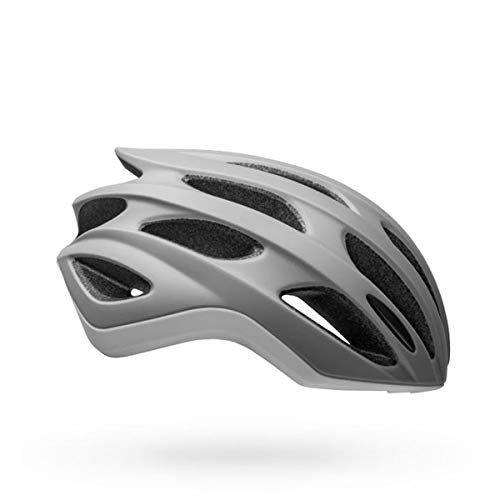
Bell Formula MIPS
Lighter than most helmets at this level, which matters when you are stationary for an hour or more and neck fatigue becomes the limiting factor. The vent channels run front to back to move whatever air a fan provides. Owners report the fit runs slightly narrow, so try before committing if you have a rounder head shape.
Pros
- Low weight reduces neck fatigue
- Channels work well with a floor fan
- Comfortable strap junctions
Cons
- Narrower fit shape
- Pads compress over time

Thousand Heritage 2.0
This is the helmet for people riding indoor tracks or gym spin spaces who want something that also looks right on a commute. The magnetic buckle is easy to fasten one handed and the vegan leather straps stay comfortable. Airflow is more modest than sport helmets, so pair it with a fan for hard efforts.
Pros
- Easy magnetic buckle
- Comfortable straps against skin
- Looks good off the bike too
Cons
- Fewer vents than sport helmets
- Heavier than performance models

Retrospec Lennon Bike Helmet
A straightforward helmet that covers the basics of certified protection, adjustable fit and enough venting for moderate indoor efforts. It is the sensible pick for a shared gym or family setup where several people use the same helmet. Pads are removable, which matters when multiple riders sweat into it.
Pros
- Very affordable
- Removable pads for shared use
- Simple adjustment that anyone can set
Cons
- No rotational impact system
- Venting limited for hard efforts

Schwinn Thrasher Bike Helmet
The Thrasher is easy to find and easy to fit, with a dial retention system and a decent vent count for its price bracket. It is a reasonable helmet for family members using an indoor trainer occasionally rather than daily. Build quality is basic, so heavy users will outgrow it.
Pros
- Easy to find and replace
- Good vent count for the price
- Simple universal sizing
Cons
- Basic pad materials
- No rotational protection system

Bern Watts 2.0
A rounder shell with more rear coverage than a road helmet, which suits indoor track riding and mixed-use spaces. It is warmer than a vented road helmet, so a fan is essential for hard indoor efforts. Owners report the fit is secure and the shell survives knocks that would crack lighter helmets.
Pros
- More rear head coverage
- Durable shell for repeated use
- Comfortable secure fit
Cons
- Runs hot without a fan
- Heavier than road helmets

Bontrager Starvos WaveCel
WaveCel is Bontrager’s alternative approach to reducing rotational forces, using a collapsing cellular structure in place of a sliding liner. The trade-off indoors is that the structure occupies vent space, so it runs warmer than the Fixture. Choose it if protection technology outranks airflow in your priorities.
Pros
- Distinct rotational protection approach
- Precise Boa fit adjustment
- Solid overall build quality
Cons
- Warmer than open-vent helmets
- Heavier than comparable road models
How they stack up
| # | Model | Protection | Best for | Score | Price |
|---|---|---|---|---|---|
| 1 | Giro Fixture MIPS | MIPS rotational system | Best overall | 9.4 | Check price |
| 2 | Bell Formula MIPS | MIPS rotational system | Best for long sessions | 9.2 | Check price |
| 3 | Thousand Heritage 2.0 | Certified impact shell | Best for indoor commuting setups | 9.0 | Check price |
| 4 | Retrospec Lennon Bike Helmet | Certified impact shell | Best budget | 8.8 | Check price |
| 5 | Schwinn Thrasher Bike Helmet | Certified impact shell | Best for casual indoor use | 8.6 | Check price |
| 6 | Bern Watts 2.0 | Full coverage skate shape | Best for indoor track and skate parks | 8.3 | Check price |
| 7 | Bontrager Starvos WaveCel | WaveCel cellular liner | Best protection technology | 8.0 | Check price |
How to pick the right one
Airflow matters more indoors, not less On the road, riding at speed pushes air through vents whether they are well designed or not. On a trainer or rollers nothing moves unless you make it move. That inverts the usual buying logic: aerodynamic helmets with small vents are the worst choice indoors, and the cheap, open, heavily vented helmet often feels better. Pair whatever you buy with a floor fan pointed at your chest and face, because the fan does more cooling work than any helmet design.
Pads and straps take a beating from sweat Indoor sessions produce far more sweat per hour than outdoor rides at the same effort, and it lands directly on the pads instead of evaporating. Removable, washable pads are close to essential. Salt residue stiffens straps and degrades foam over time, so rinse straps after hard sessions. If several people share a helmet, washable pads move from a convenience to a hygiene requirement.
Decide whether you need a helmet indoors at all On a fixed trainer with the bike locked into a frame, many riders reasonably skip the helmet. On rollers, an indoor track, or a smart trainer that allows lateral movement, a fall is entirely possible and a helmet makes sense. Group indoor cycling classes on stationary bikes generally do not require one. Be honest about which situation you are in rather than buying out of habit.
Fit is checked the same way indoors or out The helmet should sit level with roughly two finger widths between your eyebrows and the front edge. The side straps should form a V just below the ears, and the chin strap should allow one finger underneath. With the retention dial tightened, the helmet should not shift when you shake your head. Replace any helmet after an impact, and replace on the manufacturer’s schedule even without one, since foam degrades with sweat and age.
Common questions
Do I need a helmet on an indoor trainer?
On a stationary trainer where the bike is fixed in a frame, most riders do not wear one. On rollers or an indoor track, where balance is required and falls happen, a helmet is sensible. Judge by whether a fall is physically possible in your setup.
Which helmet features matter most for indoor riding?
Vent area, removable washable pads and an easy retention dial. Aerodynamic shaping, which dominates outdoor helmet marketing, is irrelevant when you are not moving through air.
Will a helmet make me overheat indoors?
It can, since it traps heat at the head with no airflow to remove it. A floor fan aimed at your head and chest solves most of this and matters more than the helmet model you choose.
How often should I replace a bike helmet?
Manufacturers typically recommend replacement every three to five years, and immediately after any impact. Indoor use accelerates ageing because sweat and salt break down foam and straps faster than dry outdoor use.
Is MIPS worth paying for?
MIPS and similar systems are designed to reduce rotational forces in angled impacts, which are common in real falls. Most safety researchers consider rotational protection worthwhile. Whether it justifies the price difference on an indoor-only helmet is a personal call.
Can I wash my helmet pads?
Yes. Most helmets have pads attached with hook and loop tape. Remove them, hand wash in mild soap, and air dry fully. Never machine wash or tumble dry, and never put the helmet shell itself in a dishwasher.
What size helmet do I need?
Measure the circumference of your head about a centimetre above your eyebrows and compare against the manufacturer’s chart. Sizing varies between brands, so use each brand’s own chart rather than assuming your size carries over.
Do indoor cycling classes require helmets?
Almost never, since the bikes are fixed and there is no risk of falling sideways. Check with the studio, but the standard expectation is no helmet in a spin class.
Our pick
The Giro Fixture MIPS is the best all-round choice for indoor riding because open venting and a simple fit dial address the two problems that actually appear on a trainer, heat and adjustment with sweaty hands. The Bell Formula MIPS is worth the step up if session length makes weight matter, and the Retrospec Lennon covers occasional or shared use. Whatever you pick, a floor fan will do more for your comfort than any helmet upgrade.