Indoor Bike Pumps Compared for Pressure and Ease
Topeak JoeBlow Sport III ranks first for home use, pairing a large base gauge with a SmartHead that takes Presta and Schrader without swapping parts. Lezyne Classic Floor Drive rebuilds rather than dies. Pro Bike Tool Bike Floor Pump covers most of that ability with a lighter build.
Topeak JoeBlow Sport III is the pump to park beside a turbo trainer, with a readable dial and a head that swallows either valve type. Lezyne Classic Floor Drive suits anyone who would rather rebuild a pump than replace it. Pro Bike Tool Bike Floor Pump handles the same jobs with fewer metal parts.
Indoor inflation is fussier than it looks. Trainer and commuter pressures land in a band where budget gauges drift most, and a light base skates across a garage floor while you push. We compared gauge placement and marking spacing, head mechanisms, barrel volume and base construction. Owner reports on seal life and head wear across several years settled the ranking.
What to look for
Why gauge accuracy matters more for indoor riding On a trainer or rollers, tyre pressure changes both wear rate and how consistent the resistance feels session to session. Floor pump gauges drift most at the ends of their range, so a pump rated to 220 psi may read less precisely at the 80 psi you actually use. Judge a dial by marking width across your working band, not by its maximum number. A separate digital gauge makes a useful cross check.
How do Presta and Schrader pump heads differ? Presta valves are the narrow threaded stems on road and most modern bikes. Schrader are the wider car style valves found on hybrids, kids bikes and older frames. Twin heads such as Topeak’s SmartHead accept both from one opening, which saves fiddling in a mixed household. Threaded chucks like Lezyne’s seal tighter and protect fragile stems, at the cost of a few seconds on and off.
Barrel volume, pressure and how hard you work Wide barrels shift more air per stroke and fill a mountain bike tyre fast. Narrow high pressure barrels reach road figures with less effort at the top of the range. Indoor training on 25mm or 28mm road tyres puts you at that top end most of the time. Switchable dual mode pumps exist, though a good general purpose pump handles a typical garage without real compromise.
Base stability, hose reach and where the pump lives Hard floors give a light base nothing to grip, so it skates sideways as you push. Wide steel bases with foot pads solve that outright. Longer hoses let you reach a valve without unclamping the bike from the trainer, which turns a two minute job into a thirty second one. Check the pump stands upright somewhere out of the walkway, because a floor pump lying flat gets trodden on.
The top picks, ranked

Topeak JoeBlow Sport III Floor Pump
SmartHead accepts Presta and Schrader from the same opening, so a road bike and a hybrid share one pump with nothing to unscrew. A wide steel foot base stays planted on concrete and tile. Owners report the dial holding its calibration for years, which is why this ends up living permanently next to the trainer.
Pros
- Head takes either valve with no parts to swap
- Large dial readable from standing height
- Steel base grips hard floors
Cons
- Base mounted dial means crouching for a precise read
- Bulky to store in a small flat

Lezyne Classic Floor Drive Pump
A CNC machined aluminium body carries a screw on chuck that threads onto the valve rather than clamping it, which spares fragile Presta stems. Nearly every component sells as a spare, so a tired seal means a rebuild instead of a landfill trip. Rated to around 220 psi, well past anything a road tyre needs.
Pros
- Rebuildable with factory spare parts
- Threaded chuck is gentle on Presta valves
- Metal construction through body and base
Cons
- Threading on takes longer than a lever chuck
- Chuck needs reversing for Schrader valves
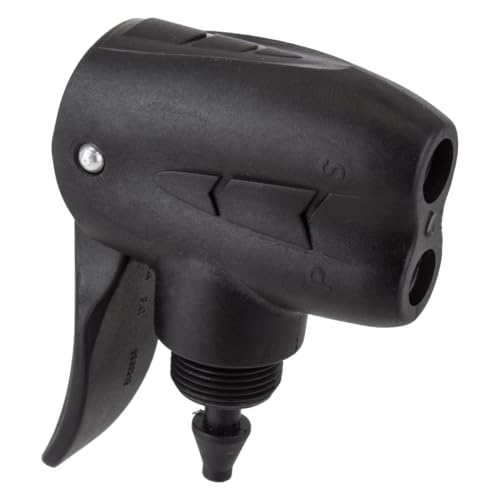
Park Tool PFP-8 Home Mechanic Floor Pump
Park Tool sets the gauge where your eye lands while pumping, mounts a steel barrel above a wide base and expects daily use rather than weekly. Its dual head covers Presta and Schrader, so wheelbarrows and car tyres fall within scope. Owners describe it as overbuilt in the way workshop tools should be.
Pros
- Built for repeated workshop sessions
- Gauge sits in your line of sight
- Handles bike, barrow and car valves
Cons
- Steel barrel adds weight over aluminium rivals
- Utilitarian looks with no finish extras

Pro Bike Tool Bike Floor Pump
Wide dial markings, a twin valve head and a stable base cover what a first floor pump needs. Ball and inflatable needles arrive in the box, which pulls footballs and paddling pools into its job list. Owners call readings accurate enough for training use and flag the seals as the first part to need attention.
Pros
- Widely spaced markings are easy to read
- Takes both valve types without swapping
- Needles extend it beyond bike duty
Cons
- Seals wear sooner than premium pumps
- Head assembly uses plastic components

Vibrelli Performance Bike Floor Pump
Adapters and a puncture repair kit ship alongside the twin valve head in most listings, which fits a household running several different bikes plus a few sports balls. Gauge placement sits high enough to read mid stroke. Owners treat it as a practical family pump rather than a precision instrument.
Pros
- Adapters cover every household valve
- Repair kit included in the box
- Dial visible while you pump
Cons
- Gauge drifts at the top of its range
- Base is lighter than workshop pumps
BV Bicycle Ergonomic Bike Floor Pump
Twin valve head, a basic dial and a moulded grip handle cover the fundamentals with nothing extra. Commuter and hybrid tyres get topped up without fuss. Owners rate it a sound first pump and accept the trade offs in gauge precision and seal life against workshop grade models.
Pros
- Moulded grip stays comfortable over long sessions
- Twin head suits mixed household bikes
- Light enough to carry to the car
Cons
- Least precise dial in this group
- Plastic base flexes on hard floors

Blackburn Core 3 Floor Pump
Blackburn lifts the dial to the top of the barrel, so you read pressure standing rather than crouched over a trainer. That helps most when you are dialling in a repeatable session pressure. An anodised barrel over a steel base gives it weight where it counts, and owners report the head seats one handed.
Pros
- Dial position beats every rival here for reading
- Anodised barrel over a steel base
- Head seats onto a valve one handed
Cons
- Raised dial is more exposed to knocks
- Moves less air per stroke than wide barrels
The lineup, side by side
| # | Model | Max pressure | Best for | Score | Price |
|---|---|---|---|---|---|
| 1 | Topeak JoeBlow Sport III Floor Pump | Around 160 psi rated | Best overall | 9.4 | Check price |
| 2 | Lezyne Classic Floor Drive Pump | Around 220 psi rated | Best build quality | 9.1 | Check price |
| 3 | Park Tool PFP-8 Home Mechanic Floor Pump | Around 160 psi rated | Best for home workshops | 8.9 | Check price |
| 4 | Pro Bike Tool Bike Floor Pump | Around 160 psi rated | Best value | 8.7 | Check price |
| 5 | Vibrelli Performance Bike Floor Pump | Around 160 psi rated | Best for mixed valve types | 8.5 | Check price |
| 6 | BV Bicycle Ergonomic Bike Floor Pump | Around 160 psi rated | Best budget | 8.2 | Check price |
| 7 | Blackburn Core 3 Floor Pump | Around 160 psi rated | Best gauge readability | 8.0 | Check price |
Frequently asked questions
What pressure should I run for indoor trainer sessions?
Follow the tyre sidewall range and the trainer maker’s guidance, which usually points toward the upper end to cut slip and heat. Repeating the same figure each session matters more than the exact number, and that is where a steady gauge earns its keep.
Are floor pump gauges accurate?
Within a few psi on good pumps, and noticeably worse near the ends of the range. A separate digital gauge lets you check the dial and learn its offset. Treat any single gauge as a consistent reference rather than absolute truth.
Which pumps handle both Presta and Schrader valves?
Topeak JoeBlow Sport III, Park Tool PFP-8, Pro Bike Tool, Vibrelli and BV all use twin valve heads that take either without swapping parts. Lezyne Classic Floor Drive uses a threaded chuck that reverses for the other valve type.
Why does air escape when I pull the head off?
A short hiss is just the hose and chuck emptying, not the tyre. Losing real pressure usually means the Presta lock nut was left loose or the head came off at an angle. Threaded chucks give up less air on removal than lever types.
Can I use a floor pump for tubeless tyres?
Topping up works fine. Seating a fresh tubeless tyre normally does not, since the bead needs a sudden burst from a charger tank, tubeless inflator or compressor. Once the bead is seated, a standard floor pump maintains it without issue.
How often should I check tyre pressure?
Before most rides on road tyres, which shed pressure over a few days and faster with latex or lightweight tubes. A bike living on a trainer holds up for a week, though a quick check before a hard session costs a minute and prevents a wasted one.
Do floor pumps wear out?
Seals and heads fail first. Rebuildable models like Lezyne Classic Floor Drive sell both as spares, so the pump keeps going. A sudden jump in strokes per tyre points to a worn piston seal, and a rebuild kit restores it.
Is a high maximum pressure rating useful?
Only when you actually run those pressures, which fewer riders do now that wider tyres are standard. A pump rated to 220 psi often spreads its markings thinly across the range you use. A 160 psi model with clear graduations is usually the better tool.
Which floor pump is easiest to read while pumping?
Blackburn Core 3 places its dial near the top of the barrel, so you read it standing over the bike. Park Tool PFP-8 sits close behind. Base mounted dials like the JoeBlow’s are larger but ask you to crouch for a precise number.
The verdict
Topeak JoeBlow Sport III fits the widest range of households, with a readable dial and a head that copes with whatever valve turns up. Choose Lezyne Classic Floor Drive when you want a pump you can rebuild indefinitely. Pro Bike Tool Bike Floor Pump delivers most of that capability for a first floor pump, with seals as the eventual weak point.