Turn Any Bike Into an Indoor Trainer Setup
Wahoo KICKR CORE is the strongest all round direct drive trainer, pairing a tight accuracy band with quiet running. Zwift Hub One gets a new rider onto virtual roads fastest, thanks to virtual shifting. Elite Suito-T folds smallest when the trainer shares a hallway.
Wahoo KICKR CORE is the trainer most riders should buy, with direct drive accuracy and low noise below flagship money. Zwift Hub One removes every compatibility question from the first ride. Elite Suito-T wins where floor space, not budget, drives the decision.
Comparing trainers is awkward because spec sheets hide what shapes a session. Two units can quote similar accuracy yet respond at different speeds when a virtual gradient jumps. Wheel on models add tyre wear and calibration drift that direct drive avoids. We compared drive type, published accuracy, gradient ceilings, freehub and axle requirements, then weighed owner reports about noise carrying through a shared floor.
Our top picks

Wahoo KICKR CORE
Flywheel and drive system come straight from Wahoo’s flagship, minus the built in legs and the top of the gradient range. Resistance shifts smoothly as a virtual climb steepens, which is what makes structured intervals sustainable. Noise stays low enough for a flat with neighbours below.
Pros
- Accuracy tight enough for power based intervals
- Quiet running suits flats and shared houses
- Heavy flywheel carries momentum like a road wheel
Cons
- Some versions need a cassette bought separately
- No folding legs, so it stores bulky
Zwift Hub One
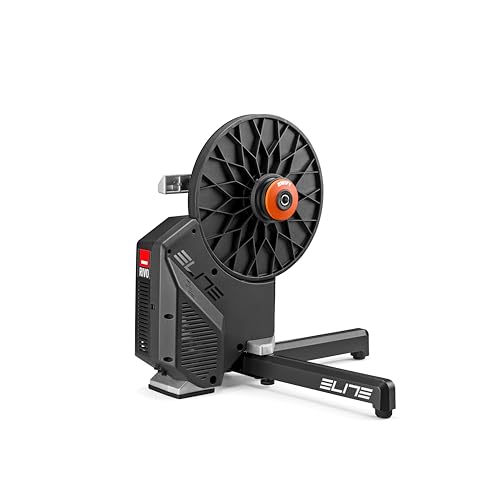
A single cog replaces the cassette, so drivetrain speed and freehub matching stop mattering. Gear changes happen through the Zwift Click controller, and the chain never moves across sprockets. Nothing else here goes from box to first ride as quickly.
Pros
- No cassette matching or freehub compatibility check
- Virtual shifting removes indoor gear noise
- Rides straight out of the box with Zwift
Cons
- Virtual shifting works fully only in supported apps
- Wider accuracy band than premium units
Elite Suito-T
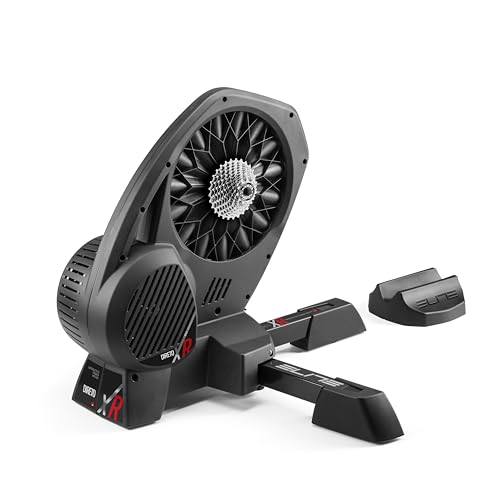
Legs fold to a footprint that slides under a desk or behind a door between sessions. Elite ships it largely assembled with a front riser block, and the T suffix means no cassette, so you match your own drivetrain. Resistance reacts quickly and the unit stays quiet at dawn.
Pros
- Folds smaller than any direct drive rival here
- Arrives assembled with a riser block included
- Quiet enough for early morning sessions
Cons
- Lighter flywheel gives less road feel than the KICKR
- Cassette must be bought and fitted separately

Garmin Tacx Flux S Smart
Several seasons of production have made the Flux S the standard value route into direct drive. Most versions ship with a cassette fitted, which removes a step and a separate purchase. Owners report long service lives rather than headline features.
Pros
- Direct drive feel close to wheel on money
- Cassette usually fitted, so setup is quicker
- Proven durability across several production years
Cons
- 10 percent gradient ceiling trails newer rivals
- Heavy and awkward to shift between rooms

Saris H3 Direct Drive Trainer
Sealed construction leaves your drivetrain as the loudest thing in the room. High power efforts hold steady, which suits heavier riders and sprinters standing on the pedals. Wide fixed legs deliver that stability at the cost of permanent floor space.
Pros
- Among the quietest trainers on sale
- Stable during out of the saddle sprints
- 20 percent ceiling handles the steepest virtual climbs
Cons
- Fixed wide legs occupy floor space permanently
- Heavy to move between rooms
Kinetic Road Machine Smart Control
Keeping the rear wheel in the frame skips cassettes, freehubs and axle adapters entirely. Fluid resistance builds progressively, and the smart control unit lets apps drive the load. Tyre wear and extra noise are the trade for that convenience.
Pros
- No cassette purchase or wheel removal
- Fluid unit ramps up smoothly under power
- Folds flatter than most direct drive units
Cons
- Chews a road tyre unless you fit a trainer tyre
- Louder than direct drive and needs spin down calibration

Sportneer Fluid Bike Trainer Stand
Resistance rises as you pedal harder, but nothing here connects to an app or reports watts. Race day warm ups and short weather forced sessions are what it does well. Add a separate speed sensor if you want basic ride data.
Pros
- Lowest cost route to riding indoors
- Folds flat against a wall
- Fluid curve feels smoother than magnetic units
Cons
- No power data or app control at all
- Clearly louder than any direct drive trainer
How they stack up
| # | Model | Drive type | Best for | Score | Price |
|---|---|---|---|---|---|
| 1 | Wahoo KICKR CORE | Direct drive | Best overall | 9.4 | Check price |
| 2 | Zwift Hub One | Direct drive | Best for virtual riding | 9.2 | Check price |
| 3 | Elite Suito-T | Direct drive | Best for small spaces | 9.0 | Check price |
| 4 | Garmin Tacx Flux S Smart | Direct drive | Best value direct drive | 8.8 | Check price |
| 5 | Saris H3 Direct Drive Trainer | Direct drive | Best for quiet running | 8.6 | Check price |
| 6 | Kinetic Road Machine Smart Control | Wheel on, fluid resistance | Best wheel on trainer | 8.3 | Check price |
| 7 | Sportneer Fluid Bike Trainer Stand | Wheel on, fluid resistance | Best budget | 8.0 | Check price |
How to choose
Direct drive vs wheel on: which should you buy? Direct drive units take the place of your rear wheel. That removes tyre slip, tyre wear and most of the noise, and it steadies power figures across sessions. Wheel on trainers clamp against the tyre, so they cost less and set up faster, but they drift between calibrations. Riding indoors more than a few times a month tips the maths toward direct drive.
How accurate does a smart trainer need to be? Within one or two percent matters for structured intervals, where zone boundaries sit close together. Virtual racing cares more about consistency, since every rider is measured on their own unit. Response speed shapes the ride more than the accuracy figure does. Spec sheets rarely publish it, so owner reports about how quickly resistance catches a climb are worth reading.
What cassette, freehub and axle adapters will you need? Direct drive trainers need a cassette matched to your groupset and a freehub body that fits it. Some ship with a cassette fitted, some ship bare, and a T suffix such as the Elite Suito-T generally means bare. Quick release and thru axle bikes need different adapters. Confirm all three before ordering, because a mismatched freehub means a return rather than a workaround.
How do you set up a trainer in a small room? Allow the length of your bike plus about a metre in front for a fan and screen. A rubber mat cuts vibration into the floor below and catches sweat, which corrodes bolts faster than rain. Airflow matters more than most people expect, since power output drops noticeably without a fan. Folding units like the Suito-T clear the space between sessions.
Frequently asked questions
Do I need a smart trainer for Zwift?
No, but the experience differs sharply. A dumb trainer with a speed sensor gives estimated power and no automatic resistance, so climbs feel identical to flats. Smart trainers change load with the terrain and broadcast real watts.
Will an indoor trainer damage my bike?
Sweat does the damage, not the trainer. Salt attacks bolts, headset bearings and paint far faster than rain. Use a frame cover and wipe the bike down afterwards. Carbon frame owners should check manufacturer guidance before clamping anything.
How much space does an indoor bike trainer need?
Plan for your bike’s length plus a metre ahead and half a metre either side. Folding models such as the Elite Suito-T pack away between rides. Wide legged units like the Saris H3 work best left permanently set up.
What is a trainer tyre and do I need one?
It is a hard compound rear tyre built to survive roller heat and abrasion. Regular wheel on users benefit from a spare wheel with one fitted. Direct drive trainers never need one, since no tyre touches the unit.
How loud are indoor trainers really?
Modern direct drive units sit below the noise of your chain and cooling fan. Wheel on trainers hum, and the pitch rises with speed. In a flat, a direct drive unit on a rubber mat is the quietest realistic combination.
Can I use a mountain bike on a direct drive trainer?
Yes, given the right thru axle adapters and a cassette that fits the freehub. Most current trainers cover common axle standards. On a wheel on unit, swap knobbly tyres for a slick, because they are loud and wear fast on a roller.
Do I need to calibrate my trainer?
Wheel on units need regular spin downs, because tyre pressure and roller tension shift. Many direct drive trainers self calibrate at the factory. Running an occasional spin down after warming up is still good practice.
Is a heavier flywheel better on a bike trainer?
Heavier flywheels carry momentum through the dead spot in a pedal stroke and feel closer to the road. Lighter ones feel more abrupt but make the unit easier to carry. Some trainers simulate inertia electronically, so weight alone does not settle it.
Which bike trainer is best for a beginner?
Zwift Hub One removes cassette matching and gear setup, which are the two steps that stall new buyers. Wahoo KICKR CORE is the better long term unit for anyone already following training plans. Budget first time riders can start with the Sportneer and upgrade later.
Final word
Wahoo KICKR CORE handles structured training and virtual racing without asking for a compromise, which makes it the default pick. Choose Zwift Hub One for the simplest possible setup, Elite Suito-T when storage decides the purchase, and Kinetic Road Machine Smart Control if you want the rear wheel to stay in the frame.