Indoor Bird Health Supplies Owners Rely On Daily
ZuPreem FruitBlend Flavor Pellets lead because a formulated diet fixes the selective feeding that seed mixes invite. Zoo Med’s AvianSun 5.0 UVB Compact Fluorescent Lamp replaces the ultraviolet window glass filters out. A Kaytee Forti-Diet Pro Health Cuttlebone clips to the bars and supplies calcium for weeks.
Budgies, cockatiels and canaries kept inside need three things before anything else. ZuPreem FruitBlend Flavor Pellets handle diet, the Zoo Med AvianSun 5.0 UVB Compact Fluorescent Lamp handles light, and a Kaytee Forti-Diet Pro Health Cuttlebone covers calcium. Everything further down this list builds on those three.
A cage quietly removes what wild birds arrange for themselves. Full spectrum light, varied foraging surfaces and natural abrasives all disappear indoors. Seed only bowls and daylight through window glass both fall short of what a bird actually uses. We compared nutrition labelling, published UVB specifications, manufacturer feeding guidance and long term owner reports to build this ranking.
Our top picks
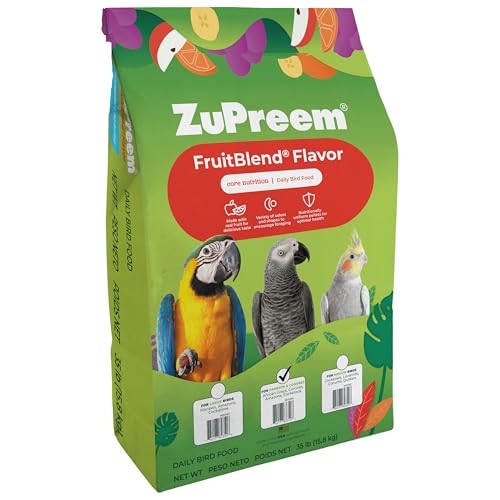
ZuPreem FruitBlend Flavor Pellets for Small Birds
Every pellet carries identical nutrition, so a bird cannot pick favourites and leave the rest of the bowl. Fruit flavouring and colour exist to get seed raised birds to try the new shape at all. Owners report conversion runs faster with this than with plain brown pellets, which is exactly where most switches stall.
Pros
- Identical pellets rule out selective feeding
- Accepted readily by seed raised birds
- Several bag sizes keep the supply fresh
Cons
- Added colour is cosmetic and puts some owners off
- Fines gather at the bottom of the bag

Zoo Med AvianSun 5.0 UVB Compact Fluorescent Lamp
Window glass blocks the UVB wavelengths birds use to synthesise vitamin D3, so a sunny room still counts as darkness by that measure. This compact fluorescent screws into an ordinary socket and emits both UVA and UVB at 5.0 strength. Mount it at the distance printed on the packaging, then run it on a timer for a few hours daily.
Pros
- Supplies the UVB that window glass removes
- Screws into a standard lamp fitting
- UVA output changes how birds perceive colour
Cons
- Output fades while the bulb still lights normally
- Distance from the cage changes the effective dose

Nekton-S Multi-Vitamin for Birds
Soluble powder blending vitamins, minerals and amino acids into drinking water or soft food. Moulting, breeding and recovery are the periods where it earns its place. Owners lean on it when a bird refuses pellets and stays on seed, since a seed bowl leaves measurable nutritional gaps.
Pros
- Covers gaps for birds that refuse pellets
- Useful through moult and stress periods
- A small measure lasts months
Cons
- Mixed water needs replacing every day
- Adds little for a bird already on complete pellets

Kaytee Forti-Diet Pro Health Parakeet Food
Seed base with pellets, probiotics and omega 3 folded through it, aimed at birds that reject a pellet only bowl. It sits between plain seed and a complete diet rather than replacing either one. Owners pair it with fresh vegetables and note that birds still hunt out their favourite seeds first.
Pros
- Accepted by birds that will not take pellets
- Probiotics and omega 3 lift it above plain seed
- Resealable bags keep the mix dry
Cons
- Selective feeding still leaves nutritional gaps
- Fat content runs higher than a pellet diet
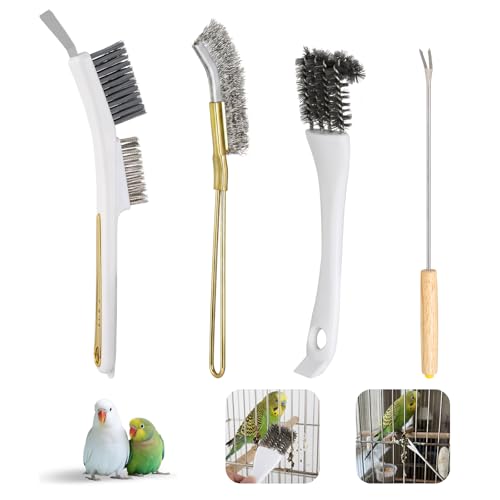
Poop-Off Bird Poop Remover with Brush Top
Enzyme formula that breaks down dried droppings welded onto cage bars, perches and nearby walls. Household sprays either fail at that job or are unsafe in the same airspace as a bird. Brush top lets you scrub while applying, which is often the difference between cleaning weekly and putting it off.
Pros
- Lifts dried droppings that water leaves behind
- Brush head speeds up cage bar cleaning
- Safe around birds once surfaces are rinsed
Cons
- Scent is noticeable while the enzymes work
- Bird still needs to be out of the room

Polly’s Pet Products Sand Walk Bird Perch
Sand textured surface files nail tips down during ordinary perching, stretching the gap between clippings. Diameter changes along the length, so the foot flexes instead of holding one shape all day. Mount it away from the food bowl and the sleeping spot, because standing on abrasive texture around the clock irritates skin.
Pros
- Cuts how often nails need trimming
- Changing diameter exercises the foot
- Bolts through the cage bars in minutes
Cons
- Irritates feet if used as the sleeping perch
- Texture traps debris and needs regular scrubbing
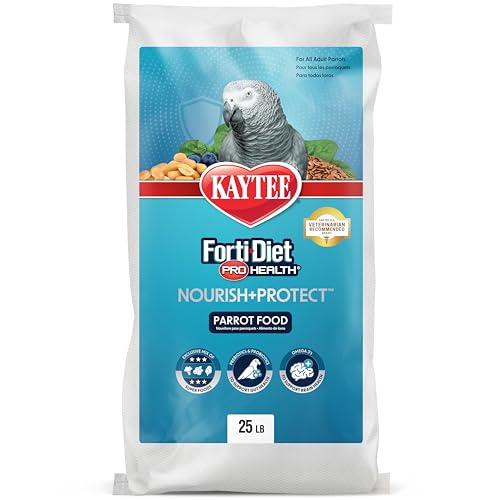
Kaytee Forti-Diet Pro Health Cuttlebone
Clips to the bars and gives a caged bird calcium plus something firm to work a beak against. Hens in lay draw down calcium reserves quickly, which makes constant access worth having. Swap it out once the surface is soiled or worn thin.
Pros
- Steady calcium source that lasts weeks
- Gives the beak useful work between meals
- Matters most for hens in lay
Cons
- Some birds ignore it entirely at first
- Needs replacing as soon as it is soiled
The lineup, side by side
| # | Model | Type | Best for | Score | Price |
|---|---|---|---|---|---|
| 1 | ZuPreem FruitBlend Flavor Pellets for Small Birds | Extruded complete pellet | Best overall | 9.4 | Check price |
| 2 | Zoo Med AvianSun 5.0 UVB Compact Fluorescent Lamp | UVA and UVB, 5.0 strength | Best for indoor light | 9.2 | Check price |
| 3 | Nekton-S Multi-Vitamin for Birds | Fine soluble powder | Best supplement | 9.0 | Check price |
| 4 | Kaytee Forti-Diet Pro Health Parakeet Food | Fortified seed and pellet blend | Best value | 8.8 | Check price |
| 5 | Poop-Off Bird Poop Remover with Brush Top | Enzyme based cleaner | Best for cage hygiene | 8.5 | Check price |
| 6 | Polly’s Pet Products Sand Walk Bird Perch | Sand textured grooming surface | Best for nail and foot health | 8.2 | Check price |
| 7 | Kaytee Forti-Diet Pro Health Cuttlebone | Calcium and beak conditioning surface | Best budget | 8.0 | Check price |
Before you buy
Does an indoor bird need pellets or seed? Seed only bowls sit behind a large share of companion bird health problems. Birds eat the fatty sunflower and millet first and leave the rest, so what the bag claims never matches what goes into the bird. Formulated pellets remove that choice, since every piece is identical. Where a bird will not switch, a fortified mix plus fresh vegetables and a soluble supplement is a defensible second position. Plan the conversion over several weeks of gradual mixing rather than an overnight swap.
Why window light is not the same as daylight Glass filters out the UVB wavelengths birds use to synthesise vitamin D3. A cage in the brightest room of the house therefore receives none of it. Running a 5.0 UVB lamp on a timer, mounted at the distance the manufacturer states, closes that gap in a few hours a day. Output drops off long before the tube stops giving visible light, so replace on schedule instead of waiting for failure. Birds already eating complete pellets get supplemented D3 in food, which lowers the stakes.
How to keep cage air safe indoors Avian lungs move air far more efficiently than ours, which also makes birds unusually vulnerable to whatever floats through a room. Overheated non stick cookware is the sharpest hazard, and aerosols, scented candles, air fresheners and strong cleaners follow close behind. Use enzyme cleaners formulated for bird areas, work while the bird is in another room, then ventilate before bringing it back. Daily tray liners cut the dander and dust circulating in a closed house.
Perches, cuttlebone and how birds wear down beaks and nails Cages ship with uniform dowel perches that hold a foot in one position for hours, which contributes to pressure sores. Mix diameters instead, combining a natural wood branch, a plain perch and one grooming surface. Cuttlebone and mineral blocks give the beak something to grind against. Hookbills such as budgies and cockatiels shell their seed and need no insoluble grit, and free access to it risks impaction.
Common questions
Do indoor birds need a UVB lamp?
It genuinely helps, since window glass blocks the wavelengths involved in vitamin D3 synthesis. Birds fed complete pellets already receive supplemented D3, so seed fed birds and birds in dim rooms benefit most. Run it on a timer at the stated distance rather than continuously.
How do you switch a bird from seed to pellets?
Slowly, over several weeks, mixing a rising proportion of pellets into the familiar seed. Birds will starve rather than eat something they do not recognise as food, so weigh the bird and watch droppings throughout. Flavoured pellets go down more readily than plain ones.
Is cuttlebone enough calcium on its own?
For many birds it covers the need and conditions the beak at the same time, but only if the bird actually uses it. Hens in lay have far higher demand and often need a dedicated supplement. Where a bird ignores cuttlebone completely, a soluble mineral supplement is the practical alternative.
Which household items are dangerous to pet birds?
Overheated non stick cookware tops the list, because the fumes can kill quickly. Aerosols, scented candles, air fresheners, strong cleaners and cigarette smoke all pose real respiratory risk. On the food side, avocado, chocolate, caffeine, alcohol and onion are the main dangers.
How often should a bird cage be cleaned?
Change the tray liner daily and wipe food and water dishes at the same time. Scrub bars and perches properly once a week. Dried droppings need an enzyme cleaner rather than plain water, and the bird should be out of the room until everything is rinsed and dry.
Do budgies and cockatiels need grit?
Hookbills shell their seeds before swallowing, so insoluble grit serves no purpose and free access can cause impaction. Finches and canaries swallow seed whole and can take a small amount. When unsure, offer cuttlebone or a mineral block instead of loose grit.
Can vitamin drops go in the water long term?
Use them for a defined reason such as moulting, recovery or a seed based diet, not permanently alongside complete pellets where over supplementation becomes the risk. Vitamin water also spoils faster and needs changing daily, which is why many owners dose soft food instead.
What are the first signs an indoor bird is unwell?
Birds hide illness, so the signals are subtle. Look for fluffed feathers during the day, tail bobbing while breathing, reduced vocalisation, changed droppings and time spent on the cage floor. Any of these justify a prompt call to an avian vet, because visible symptoms usually mean the problem is advanced.
Which is better for indoor birds, pellets or a fortified seed mix?
Pellets win on consistency, because a bird cannot sort them and eat only the fatty pieces. A fortified mix is the fallback for birds that refuse to convert, and it works best with fresh vegetables and a soluble supplement alongside.
How do you stop a bird’s nails getting too long?
Fit one grooming perch with a textured surface and mount it away from the sleeping and feeding spots. Nails then wear during normal movement. Cages using only smooth dowels leave clipping as the only option, which is stressful for most birds.
The bottom line
ZuPreem FruitBlend Flavor Pellets deliver the single biggest change for an indoor bird, because identical pellets end selective feeding outright. Add the Zoo Med AvianSun 5.0 UVB Compact Fluorescent Lamp on a timer to replace what window glass filters out. Keep a Kaytee Forti-Diet Pro Health Cuttlebone clipped to the bars as a constant calcium source.