Travelling With a Bird: The Health Kit Essentials
The Prevue Pet Products Travel Bird Cage is our overall pick for its secure, ventilated design at a manageable size. The Wingabago Deluxe Bird Carrier suits soft sided travel, and the Lixit Quick Lock Water Bottle solves the spilled water dish problem entirely.
If you need to move a budgie, cockatiel or similar companion bird safely, the Prevue Pet Products Travel Bird Cage is the sensible core purchase, with the Wingabago Deluxe Bird Carrier the better soft sided option and the Lixit Quick Lock Water Bottle the item that stops a wet, chilled bird arriving at the other end.
Travel supplies for birds are harder to choose than they look because the priorities invert: the roomy cage that is right at home becomes dangerous in a moving vehicle, where a bird needs containment and a stable perch rather than space to fly. We compared door security, ventilation, perch design, water delivery and weight, then ranked the seven below. Anything beyond routine transport, including sedation or travel for an unwell bird, is a conversation for an avian vet.
The shortlist, ranked

Prevue Pet Products Travel Bird Cage
A compact wire travel cage with a secure latching door, a low mounted perch and a pull out tray, sized so a bird cannot build up speed inside it during a journey. That restriction is deliberate and protective rather than a limitation. Owners report the folding handle and slide out tray make vet trips and overnight stays considerably less stressful than improvising with a box.
Pros
- Restricted size prevents injury during movement
- Slide out tray makes cleaning quick
- Secure latch resists a determined beak
Cons
- Open wire offers little draught protection in a car
- Not suitable as a long term living cage

Wingabago Deluxe Bird Carrier
A soft sided carrier designed specifically for birds rather than adapted from a cat carrier, with mesh panels for ventilation, an interior perch and a wipe clean base. The soft sides absorb road vibration better than a rigid cage. Owners report it is far easier to carry any distance than a wire cage, which matters at an airport or on public transport.
Pros
- Purpose built for birds rather than adapted
- Soft sides damp road vibration
- Comfortable to carry over distance
Cons
- Fabric absorbs odours over time
- Less rigid protection than a wire cage in an impact

A and E Cage Company Acrylic Travel Bird Carrier
A rigid carrier with clear acrylic panels and ventilation holes, so the bird can see out and you can check on it without opening anything. The solid panels block draughts, which is a genuine advantage in a cold car. Owners report it is easy to clean and that the clear sides help nervous birds settle once they can see their surroundings.
Pros
- Blocks draughts better than wire
- Easy visual checks without opening
- Smooth interior wipes clean quickly
Cons
- Heats up quickly if left in sunlight
- Heavier than a soft sided carrier

Lixit Quick Lock Bird Water Bottle
A sipper style water bottle that locks to the cage bars and delivers water through a ball valve, so nothing sloshes out on a journey and the bird does not arrive soaked and chilled. Birds need to be introduced to a bottle before the trip rather than on the day. Owners report keeping a familiar dish available at home for a week alongside the bottle until the bird uses it confidently.
Pros
- Eliminates spillage during transport
- Keeps water clean of droppings and seed
- Clear body shows the level at a glance
Cons
- Bird must be trained to use it in advance
- Valve needs checking regularly for blockage

The Aviator Bird Harness and Leash
A figure of eight harness with an integrated leash designed to allow supervised time outside a cage without the risk of a bird flying off, which is the single worst outcome of travel. It requires patient training over weeks rather than being fitted on the day. Owners report the training period is the whole task, and that a bird forced into a harness quickly will refuse it thereafter.
Pros
- Prevents the worst travel outcome, a lost bird
- Sized ranges cover small to large species
- Allows genuine enrichment away from the cage
Cons
- Requires weeks of patient training
- Never suitable as a substitute for a carrier in transit

Nekton-Biotic Bird Probiotic Supplement
A powdered probiotic preparation intended to support gut flora, which is relevant around travel because a change of routine, water and environment commonly upsets a bird’s digestion. It is sprinkled onto soft food rather than dosed in water. Any change in droppings that persists beyond a day or two is a reason to see an avian vet rather than to keep supplementing.
Pros
- Targeted at a genuine travel related issue
- Small doses suit small companion birds
- Travels easily as a sealed powder
Cons
- Not a treatment for illness
- Needs to be given with food the bird will actually eat
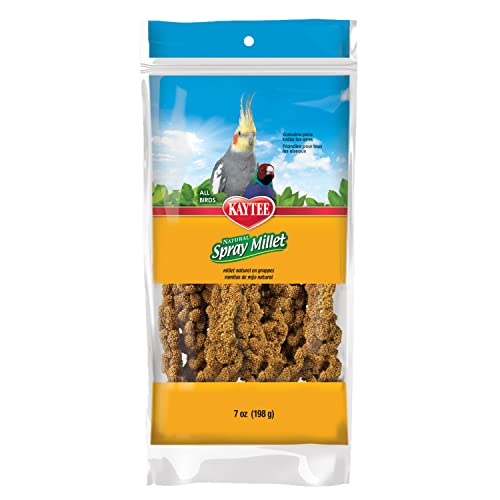
Kaytee Spray Millet Bird Treat
Natural millet sprays, which are highly palatable and are often the one thing a stressed bird will still eat when it refuses its normal diet in an unfamiliar place. Clipping a spray inside the carrier gives the bird something familiar to focus on. Owners report using it sparingly at home so it retains its appeal for exactly these situations.
Pros
- Almost universally accepted by small birds
- Gives a stressed bird something familiar
- Costs very little and stores well
Cons
- A treat rather than nutrition
- Overuse at home reduces its value when travelling
How to pick the right one
Smaller is safer in a moving vehicle The instinct to give a bird plenty of room in transit is exactly wrong. In a moving car, a large cage lets a startled bird take flight and hit the bars, and a tall cage lets it fall a damaging distance. A properly sized travel cage or carrier keeps the bird close to a stable low perch, so sudden braking results in a stumble rather than an injury. Fit the perch low and securely, and remove any swinging toys and heavy ceramic dishes that can become projectiles.
Solve water before the day of travel An open water dish empties within minutes on a journey, and a wet bird in a moving car chills fast. A sipper bottle solves it, but only if the bird already knows how to use one, which takes time. Introduce the bottle at home a week or two ahead, alongside the familiar dish, and only remove the dish once you have watched the bird drink from the bottle. For short trips, many owners simply offer water at stops and provide moisture rich foods such as cucumber or melon in the carrier instead.
Temperature and draughts matter more than distance Birds tolerate a fairly narrow temperature range and are very sensitive to draughts, so a wire cage in the back of a car with air conditioning blowing across it is a real problem even on a short trip. Cover part of the carrier with a light breathable cloth to block draughts while leaving ventilation, secure it with a seat belt away from direct airflow and direct sun, and never leave a bird in a parked vehicle. A rigid carrier with solid sides handles cold better, while a mesh sided one handles heat better.
Plan the paperwork and the destination in advance Air travel with a bird involves airline specific rules, carrier dimension limits and often a health certificate from a vet within a set number of days. Crossing state or national borders can add permits, and some species face additional restrictions. Check every requirement well ahead, since these are not things that can be arranged at the airport. At the destination, look up the nearest avian vet before you need one, and take a photograph of your bird and a note of any leg band or microchip details in case it escapes.
The lineup, side by side
| # | Model | Type | Best for | Score | Price |
|---|---|---|---|---|---|
| 1 | Prevue Pet Products Travel Bird Cage | Wire travel cage with tray | Best overall | 9.4 | Check price |
| 2 | Wingabago Deluxe Bird Carrier | Soft sided carrier | Best soft sided carrier | 9.2 | Check price |
| 3 | A and E Cage Company Acrylic Travel Bird Carrier | Rigid acrylic carrier | Best visibility | 9.0 | Check price |
| 4 | Lixit Quick Lock Bird Water Bottle | Sipper bottle with ball valve | Best travel water source | 8.8 | Check price |
| 5 | The Aviator Bird Harness and Leash | Figure of eight harness with leash | Best for outdoor safety | 8.6 | Check price |
| 6 | Nekton-Biotic Bird Probiotic Supplement | Powder for soft food | Best digestive support | 8.3 | Check price |
| 7 | Kaytee Spray Millet Bird Treat | Natural millet spray | Best budget appetite aid | 8.0 | Check price |
Good to know
Should I use my bird’s normal cage for travel?
No. A full sized cage is dangerous in a moving vehicle because it gives a startled bird room to fly into the bars and height to fall from. Use a properly sized travel carrier with a low secure perch, and set the normal cage up at the destination if you are staying more than a night.
How do I keep my bird calm during a car journey?
Cover part of the carrier with a light breathable cloth to reduce visual stimulation while keeping ventilation, secure it so it cannot slide or tip, keep the car temperature steady, and keep music and conversation low. Familiar items such as a favourite perch or a millet spray help. Most birds settle within the first twenty minutes if the carrier is stable.
Can I give my bird water from a dish while driving?
Not while moving. It will spill, soak the bird and chill it. Use a sipper bottle the bird has already learned to use, or stop at intervals and offer a dish while stationary. Moisture rich fresh foods are a useful supplement on shorter trips.
Do I need a health certificate to fly with a bird?
Frequently yes. Most airlines that accept birds require a certificate of veterinary inspection issued within a specific window before travel, and crossing borders can add permits and species specific restrictions. Requirements vary by airline and destination, so confirm them directly and well in advance.
Should my bird be sedated for travel?
That is a decision for an avian vet, and for most healthy birds it is neither necessary nor advisable. Sedation carries its own risks in small birds. Preparation, a properly sized carrier and a calm environment address the problem more safely. Never give a bird any human medication.
How do I get my bird used to the carrier?
Start days or weeks ahead. Put the carrier near the cage with the door open and a favourite treat inside so the bird explores it voluntarily. Progress to closing the door briefly, then to short trips around the house, then a short drive. A bird that has only ever seen the carrier on the way to the vet will always associate it with stress.
What should be in a bird travel kit?
The carrier, a familiar perch, a sipper bottle plus a spare dish, a portion of the bird’s normal food, millet or another accepted treat, paper liners, a light breathable cover, cleaning wipes, and the contact details of both your own vet and an avian vet near your destination. A photograph of your bird and any band or microchip number is worth having too.
What signs of stress should I watch for?
Rapid open mouthed breathing, prolonged fluffing, refusal to eat or drink for more than a few hours, and unusual silence in a normally vocal bird. Minor stress settles once the environment is stable. Persistent laboured breathing, a change in droppings lasting more than a day, or lethargy at the bottom of the carrier are reasons to contact an avian vet promptly.
Our take
The Prevue Pet Products Travel Bird Cage is the core purchase for anyone moving a small bird regularly, since a correctly sized cage with a low perch prevents the injuries a full sized cage invites. Add the Wingabago Deluxe Carrier if you will be carrying the bird any real distance, and get a Lixit Quick Lock Water Bottle in use at home weeks before you actually need it.


