Bird Ladders Compared by Rung Spacing, Wood and Grip
Penn-Plax Bird Life Wooden Ladder leads because its rung spacing works for budgies through small conures and it anchors at both ends. Prevue Pet Products Bird Ladder does the same job in a plainer build. Super Bird Creations Rainbow Bridge Ladder holds up to bigger parrot beaks.
Penn-Plax Bird Life Wooden Ladder suits the widest range of cages, with rung spacing that works from budgies through small conures. Prevue Pet Products Bird Ladder covers the same job in a plainer build that is easy to replace often. Larger beaks are better served by the Super Bird Creations Rainbow Bridge Ladder.
Two failure modes hide in every product photo. Spacing sized for a conure leaves a budgie stretching between rungs, and a ladder anchored at one end only swings when a bird steps on. Nervous birds abandon a swinging ladder for good. We compared rung spacing, wood type, surface texture, mounting hardware and chew resistance, then matched each ladder to a bird size and cage layout.
How to choose
What to look for in a bird ladder Four things decide whether a ladder gets used at all. Rung spacing has to match the bird’s stride, the wood has to be safe to chew, both ends need anchoring, and the length has to fit without blocking a perch. Untreated hardwood and stainless hooks are the safe default across every one of those. Get the first two right and the rest is fitting work.
Which rung spacing suits budgies, cockatiels and parrots? Close spacing works for budgies, finches and canaries, whose stride is short. Cockatiels and small conures need moderate gaps, and larger parrots want wider gaps on thicker rungs their feet can wrap around. A bird should step from one rung to the next without stretching or bunching its toes. Wrong spacing is not simply ignored either, since a missed step can drop a bird onto the tray. Keeping several species means a ladder per cage rather than one compromise size.
Are dyed wood and rope ladders safe for birds? Dye is fine where the maker states it is vegetable based and bird safe, which established bird toy brands do. Stains, varnishes and general purpose paints belong nowhere near a cage, because birds chew what they climb. Rope should be natural fibre or tightly woven cotton and needs weekly inspection. Loose threads wrap around toes and get swallowed, so trim any fraying as soon as it shows.
Where to hang a ladder and when to replace it Keep a ladder out from under a perch, or it collects droppings continuously. Angle it between two levels the bird already uses instead of pinning it flat against a wall. Wood is porous and never fully sterilises, so scrub with a bird safe cleaner, dry it completely, and retire it once it is stained or heavily chewed. Rotating two ladders keeps a cage interesting and gives each one time to dry.
The best picks, ranked

Penn-Plax Bird Life Wooden Ladder
Untreated hardwood rungs spaced for small and medium birds, with hooks at the top and the bottom. Anchoring both ends removes the swing that stops nervous birds climbing at all. Moderate chewing barely marks the wood, though a determined large parrot will reduce any wooden ladder to splinters.
Pros
- Hooks at both ends stop the ladder swinging
- Spacing fits budgies through small conures
- Bare wood with no dye or varnish
Cons
- Large parrots chew through it quickly
- Porous wood absorbs droppings and needs replacing

Prevue Pet Products Bird Ladder
Plain wooden ladder from a cage brand that has been making them for decades, sold in lengths matched to standard cage heights. Nothing has to be cut or trimmed to make one fit. Rungs finish smooth rather than textured, which suits steady climbers more than clumsy ones.
Pros
- Standard lengths drop into common cages
- Plain enough to treat as a consumable
- Hook mounting takes seconds
Cons
- Smooth rungs give less grip than bark
- Basic hooks can be worked loose by clever beaks
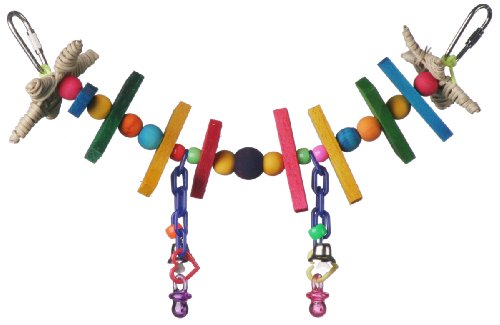
Super Bird Creations Rainbow Bridge Ladder
Chunky wood blocks threaded onto rope, built for birds that chew everything they stand on. Coloured blocks pull attention away from cage bars, so it earns its space as enrichment and not only as a route between levels. Check the rope weekly, because frayed fibres catch toes.
Pros
- Block thickness stands up to bigger beaks
- Works as chew enrichment as well as a climb
- Clip ends attach to most cage bar spacings
Cons
- Rope frays and needs weekly inspection
- Too bulky for budgies and finches
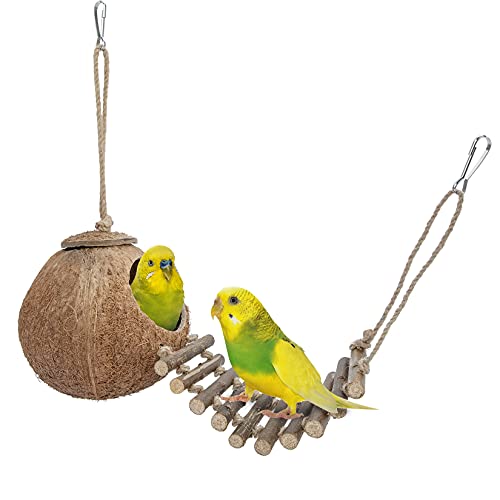
Niteangel Natural Wood Bird Ladder
Irregular branch sections replace machined dowels, so a foot grips a different diameter on every step. That variation is the whole argument for natural wood, since uniform rungs hold the toes in one shape. Slight flex comes with it, which confident climbers ignore and timid birds need a few days to trust.
Pros
- Varying diameters support foot health
- Bark surface gives reliable grip
- Fits a cage furnished with natural branches
Cons
- Flexes more than a rigid dowel ladder
- Bark flakes down into the cage tray

Trixie Natural Living Bird Ladder
Short and narrow build for cages where a full length ladder would block a perch or a flight path. Vertical space runs out fast in a compact cage, and this fits what is left. Wood is untreated according to the listing, which matters because birds chew whatever they climb.
Pros
- Fits cages that longer ladders overwhelm
- Narrow width preserves flight room
- Untreated wood with no surface coating
Cons
- Too short to span a tall flight cage
- Light build will not survive an active chewer

Kathson Bird Cage Ladder Bridge
Flexible slat bridge that curves between two anchor points instead of running up a cage wall. Horizontal movement across a wide cage is what it encourages, which a straight ladder never does. Hang it with a gentle sag rather than pulled tight, and confident climbers take to it within a day.
Pros
- Promotes horizontal movement across the cage
- Curves to fit between any two perches
- Repositions easily when the layout changes
Cons
- Timid birds need time to trust the flex
- Rope and wire need checking for wear

Hamiledyi Bird Ladder Perch
Arrives as a set with extra perches, which furnishes an empty cage in a single order. Individual pieces are modest in build, and that is the trade made for a bundle. Treat the whole set as consumables and swap pieces out every few months.
Pros
- Fits out a new cage in one order
- Mixes climbing and perching pieces
- Sizes suit budgies, finches and canaries
Cons
- Build quality varies piece to piece
- Short lifespan with an active chewer
Compared at a glance
| # | Model | Material | Best for | Score | Price |
|---|---|---|---|---|---|
| 1 | Penn-Plax Bird Life Wooden Ladder | Untreated hardwood | Best overall | 9.4 | Check price |
| 2 | Prevue Pet Products Bird Ladder | Natural wood | Best value | 9.2 | Check price |
| 3 | Super Bird Creations Rainbow Bridge Ladder | Wood blocks on rope | Best for larger parrots | 9.0 | Check price |
| 4 | Niteangel Natural Wood Bird Ladder | Natural branch wood with bark | Best natural branch style | 8.8 | Check price |
| 5 | Trixie Natural Living Bird Ladder | Untreated wood | Best for small cages | 8.6 | Check price |
| 6 | Kathson Bird Cage Ladder Bridge | Flexible bridge ladder | Best for connecting perches | 8.3 | Check price |
| 7 | Hamiledyi Bird Ladder Perch | Multipack with perches | Best budget multipack | 8.0 | Check price |
Good to know
Do birds actually use ladders?
Most climbing species do, especially parrots and budgies that move through branches using beak and feet together. Finches and canaries often prefer flying between perches and leave a ladder alone. Placing a favourite treat at the top for a few days usually starts the habit.
What rung spacing does my bird need?
Close spacing for budgies, finches and canaries, moderate spacing for cockatiels and conures, and wider gaps on thicker rungs for larger parrots. Watch the bird step between rungs. Stretching or bunched toes both mean the spacing is wrong.
Is painted or dyed wood safe for birds?
Only where the manufacturer states the dyes are vegetable based and bird safe, which reputable toy brands publish. Anything stained, varnished or coated with general purpose paint should stay out of a cage, since birds chew every surface they climb.
How often should a wooden bird ladder be replaced?
Once it is heavily chewed, splintered or stained past what cleaning fixes, which lands anywhere from a few months to a year depending on the bird. Porous wood cannot be fully disinfected, so treating ladders as consumables is the safer approach.
Can a ladder stay in the cage all the time?
Yes, provided both ends are fixed and it sits clear of flight paths and away from directly under a perch. Swapping between two ladders occasionally keeps the environment stimulating and lets each piece dry fully after a scrub.
Are rope ladders safe for parrots?
They are popular and fine under supervision, but frayed rope is a genuine hazard because toes and beaks tangle in loose fibre. Inspect rope weekly and trim or replace the moment fraying appears.
Where should a ladder go in a bird cage?
Angle it between two levels the bird already uses rather than running it vertically, and keep it out from under a perch to reduce soiling. Leaving clear space for wing movement matters more than fitting the longest ladder available.
Will a ladder help a bird that cannot fly?
It gives a clipped or older bird a safe route between levels and useful exercise. For birds with mobility problems, a gently angled ladder with close rungs and a textured grip surface is far easier than a steep one.
Which is better, a straight ladder or a flexible bridge?
Straight ladders link levels vertically and suit tall cages. Flexible bridges span two perches horizontally and encourage sideways movement in a wide cage. Timid birds settle into a rigid ladder faster, while confident climbers enjoy the flex.
How do you get a bird to start using a new ladder?
Clip a millet spray or a favourite treat at the top for the first few days. Position the ladder near a route the bird already takes, and make sure both ends are anchored so nothing moves underfoot. Most birds test it within a week.
The bottom line
Penn-Plax Bird Life Wooden Ladder fits the widest range of common pet birds and stays still enough that cautious ones will climb it. Bigger beaks get far more life out of the Super Bird Creations Rainbow Bridge Ladder. Anyone furnishing a cage from scratch can start with the Prevue Pet Products Bird Ladder and replace it as it wears.