Cat Bowls Compared for Whisker Comfort and Grip
Necoichi Raised Cat Food Bowl wins overall for its tilted, elevated design and easy cleaning. Y YHY Ceramic Raised Cat Bowl Set is the better value for multi-cat homes, and Dr. Catsby Stainless Steel Whisker Relief Bowl targets cats that leave food around the edges.
Necoichi Raised Cat Food Bowl is the dish most cats settle into fastest, with the Y YHY ceramic set covering multi-cat households and the Dr. Catsby whisker relief bowl solving the specific problem of food pushed to the rim.
The two most common cat bowl complaints, food left around the edges and mess on the floor, come from opposite causes. Whisker contact makes some cats avoid deep bowls entirely. An unstable dish slides across tile the moment a cat leans in. We compared published dimensions, materials and stability features alongside what owners report about fussy eaters to rank these seven.
What matters most
Why does bowl depth matter more than size? Whiskers carry dense nerve endings, and a deep narrow bowl presses on them with every bite. A cat that eats only the middle and leaves a ring of food around the edge is showing a classic sign of whisker fatigue. Pawing food onto the floor is another. A wide, shallow dish removes the problem entirely, which is why several picks here center on that one idea.
Does height and tilt help older cats? Raising a bowl a few inches means a cat does not crouch and bend its neck downward through a whole meal. That is a comfort question for a healthy young cat and a welfare question for an arthritic one. A slight forward tilt goes further by keeping food gathered at the low edge instead of spread toward the rim. Vets often recommend this combination for senior cats specifically.
Which material avoids odours and chin acne? Ceramic and stainless steel are non porous, wash easily and resist holding food smells. Plastic scratches over time, and those scratches trap bacteria and oils that vets often link to feline chin acne. Switching to stainless or glazed ceramic, washed daily, is the standard first step if a cat develops chin bumps.
How do you stop a bowl from sliding? A light bowl on tile becomes a hockey puck the moment a cat leans in. Weight, a rubber base ring or a separate silicone mat all fix it, and a mat has the bonus of catching spills and stray kibble. In multi-cat homes, spacing bowls apart matters as much as the bowl itself, since cats generally avoid eating shoulder to shoulder.
What we recommend

Necoichi Raised Cat Food Bowl
A shallow ceramic dish sits on a short raised stand with a slight tilt toward the cat, addressing whisker contact and neck strain in one design. Glazed ceramic wipes clean and resists holding odours the way plastic can. Owners report it suits older cats and cats that regurgitate after eating too quickly.
Pros
- Shallow tilted dish keeps whiskers clear
- Raised height eases neck and joint strain
- Ceramic resists odours and stains
Cons
- Ceramic can chip if knocked off a counter
- Capacity is small for large meal portions
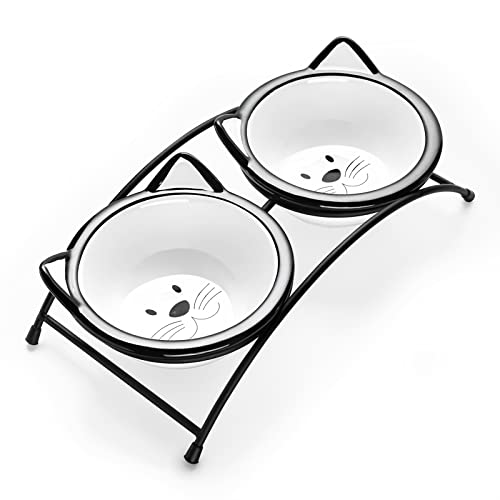
Y YHY Ceramic Raised Cat Bowl Set
Two wide, shallow ceramic bowls on raised bases arrive together, which suits separate food and water stations or a two-cat home. A generous rim gives cats somewhere to rest their chin without dipping whiskers into the food. Owners report the weight keeps both bowls planted during enthusiastic eating.
Pros
- Two bowls covers food and water in one buy
- Heavy enough to resist sliding
- Wide shallow shape suits most cats
Cons
- Heavier to lift and rinse daily
- Raised height is modest compared with stands
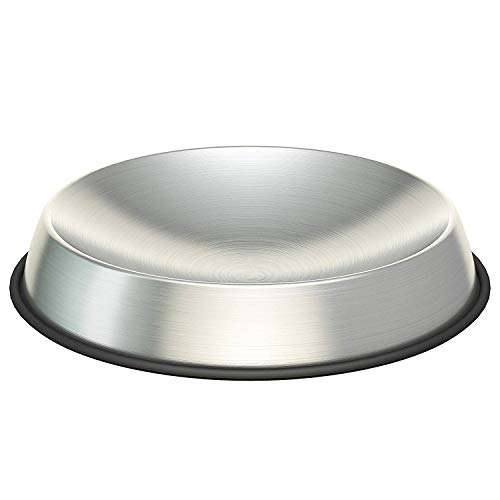
Dr. Catsby Stainless Steel Whisker Relief Bowl
This bowl was built around a single idea: sides wide and shallow enough that whiskers never brush them. Food stays centered rather than pushed to the edges, the visible sign a cat is uncomfortable. Stainless steel sanitizes more easily than any other material here, and an included silicone mat stops the dish from skating.
Pros
- Shallow profile eliminates whisker contact
- Stainless steel is easy to sanitise
- Included mat controls sliding
Cons
- Metal can rattle on hard floors
- Single bowl only, no water pairing
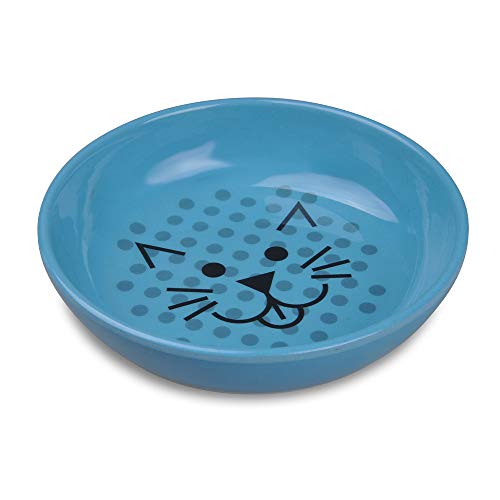
Van Ness Ecoware Non-Skid Cat Dish
Van Ness has produced this pattern for years, and it remains the sensible cheap option with a moulded non-skid base and a shallow profile most cats accept. Ecoware material is made partly from renewable resources and rinses clean easily. Light weight means a determined cat can still shift it across a slick floor.
Pros
- Very affordable for a shallow design
- Non skid ring works on tile and wood
- Light enough to rinse one handed
Cons
- Light weight means a strong cat can move it
- Surface scratches over years of use
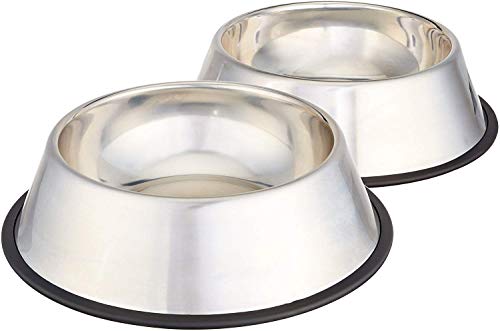
Amazon Basics Stainless Steel Pet Bowl
For cats with chin acne, a smooth stainless bowl that runs through the dishwasher daily is often the practical answer. Several sizes are available, so a shallow small option replaces a deep dog-style dish. Owners report the rubber base ring holds position better than bare metal bowls without one.
Pros
- Non porous surface suits chin acne concerns
- Survives daily dishwasher cycles
- Inexpensive to buy several
Cons
- Deeper sizes cause whisker contact
- No raised height option

Kitty City Raised Cat Food Bowl
Raising the dish shortens how far a cat has to crouch, which matters for older cats with stiff joints or arthritis. Kitty City keeps the dish removable, so cleaning does not mean carrying the whole stand to the sink. Owners report the height suits average-sized adult cats better than kittens.
Pros
- Elevation helps stiff or senior cats
- Removable dish simplifies washing
- Stable footprint on hard floors
Cons
- Plastic stand can hold odour over time
- Too tall for kittens and small breeds
Neater Pets Slow Feed Cat Bowl
Cats that inhale a meal and bring it back up often do better with a maze-style bowl that forces smaller mouthfuls. Raised ridges spread kibble out, so the cat has to work between bites. Owners report the design works well with dry food, though wet food is harder to clean out of the channels.
Pros
- Slows down cats that eat too quickly
- Non slip feet keep it in place
- Works well with dry kibble
Cons
- Channels are fiddly to clean with wet food
- Some cats give up rather than persist
Compared at a glance
| # | Model | Material | Best for | Score | Price |
|---|---|---|---|---|---|
| 1 | Necoichi Raised Cat Food Bowl | Glazed ceramic | Best overall | 9.4 | Check price |
| 2 | Y YHY Ceramic Raised Cat Bowl Set | Ceramic | Best value | 9.2 | Check price |
| 3 | Dr. Catsby Stainless Steel Whisker Relief Bowl | Stainless steel | Best for whisker fatigue | 9.0 | Check price |
| 4 | Van Ness Ecoware Non-Skid Cat Dish | Ecoware composite | Best budget | 8.8 | Check price |
| 5 | Amazon Basics Stainless Steel Pet Bowl | Stainless steel | Best for easy cleaning | 8.6 | Check price |
| 6 | Kitty City Raised Cat Food Bowl | Plastic stand, removable dish | Best for senior cats | 8.3 | Check price |
| 7 | Neater Pets Slow Feed Cat Bowl | Plastic | Best for fast eaters | 8.0 | Check price |
Common questions
Why does my cat leave food around the edge of the bowl?
That pattern usually signals whisker contact with the sides. A wider, shallower bowl, such as the Dr. Catsby or Necoichi designs, typically stops it within a few meals.
Are raised cat bowls better than flat ones?
They reduce neck bending and can help cats that regurgitate after eating or have joint stiffness. Healthy young cats do fine either way, so raise the bowl mainly for older or very fast eaters.
Ceramic, stainless steel or plastic: which is best for cat bowls?
Ceramic and stainless steel stay easier to keep hygienic because they are non porous. Plastic costs less but develops scratches that hold bacteria, and it is the material most often linked to chin acne.
How often should cat bowls be washed?
Wash food bowls daily and water bowls at least every other day. Wet food residue and biofilm build up quickly, and many cats refuse a bowl that smells stale.
Should cat food and water bowls sit apart?
Many cats prefer it, and some drink noticeably more when water sits away from the feeding station. If a cat paws at the water or spills it, try moving the water bowl to another room.
Do slow feed cat bowls actually work?
For most fast eaters, yes, because the ridges force smaller mouthfuls. A minority of cats give up and walk away, so watch the first few meals to confirm intake stays normal.
How many bowls does a multi-cat home need?
Common guidance is one feeding station per cat plus one spare, spaced apart. Cats guard resources quietly, and separate stations reduce tension owners might not otherwise notice.
Can cat bowls go in the dishwasher?
Stainless steel and glazed ceramic handle normal cycles well. Plastic and composite bowls should go on the top rack, since high heat on the lower rack can warp them.
Our take
Necoichi Raised Cat Food Bowl solves whisker contact and neck strain together, which covers the two complaints that make cats fussy about a dish. Multi-cat homes get better value from the Y YHY ceramic set, and cats that push food to the edges respond best to the Dr. Catsby whisker relief bowl.


