What Makes a Good Nest Box for Your Backyard Birds?
Nature’s Way Cedar Bluebird Box House leads on airflow and a side viewing door. JCs Wildlife Ultimate Bluebird House adds a recessed floor and deep entry that blocks reaching predators. Kettle Moraine Bluebird House covers the essentials in solid cedar. Match the hole diameter to your target species first.
Cavity nesters want a dry, shaded box with a hole sized to their species. Nature’s Way Cedar Bluebird Box House handles that best overall, pairing vent gaps and drain holes with a side door. Chicks sit deeper and safer inside the JCs Wildlife Ultimate Bluebird House, while Kettle Moraine Bluebird House keeps plain cedar simple.
Hole diameter alone decides whether bluebirds, wrens or starlings claim the box. Heat and standing water cause most of the rest of the losses. We compared listed materials, vent and drain detail, entrance sizing and how each panel opens for end of season cleanout. Owner reports on repeat occupancy and how the wood weathered settled the close calls.
The shortlist, ranked

Nature’s Way Cedar Bluebird Box House
Untreated cedar walls hold heat more steadily than thin pine panels. Vent gaps sit high under the roof, and drilled floor holes let rain run out instead of pooling under the nest. A side door swings open for cleanout and for brief brood checks. Its 1.5 inch hole suits bluebirds and tree swallows.
Pros
- Vent gaps and floor drainage built in
- Side door opens for fast cleanout
- Untreated cedar resists rot
Cons
- Mounting pole not included
- Hole size rules out larger species
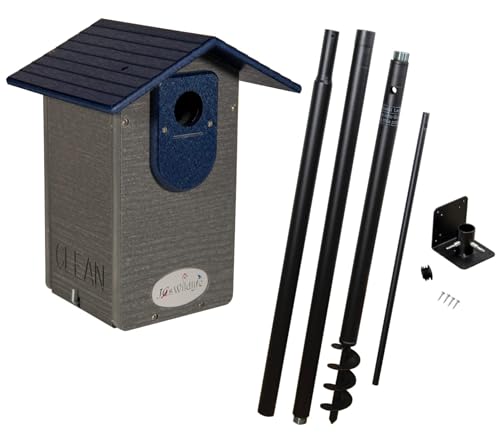
JCs Wildlife Ultimate Bluebird House
Recessing the floor above the base sets eggs further from a raccoon paw at the hole. Depth at the entry works the same way, adding distance a reaching predator cannot cover. A full front panel drops open, so scraping out old grass takes seconds. Cedar and composite construction shrugs off wet springs.
Pros
- Deep entry keeps paws off the nest
- Generous venting and drainage
- Front panel gives full cleanout reach
Cons
- Heavier than a plain cedar box
- Bulk needs a sturdy post

Kettle Moraine Bluebird House
Plain cedar boards and a hinged front cover what nesting birds actually need. Drainage holes sit in the floor, and the 1.5 inch hole keeps starlings out while letting bluebirds through. Nothing here is decorative, which is why it arrives ready to hang and stays serviceable for years.
Pros
- Solid cedar at entry level cost
- Hinged front swings clear for cleaning
- Correct hole size for bluebirds
Cons
- Venting is minimal for hot climates
- Unfinished look suits rustic yards only

Woodlink Coppertop Cedar Wren House
Copper sheeting over the roof sheds rain and weathers to a dull patina outdoors. Below it, a 1.125 inch hole admits house wrens and chickadees while excluding house sparrows. Sliding the base out clears old nesting material without tools. Cedar body keeps the interior cooler through afternoon sun.
Pros
- Copper roof outlasts painted trim
- Hole diameter excludes house sparrows
- Base slides off for cleaning
Cons
- Too small for bluebirds
- Shallow interior limits brood size

Kingsyard Wooden Bird House
Fir panels and a compact footprint suit a fence line, a courtyard wall or a balcony rail. Vent slots run under the roof and a cleanout door drops from the side. Mounting hardware ships in the box, so a first time host can hang it the same afternoon. Its 1.25 inch hole targets chickadees, titmice and nuthatches.
Pros
- Small footprint fits tight spaces
- Hardware included for quick mounting
- Vent slots and drainage already cut
Cons
- Fir weathers faster than cedar
- Interior is tight for large broods

Woodlink Going Green Bluebird House
Reclaimed wood makes up most of the body, cutting new timber out of the build. Function stays conventional: 1.5 inch hole, vent gaps, floor drainage and a front panel that opens for cleaning. Grain and colour differ between units because the stock varies. Untreated surfaces keep it safe near a nest.
Pros
- Built largely from reclaimed timber
- Standard bluebird hole diameter
- Front panel opens for cleanout
Cons
- Appearance varies between units
- No pole or bracket supplied

Birds Choice Recycled Bluebird House
Poly lumber made from recycled plastic will not rot, split or fade the way raw boards do. Insects ignore it, so there is no annual sealing or scrubbing routine. Venting and floor drainage are moulded in, and one side opens for cleanout. Weight is higher than cedar, which suits a fixed post rather than a swinging hook.
Pros
- Needs no sealing or refinishing
- Shrugs off rot, insects and fading
- Moulded venting and drainage
Cons
- Insulates less well than cedar
- Heavy enough to need a firm mount
How to pick the right one
What to look for in a bird nest box Five details separate a box birds use from one that sits empty. Start with entrance diameter, since it selects the species. Then check for vent gaps near the roof and drilled holes in the floor. Untreated wood or recycled poly lumber both work; treated lumber does not belong near a nest. Finally, confirm a panel or base opens, because a box you cannot clean gets abandoned after a season or two.
Which entrance hole size fits which species Bluebirds, tree swallows and swifts use a 1.5 inch hole. Chickadees, titmice and nuthatches prefer 1.25 inch. House wrens do well at 1.125 inch. Anything above 1.6 inch lets in starlings, which evict smaller nesters and take the box for the season. Drilling a hole wider later is easy, so err on the small side when you are unsure which birds visit.
Best nest boxes for small yards and fences Balconies, courtyards and narrow side gardens still host chickadees and wrens. Compact fir or cedar boxes with a 1.125 to 1.25 inch hole suit those spaces, and they mount on a fence post or wall bracket rather than a free standing pole. Keep the box at least five feet up and away from doorways. One well placed small box beats three crowded together, since most cavity nesters defend territory.
How to mount a box and stop predators reaching it Pole mounting with a stovepipe or cone baffle underneath blocks raccoons, cats and rat snakes. Trees and fences give climbers a free route, so avoid them where you can. Face the hole away from prevailing wind and from harsh afternoon sun. Height varies by species: roughly five feet for bluebirds, six to ten feet for chickadees and wrens. Skip any box with a perch below the entrance.
The lineup, side by side
| # | Model | Material | Best for | Score | Price |
|---|---|---|---|---|---|
| 1 | Nature’s Way Cedar Bluebird Box House | Natural cedar | Best overall | 9.4 | Check price |
| 2 | JCs Wildlife Ultimate Bluebird House | Cedar and composite | Best predator protection | 9.2 | Check price |
| 3 | Kettle Moraine Bluebird House | Natural cedar | Best budget | 9.0 | Check price |
| 4 | Woodlink Coppertop Cedar Wren House | Cedar with copper roof | Best for wrens and chickadees | 8.8 | Check price |
| 5 | Kingsyard Wooden Bird House | Fir wood | Best for small yards and balconies | 8.6 | Check price |
| 6 | Woodlink Going Green Bluebird House | Reclaimed wood | Best recycled materials | 8.3 | Check price |
| 7 | Birds Choice Recycled Bluebird House | Recycled poly-lumber | Best low-maintenance box | 8.0 | Check price |
Questions worth asking
What size entrance hole keeps starlings out?
Stay at or below 1.5 inch. Starlings need a wider opening, so a 1.5 inch hole admits bluebirds while shutting them out. Wrens and chickadees do better around 1.125 to 1.25 inch, which also excludes house sparrows in many yards.
Which wood is safest for a nest box?
Untreated cedar is the usual choice because it resists rot and insulates reasonably well. Fir and pine cost less but weather faster. Never use pressure treated lumber, painted interiors or plywood with exposed glue edges near nesting birds.
Do nest boxes need ventilation and drainage holes?
Yes, both. Gaps under the roof let hot air escape on still summer days, which is when boxes cook. Holes in the floor drain wind driven rain so nesting material dries instead of matting. Boxes lacking either feature can be modified with a drill.
How often should you clean a nest box?
Clear it after each brood fledges, then again before spring. Old nests hold mites, blowfly larvae and damp material. Scrape it out, brush the interior and leave the panel open an hour to dry. Gloves are sensible, and no detergent is needed.
Where is the best place to mount a bird house?
Open ground with a clear flight path beats dense shrubbery for bluebirds, while wrens accept boxes near cover. Point the entrance away from prevailing wind. Keep it out of full afternoon sun in hot regions, and put it well clear of feeders to reduce squabbling.
Should a bird nest box have a perch?
No. Cavity nesters cling to the hole edge without help. A perch mainly gives house sparrows a place to harass the occupants and gives predators a grip. Boxes designed properly leave it off, and you can saw one off an existing box.
Cedar or recycled poly lumber: which lasts longer?
Poly lumber wins on lifespan. It will not rot, split or need sealing, and colour holds for years. Cedar insulates better and looks more natural, but it silvers and eventually cracks. Choose poly for a permanent post, cedar for hot summers.
When should you put up a nest box?
Late winter into early spring, before pairs start scouting. Bluebirds begin looking as early as February in mild regions. Mounting a box after nesting starts usually means waiting for a second brood or the following year.
Can you leave nest boxes up over winter?
Leaving them up helps. Chickadees, titmice and bluebirds roost inside on cold nights, sometimes several together. Clean the box out in autumn, then check again in late winter for mouse nests or wasp combs before the season begins.
Why are birds not using my nest box?
Common causes are a hole size mismatch, a spot that bakes in the sun, competition from an established sparrow pair, or a box mounted on a tree where predators reach it. Moving the box a short distance and adding a baffle often fixes it within a season.
The verdict
Nature’s Way Cedar Bluebird Box House suits most backyards, combining vent gaps, floor drainage and a side door that makes cleanout quick. Where raccoons or cats patrol, the recessed floor and deep entry on the JCs Wildlife Ultimate Bluebird House earn their weight. Kettle Moraine Bluebird House covers the same nesting basics in plain cedar when you want to put up two or three boxes at once.


