How to Choose a Litter Box for an Indoor Cat
Nature’s Miracle High-Sided Litter Box ranks best overall, since 10 inch walls stop enthusiastic diggers from scattering litter. IRIS USA Top Entry cuts tracking further with a grooved lid that scrapes paws. PetSafe ScoopFree Ultra suits owners who would rather skip daily scooping.
Nature’s Miracle High-Sided Litter Box tops this list for indoor cats, since 10 inch walls solve the most common complaint: litter scattered across the floor. IRIS USA Top Entry goes further, forcing a cat to exit through a textured lid that catches loose granules. Households that travel often or dislike scooping should look at the PetSafe ScoopFree Ultra instead.
Choosing gets awkward because cats reject boxes for reasons owners rarely predict, from a hood that traps odor to a pan simply too short. Vets typically suggest a box roughly 1.5 times a cat’s length, measured nose to tail base. We compared interior dimensions, wall heights, entry heights, liner systems and cleaning access, then weighed owner feedback on tracking and rejection.
How to choose
What size litter box does an indoor cat need? Length matters more than any other dimension. Aim for interior length about 1.5 times a cat’s body, measured nose to tail base, so most adults need at least 20 inches. Width should let a cat turn without brushing a wall. Wall height is a separate choice: 8 to 10 inches stops scatter, but the entry side must stay low for kittens and seniors.
Open, hooded or top entry: which fits your cat? Open pans remain the safest default, since no cat refuses them on principle and odor never builds up inside. Hooded boxes such as the Catit Jumbo trap smell and give shy cats privacy, though they still need scooping just as often. Top entry designs like the IRIS USA cut tracking the most and keep dogs out, at the cost of a jump older cats may not manage.
Best litter box setup for multi cat households The standard guidance is one box per cat plus one spare, placed in separate rooms rather than lined up together. Resource guarding explains why: a single box in a corridor lets one cat block another. Mix styles when cats differ in age, and keep at least one open pan available. Self cleaning units handle volume well but still need the waste trap emptied more often with two or more cats.
Cutting litter tracking and odor in a small apartment Tracking drops fastest with a top entry lid or a stepped ramp, paired with a mat under the exit. Odor mostly comes down to scooping frequency, so daily removal beats any filter. Clumping clay controls ammonia well, crystal litter dries solids, and both perform better at two to three inches deep. Keep the box away from food bowls and noisy appliances that might startle a cat mid use.
The best picks, ranked

Nature’s Miracle High-Sided Litter Box
Three walls rise about 10 inches to trap kicked litter, while a low front lets an adult cat step in without jumping. Rounded corners replace sharp angles, so a scoop reaches every part of the pan. An antimicrobial additive in the plastic targets odor causing bacteria on the surface.
Pros
- Tall sides stop nearly all sideways scatter
- Low front lip suits older cats
- Rounded interior scoops clean fast
Cons
- Open top does nothing to hide the box
- Large footprint needs a dedicated corner

IRIS USA Top Entry Cat Litter Box
A hole in the lid forces cats to hop in from above, and the grooved surface pulls granules off their paws on the way out. Deep walls keep even a vigorous digger from throwing litter clear. The lid lifts off entirely, so full cleanouts skip wrestling with a hinge.
Pros
- Grooved lid catches litter before it hits the floor
- Enclosed sides hide the box from the room
- Keeps dogs out of the litter
Cons
- Jumping up top is hard for senior cats
- Dark interior puts off some cats

Van Ness CP7 Giant High Sides Cat Litter Pan
At roughly 23 by 18.5 inches, this pan gives a Maine Coon room to turn around without brushing a wall. Van Ness molds it from recycled plastic with a textured, stain resistant surface. No lid covers it, which suits cats that dislike enclosed spaces.
Pros
- Genuinely large footprint for big breeds
- Made from recycled plastic
- Simple shape rinses clean quickly
Cons
- No lid, so odor goes straight into the room
- Thin walls flex when carried full

Catit Jumbo Hooded Cat Litter Pan
A removable hood with a swinging door contains smell and scatter, while a replaceable carbon filter sits in the roof vent. Unclip the hood from the base to turn it into a plain open pan if a cat objects. Front entry stays low, which keeps it usable for older cats.
Pros
- Carbon filter cuts smell in small apartments
- Door removes for hesitant cats
- Converts to an open pan without tools
Cons
- Enclosed space concentrates ammonia if scooped rarely
- Filters need regular replacement
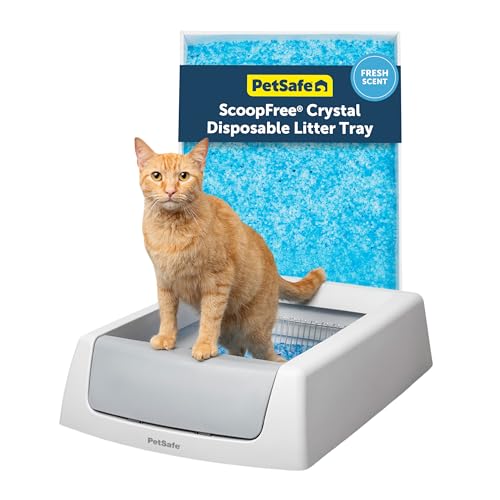
PetSafe ScoopFree Ultra Self-Cleaning Litter Box
A motorized rake sweeps waste into a covered trap a set number of minutes after the cat leaves. Disposable trays hold crystal litter that absorbs urine and dries solids. Owners report several weeks between tray swaps with one cat, less with two.
Pros
- Skips daily scooping for most single cat homes
- Covered waste trap holds odor well
- Built in counter tracks visit frequency
Cons
- Locked into buying replacement trays and crystals
- Rake motor is audible in a quiet room

Modkat Flip Litter Box
A flip lid folds back for scooping and closes into a tidy cube the rest of the time. A reusable tarpaulin liner hangs inside instead of a molded pan, leaving no seams for waste to lodge in. Its compact footprint tucks beside a washing machine.
Pros
- Front or top entry from the same box
- Reusable liner cuts plastic waste
- Closed cube blends in like furniture
Cons
- Smaller interior than a jumbo pan
- Liner needs periodic replacement

Petmate Booda Dome Cleanstep Litter Box
A domed shape hides the entrance from the room and adds roughly 50 percent more interior space than a square box of the same footprint. Steps on the entry ramp knock litter off paws before a cat reaches the floor. A charcoal filter sits in the top vent.
Pros
- Stepped ramp reduces tracking noticeably
- Round shape fits neatly into a corner
- Costs less than most covered boxes
Cons
- Round interior is tight for very large cats
- Dome must come fully off to scoop
The lineup, side by side
| # | Model | Interior | Best for | Score | Price |
|---|---|---|---|---|---|
| 1 | Nature’s Miracle High-Sided Litter Box | About 23 x 15.5 inches | Best overall | 9.4 | Check price |
| 2 | IRIS USA Top Entry Cat Litter Box | About 20.5 x 14.6 x 14.4 inches | Best for litter tracking | 9.2 | Check price |
| 3 | Van Ness CP7 Giant High Sides Cat Litter Pan | About 23 x 18.5 inches | Best for large cats | 9.0 | Check price |
| 4 | Catit Jumbo Hooded Cat Litter Pan | Jumbo, about 22.4 x 16.9 x 18.3 inches | Best hooded box | 8.8 | Check price |
| 5 | PetSafe ScoopFree Ultra Self-Cleaning Litter Box | Automatic rake on 5, 10 or 20 minute delay | Best self cleaning | 8.5 | Check price |
| 6 | Modkat Flip Litter Box | About 20 x 15 x 15 inches | Best for small apartments | 8.3 | Check price |
| 7 | Petmate Booda Dome Cleanstep Litter Box | Domed cover with stepped entry | Best budget covered box | 8.0 | Check price |
Frequently asked questions
How many litter boxes does an indoor cat need?
One per cat plus one extra is standard advice. Even a single indoor cat benefits from two boxes in different rooms, so a blocked doorway or a running washing machine never leaves it without an option.
What is the best litter box for cats that kick litter everywhere?
High sided pans and top entry boxes both solve it. Nature’s Miracle High-Sided uses 10 inch walls with a low front, while IRIS USA Top Entry adds a grooved lid that scrapes paws on exit.
Are covered litter boxes bad for cats?
Not inherently, but they concentrate odor, which some cats will not tolerate. Scoop daily if you use one, and pick a model like the Catit Jumbo where the hood detaches if the cat starts avoiding it.
Do self cleaning litter boxes actually work?
They handle daily waste removal reliably for one cat. Owners report the ScoopFree Ultra lasting a few weeks per tray with a single cat. You still need to replace trays, wipe the rake and check the sensor periodically.
Which litter box works best for senior cats?
Look for an entry lip under about 5 inches and skip anything requiring a jump. Open high sided pans with a cut down front let a cat step in rather than climb. Top entry boxes are the wrong choice for arthritic cats.
How deep should litter be in an indoor box?
Two to three inches suits most clumping clay litters. Deeper wastes litter and gets pushed to the sides. Shallower lets urine reach the pan floor, which creates stuck clumps and lingering smell.
Where should a litter box go in an apartment?
Choose a quiet spot with a clear escape route, away from food, water and washing machines. Bathrooms and utility corners work well. Avoid dead end cupboards, since a cat that feels trapped may stop using the box.
How often should you deep clean a litter box?
Scoop daily, then empty and wash the pan every two to four weeks with unscented soap and warm water. Skip ammonia based cleaners, since the smell resembles urine and can encourage marking elsewhere.
Top entry vs hooded litter box: which cuts tracking more?
Top entry designs cut tracking the most, since paws touch a grooved surface on the way out rather than just walking through a doorway. Hooded boxes contain odor better but let more litter escape at floor level near the door.
Our pick
Nature’s Miracle High-Sided Litter Box solves scatter for most indoor cats without asking the cat to change any habit. Homes fighting litter tracked down a hallway will do better with the IRIS USA Top Entry, and frequent travelers should consider the PetSafe ScoopFree Ultra. Measure your cat before buying, since interior length decides acceptance more than any single feature.

