Bird Perches That Keep Feet Healthy and Nails Short
The JW Pet Insight Sand Perch is our top pick overall for gently conditioning nails without abrading the foot. The Polly’s Pet Products Sand Walk Perch is the better value grooming option, while the Super Bird Creations Java Wood Perch gives the most natural varied shape for larger parrots.
The healthiest cage has several perch types rather than one, and the JW Pet Insight Sand Perch, Polly’s Pet Products Sand Walk Perch and Super Bird Creations Java Wood Perch cover the three jobs that matter, which are grooming, comfort and natural foot variation. The seven options below span budgie sized to parrot sized birds.
Perches are trickier to choose than they look because a cage full of identical smooth dowels holds the foot in one position all day, which is a known cause of pressure sores. We compared diameter ranges, surface textures, materials and mounting hardware, then weighed what owners report about nail wear, cleaning and whether each perch survives determined chewing.
What to look for
Variety prevents foot problems A bird standing on the same diameter dowel every day loads the same points on its foot continuously, which over time contributes to pressure sores. Fitting perches of different diameters, textures and materials lets the foot change position throughout the day. Aim for at least three different perch types even in a modest cage.
Match diameter to the species As a rough guide the bird’s toes should wrap most of the way around the perch without meeting or being stretched flat. Budgies and finches need slim perches, cockatiels and conures need medium, and larger parrots need thick branches. Buying a perch that is too large is as much a problem as one that is too small.
Use grooming perches thoughtfully Sand and mineral coated perches wear nails down gradually and reduce the need for trimming, but they should never be the only perch or the highest one where the bird sleeps. Place them where the bird passes through rather than where it rests for hours. Modern textured designs are much kinder than the old rough concrete style.
Keep placement and hygiene in mind Position perches so droppings do not fall into food or water bowls, and stagger heights so the bird can move rather than hop between two fixed points. Wooden and coconut perches are porous, so scrub them and let them dry fully rather than just wiping. Replace any perch that has been chewed to a splintering state.
What we recommend
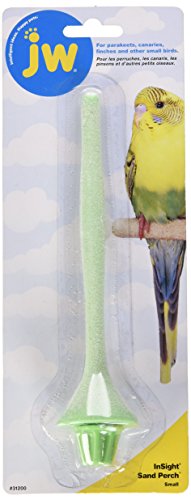
JW Pet Insight Sand Perch
This perch uses a fine textured sand coating over a shaped core, so nails wear down naturally as the bird moves rather than needing frequent trimming. The gently irregular profile also changes the grip position along its length, which reduces constant pressure on one part of the foot. Owners report it is far less abrasive than old style concrete perches.
Pros
- Conditions nails without harsh abrasion
- Varied diameter reduces pressure points
- Easy to wipe clean
Cons
- Should not be the only perch in the cage
- Coating wears down over time

Polly’s Pet Products Sand Walk Perch
Polly’s builds this perch with a smooth underside and a textured top, which is a thoughtful detail because the bird’s foot pad rests on the softer surface while the nails contact the grit. That reduces the sore feet complaint associated with rough perches. It comes in several diameters so you can match it to your species properly.
Pros
- Design protects foot pads while trimming nails
- Wide size range for different species
- Durable mineral surface
Cons
- Heavier than wood perches
- Needs correct diameter to work well

Super Bird Creations Java Wood Perch
Java wood is dense, bird safe and naturally irregular, giving multiple diameters and angles on a single piece so the bird constantly adjusts its grip. Its hardness means it survives chewing far better than soft pine. This is the closest thing to a natural branch that you can bolt into a cage without sourcing and sterilising your own wood.
Pros
- Natural varied diameters and angles
- Very durable against chewing
- Suits medium and large parrots
Cons
- Irregular shape can be awkward to position
- Porous surface needs proper cleaning
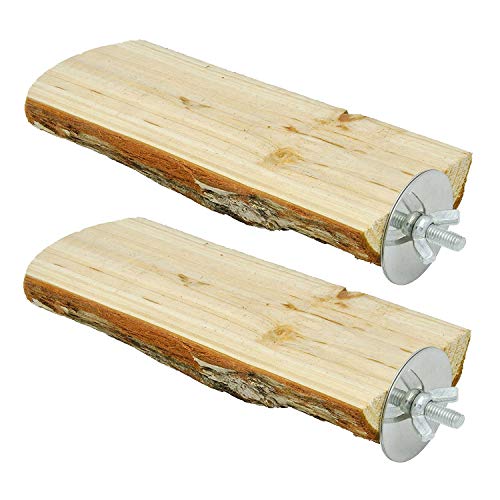
Niteangel Natural Wood Bird Perch
These natural branch perches keep the bark on, which gives small birds like budgies and cockatiels textured footing and something safe to nibble. They come in packs so you can build variety across the cage cheaply. Being softer wood, they will need replacing periodically with enthusiastic chewers.
Pros
- Natural bark texture for small feet
- Multiple perches per pack
- Safe for gentle chewing
Cons
- Softer wood wears faster
- Bark shedding adds cage cleanup

Prevue Pet Products Naturals Coco Perch
Coconut fibre and shell construction gives birds something to shred as well as stand on, which occupies the beak and reduces boredom behaviours. It doubles as an enrichment item rather than purely a resting spot. Because it is designed to be destroyed slowly, treat it as a consumable rather than a permanent fixture.
Pros
- Doubles as enrichment and chewing outlet
- Natural materials with varied texture
- Encourages foraging behaviour
Cons
- Shreds over time and needs replacing
- Fibre debris falls into the cage tray

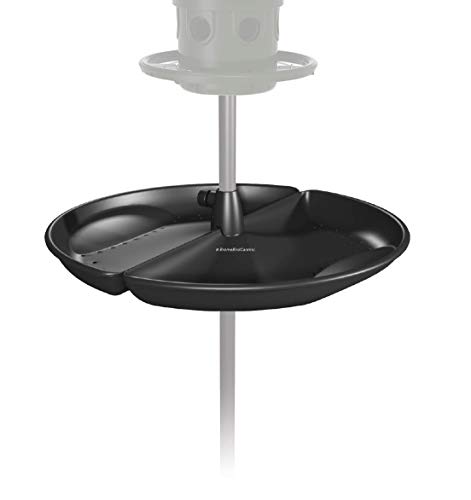
Bwogue Bird Perch Stand
A free standing perch gives your bird a legitimate place to sit outside the cage, which helps with socialising and reduces furniture damage. This stand includes food and water cups plus a tray to catch mess. It suits supervised out of cage time rather than long unattended periods.
Pros
- Gives a defined space outside the cage
- Cups and tray reduce mess
- Easy to move between rooms
Cons
- Not for unsupervised use
- Lighter models can tip with big parrots

Penn-Plax Bird Life Wooden Perch
This is the plain wooden perch that fills gaps in a cage layout inexpensively, useful as a secondary resting spot at a different height. It is uniform in diameter, so it should complement varied perches rather than replace them. Owners report it is a sensible spare to keep on hand when a chewed perch needs swapping out.
Pros
- Inexpensive way to add perch levels
- Easy to fit in most cages
- Simple to clean
Cons
- Uniform diameter offers no grip variation
- Plain smooth wood can be slippery
How they compare
| # | Model | Surface | Best for | Score | Price |
|---|---|---|---|---|---|
| 1 | JW Pet Insight Sand Perch | Fine sand textured coating | Best overall | 9.4 | Check price |
| 2 | Polly’s Pet Products Sand Walk Perch | Textured top, smoother underside | Best value grooming perch | 9.2 | Check price |
| 3 | Super Bird Creations Java Wood Perch | Java hardwood | Best natural shape | 9.0 | Check price |
| 4 | Niteangel Natural Wood Bird Perch | Natural branch with bark | Best for small birds | 8.8 | Check price |
| 5 | Prevue Pet Products Naturals Coco Perch | Coconut fibre and shell | Best for foraging birds | 8.5 | Check price |
| 6 | Bwogue Bird Perch Stand | Free standing table top perch | Best out of cage perch | 8.2 | Check price |
| 7 | Penn-Plax Bird Life Wooden Perch | Smooth hardwood dowel | Best budget option | 8.0 | Check price |
Common questions
How many perches should a bird cage have?
At least three of differing diameter and texture in a standard cage, positioned at different heights. More is better as long as the bird still has room to stretch its wings and move freely.
Are sand perches safe for birds?
Modern textured sand perches are safe when used correctly, meaning as one perch among several and not as the main sleeping spot. Problems arise when a bird stands on an abrasive surface all day.
What perch diameter suits a budgie?
Small birds generally do well on perches around half an inch, with some variation across the cage. The toes should wrap most of the way around without the foot being stretched flat.
Which perch materials should I avoid?
Avoid treated or painted wood, cherry and other fruit tree woods with toxic components, and smooth plastic dowels that offer no grip. Java wood, natural safe branches and mineral coated perches are the reliable choices.
How do I clean bird perches?
Scrub wooden perches with hot water and a bird safe cleaner, rinse thoroughly and dry completely before returning them to the cage. Mineral and sand perches wipe clean, and coconut fibre items are replaced rather than deep cleaned.
Will a perch replace nail trimming?
A grooming perch reduces how often nails need attention but rarely removes the need entirely. Check nails regularly and trim when they start to curl or catch.
How often should perches be replaced?
Replace any perch that is splintering, heavily soiled or chewed through. Soft natural branches may last months with active chewers, while java wood and mineral perches last far longer.
Can I use branches from my garden?
Only from known bird safe species, and only after scrubbing, rinsing and drying them thoroughly to remove pesticides and parasites. If you are unsure of the tree species, buy a prepared java or natural wood perch instead.
Final word
The JW Pet Insight Sand Perch is the single best perch to add to most cages because it conditions nails without punishing the foot. Combine it with a Super Bird Creations Java Wood Perch for natural diameter variation and a Niteangel natural branch for small birds, and the cage covers grooming, comfort and enrichment. Variety, not any one product, is what keeps feet healthy.