Pet Travel Gear for Flights, Cars and Road Trips
The Sherpa Original Deluxe Pet Carrier is the most practical choice for cabin flights because of its flexible frame and guarantee on airline sizing. The Kurgo Tru-Fit Smart Harness is the pick for car journeys, and the Petmate Sky Kennel is what cargo travel requires.
For cabin flights the Sherpa Original Deluxe Pet Carrier is the safest bet on sizing, car journeys are best handled by the Kurgo Tru-Fit Smart Harness, and any pet flying in cargo needs the Petmate Sky Kennel rather than a soft carrier.
Pet travel gear is confusing because a product can be excellent and still be refused at the gate, since airlines set their own under seat dimensions and cargo requirements. We compared stated dimensions against common airline limits, crash test credentials where they exist, ventilation, carrying comfort and how easily each cleans up, and we weighed what owners report about durability over repeated trips.
Our top picks

Sherpa Original Deluxe Pet Carrier
The spring wire frame along the rear is what makes this carrier work, letting the top compress a few inches to fit under a seat without squashing the pet. It is part of an airline compliance programme that covers you if a carrier meeting the published dimensions is refused. Mesh panels on three sides keep airflow up, and a removable washable liner deals with the inevitable accident.
Pros
- Compressible frame fits tighter under seat spaces
- Backed by an airline compliance guarantee
- Three sided mesh keeps airflow up
Cons
- Largest size still exceeds some airline limits
- Not suitable for cargo travel

Kurgo Tru-Fit Smart Harness
This is a walking harness and a vehicle restraint in one, with a steel nesting buckle and a seat belt tether included in the box. Kurgo has crash tested the harness at an independent facility, which puts it ahead of the many restraints that make safety claims without published testing. Five adjustment points mean it can be fitted properly rather than approximately.
Pros
- Published crash testing rather than vague claims
- Doubles as a walking harness at rest stops
- Five adjustment points give a genuine fit
Cons
- Tether restricts movement more than dogs expect at first
- Fitting correctly takes patience the first time

Petmate Sky Kennel
If a pet is flying in the hold, the requirements are specific and a soft carrier will not do. The Sky Kennel is the long standing default, with a hard shell, metal door, ventilation on four sides and the wing nut fasteners many carriers demand. It ships with live animal stickers, clip on bowls and identification labels, which are also commonly required.
Pros
- Meets the common cargo construction requirements
- Ships with the labels and bowls airlines ask for
- Very durable shell for repeated trips
Cons
- Bulky to store between journeys
- Airline rules vary, always confirm before booking

Diggs Passenger Travel Crate
A car crate that is designed to be lived with, folding down for storage and using a strap system to anchor to the vehicle rather than sitting loose in the boot. The rounded corners and mesh panels make it feel less clinical than a wire crate, and there is a shoulder strap for carrying. It is a road trip and hotel room crate rather than a flight carrier.
Pros
- Folds down for hotels and storage
- Anchors properly instead of sliding in the boot
- Comfortable and quiet for anxious dogs
Cons
- Highest outlay here by a clear margin
- Not approved for airline cargo

4Knines Dog Seat Cover
Long journeys leave hair, mud and worse across a back seat, and a proper hammock style cover contains all of it while also stopping a dog sliding into the footwell. This one uses a heavy waterproof layer with a non slip backing and seat anchors that keep it from creeping. Zips let you convert between full hammock and bench coverage when you have human passengers.
Pros
- Genuinely waterproof rather than water resistant
- Hammock design stops dogs sliding into footwells
- Converts for mixed human and dog trips
Cons
- Bulky to remove and store mid trip
- Seat belt access needs the right slot version
Henkelion Soft Sided Pet Carrier
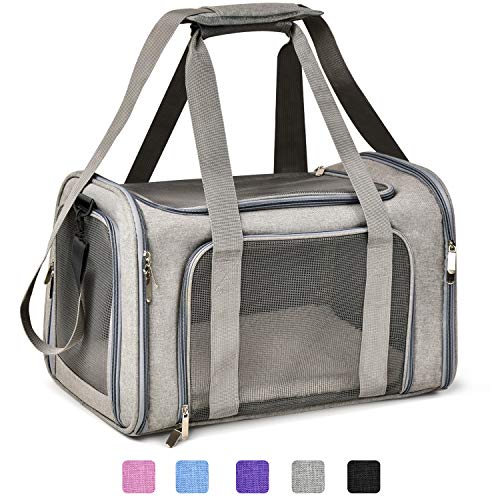
For vet visits, short car trips and occasional travel, this covers the basics at a fraction of the outlay of a flight rated carrier. Mesh on three sides, a removable fleece mat and both a shoulder strap and top handle mean it does the everyday job well. Check the dimensions carefully against your airline before assuming it will fly, since compliance is not guaranteed.
Pros
- Low outlay for occasional use
- Good ventilation for the price
- Washable mat included
Cons
- No airline compliance guarantee
- Lighter materials wear faster with heavy use
Sleepypod Mobile Pet Bed
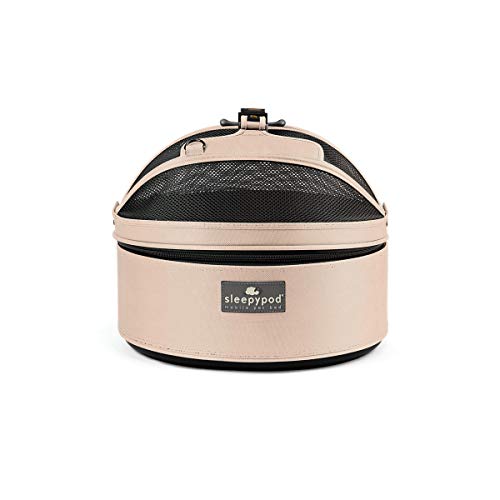
The idea here is that the carrier doubles as the pet’s normal bed at home, so travel day is not the first time they have been inside it. That matters enormously for cats, which is where most travel stress comes from. Sleepypod publishes crash test results for its carriers, and the dome zips off entirely so the base can stay out as a bed between trips.
Pros
- Doubles as a familiar bed to reduce travel stress
- Published crash test results
- Seat belt routes through the base properly
Cons
- Expensive relative to its capacity
- Round shape is awkward under some aircraft seats
What matters most
Check the airline before you check the reviews Every airline publishes its own under seat dimensions, weight limits and breed restrictions, and they differ enough that a carrier which works on one route is refused on another. Measure the airline limit first, then shop to it. Some carriers carry compliance guarantees, but the guarantee is a refund rather than a boarding pass, so confirming with the airline remains your responsibility.
Cargo travel has different rules entirely Pets flying in the hold need a hard sided kennel with ventilation on multiple sides, metal hardware rather than plastic clips, secured wing nut fasteners and live animal labelling. A soft carrier will be refused. Rules also cover temperature limits at departure and arrival, which can ground a booking in summer or winter, so confirm the specifics with the airline well before the travel date.
Restraint in a car is a safety issue, not a comfort one An unrestrained pet becomes a projectile in a collision and can also interfere with the driver. Look for restraints with published independent crash testing rather than generic safety claims, since testing in this category is voluntary and inconsistent. A properly fitted harness tether or an anchored crate are both valid approaches, but a lead clipped to a collar and a seat belt is not.
Acclimate before the journey, not on the day Owners consistently report that the pets who travel best are the ones who met the carrier weeks earlier. Leave it open at home with bedding and treats inside, feed a few meals near it, then do a short car trip before the long one. For cats in particular, a carrier that doubles as a bed removes the association between the carrier appearing and something unpleasant happening.
Side by side
| # | Model | Type | Best for | Score | Price |
|---|---|---|---|---|---|
| 1 | Sherpa Original Deluxe Pet Carrier | Soft sided cabin carrier | Best overall for cabin flights | 9.4 | Check price |
| 2 | Kurgo Tru-Fit Smart Harness | Vehicle restraint harness with walking function | Best for car journeys | 9.2 | Check price |
| 3 | Petmate Sky Kennel | Hard sided cargo kennel | Best for cargo travel | 9.0 | Check price |
| 4 | Diggs Passenger Travel Crate | Collapsible travel crate | Best premium crate | 8.8 | Check price |
| 5 | 4Knines Dog Seat Cover | Hammock style rear seat cover | Best for protecting the car | 8.6 | Check price |
| 6 | Henkelion Soft Sided Pet Carrier | Soft sided carrier | Best budget | 8.3 | Check price |
| 7 | Sleepypod Mobile Pet Bed | Convertible carrier and pet bed | Best for cats | 8.0 | Check price |
Good to know
What size pet carrier is allowed on a plane?
It varies by airline and aircraft, with common under seat limits falling somewhere around 18 by 11 by 11 inches, though many differ. Check your specific airline and route before buying. Soft carriers with compressible frames, such as the Sherpa Original Deluxe, fit tighter spaces better than rigid ones of the same nominal size.
Can my pet fly in the cabin?
Generally only small pets that fit in a carrier under the seat, with the pet remaining inside for the whole flight. Weight limits, breed restrictions and the number of animals allowed per cabin all vary by airline, and advance booking is usually required because slots are limited.
Are pet seat belts and harnesses actually tested?
Some are, most are not, because crash testing in this category is voluntary. Kurgo and Sleepypod both publish independent test results for their products, which is why they appear here. Treat generic safety claims without published testing with caution.
What do I need for a pet flying in cargo?
A hard sided kennel meeting the airline construction rules, with ventilation on multiple sides, metal door hardware, secured fasteners, live animal labelling, absorbent bedding and attached bowls. The Petmate Sky Kennel ships with most of these included. Health documentation and temperature restrictions also apply and vary by destination.
How do I reduce travel anxiety in cats?
Familiarity does most of the work. Leave the carrier out as furniture for weeks beforehand, put familiar bedding inside, and use a carrier that doubles as a bed such as the Sleepypod Mobile Pet Bed. Covering the carrier during the journey and taking short practice drives also helps.
Should I sedate my pet for travel?
This is a decision for your vet, not a general recommendation. Many airlines discourage or refuse sedated animals in cargo because sedation can affect breathing and temperature regulation at altitude. Discuss the specific journey with your vet well in advance rather than on the day.
How often should I stop on a long car journey?
Every two to three hours is a common guideline for a toilet break, water and a short walk, adjusted down for puppies, older dogs and hot weather. Never leave a pet in a parked car in warm conditions, since interior temperatures rise dangerously fast even with windows cracked.
Do I need a crate in the car or is a harness enough?
Both are valid if they are secured properly. A crash tested harness with a proper tether, such as the Kurgo Tru-Fit Smart Harness, suits most dogs and takes less space. An anchored crate like the Diggs Passenger offers more containment and suits anxious dogs or long trips where the dog will sleep.
Our take
For cabin travel the Sherpa Original Deluxe Pet Carrier is still the most reliable choice, because the compressible frame and compliance programme address the two things that actually go wrong at the gate. Car journeys are a different problem, and the crash tested Kurgo Tru-Fit Smart Harness handles them better than any carrier. If your pet must fly in the hold, the Petmate Sky Kennel is the practical requirement rather than a preference, and you should confirm the details with the airline before booking.