Bluetooth Speakers Built for Sound That Fills a Room
JBL Charge 5 heads this list for even tuning, an IP67 shell and 20 hours of playback that can also refill a phone. Bose SoundLink Flex sounds clearer for its size. Sonos Roam adds Wi-Fi streaming and multiroom grouping for households already running Sonos.
JBL Charge 5 is the speaker most people should buy, since it balances treble against bass, survives dust and submersion, and refills a phone from its own cell. Clarity in a smaller shell points to the Bose SoundLink Flex. Households already running Sonos will get more from the Roam.
Spec sheets mislead in two ways here. Watt figures say nothing about tuning, and quoted battery hours assume moderate volume. We compared driver layouts, IP ratings, weight and connectivity from published specifications. Owner reports on how each one sounds after a year, and how it survives water and drops, set the final order.
The best picks, ranked

JBL Charge 5
A dedicated tweeter, a racetrack driver and two passive radiators split the work, which keeps highs clean while the cabinet still moves real air. IP67 sealing covers dust ingress and brief submersion. Its cell runs 20 hours and doubles as a power bank, though no microphone is fitted for calls.
Pros
- Separate tweeter keeps vocals and cymbals clean
- IP67 shell handles dust and submersion
- USB output tops up a phone away from power
Cons
- No microphone for speakerphone use
- Too large for a jacket pocket
Bose SoundLink Flex
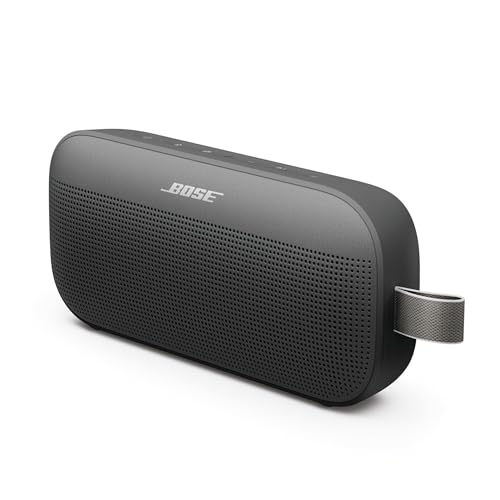
PositionIQ detects whether the Flex lies flat, stands upright or hangs from a strap, then re-tunes output to match. Vocals and acoustic material come through unusually clean for a speaker of 1.3 pounds. It floats, carries IP67 protection, and trades deep bass for that clarity.
Pros
- Clear vocals and detail even at low volume
- PositionIQ re-tunes for how it sits
- Floats and carries IP67 sealing
Cons
- 12 hours trails the Charge 5
- Bass stays polite rather than deep

Sonos Roam
Two radios sit inside the Roam: Wi-Fi for grouping with other Sonos players at home, Bluetooth for everywhere else. Automatic Trueplay listens to the room and adjusts the tuning without any input from you. At 0.95 pounds it is the lightest speaker here, and at 10 hours the shortest running.
Pros
- Joins an existing Sonos system over Wi-Fi
- Trueplay tunes itself to the room
- Lightest body in this group at under a pound
Cons
- 10 hours is the shortest figure here
- Full features depend on the Sonos app
Ultimate Ears BOOM 3
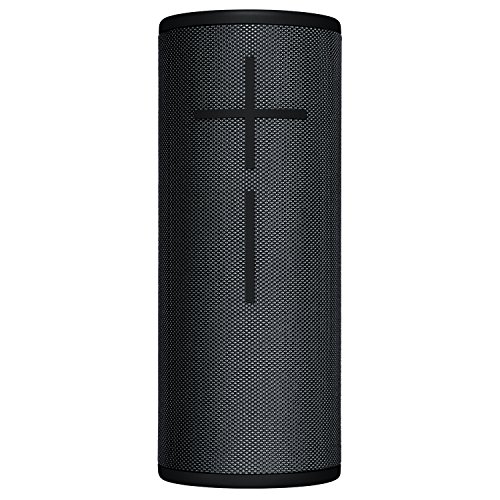
Cylindrical housing throws sound in every direction, so nobody around a picnic table stands in a dead spot. Fabric wrap plus IP67 sealing shrugs off pool splashes, and the body floats if it goes in. One oversized Magic Button skips tracks without unlocking a phone, but no power bank output is included.
Pros
- 360-degree output with no listening sweet spot
- Floats and rated IP67 against dust and water
- Magic Button controls playback one handed
Cons
- Cannot charge other devices
- Bass arrives boosted out of the box

Anker Soundcore Motion Plus
Dual tweeters and dual woofers give the Motion Plus wider frequency reach than most speakers at this level. aptX support lets compatible Android phones send more data than SBC allows. IPX7 sealing survives immersion yet carries no dust rating, and 2.2 pounds makes it the heaviest pick here.
Pros
- Four drivers widen the frequency range
- aptX support for compatible phones
- IPX7 sealing survives full immersion
Cons
- IPX7 leaves dust protection uncertified
- Heaviest speaker in this roundup

JBL Flip 6
Flip 6 shrinks the Charge formula to 1.2 pounds while keeping a two way driver setup and dual passive radiators. Highs stay defined, and the racetrack woofer pushes more low end than the size suggests. Losing the power bank output is what pays for that smaller body.
Pros
- Slips into a bag side pocket at 1.2 pounds
- Two way drivers keep highs defined
- IP67 rated against dust and water
Cons
- No power bank output
- Small cabinet limits deep bass

Marshall Emberton II
Marshall wraps True Stereophonic 360-degree output in a fretted grille with a brass control knob on top. Playback runs to 30 hours, the longest figure in this roundup by a clear margin. Tuning leans warm and no detailed EQ is offered, so the sound arrives exactly as Marshall intends.
Pros
- 30 hours outlasts everything else here
- Brass knob handles volume and track skips
- IP67 rated with 360-degree output
Cons
- No detailed EQ adjustment
- Warm tuning suits some genres more than others
How they stack up
| # | Model | Battery life | Best for | Score | Price |
|---|---|---|---|---|---|
| 1 | JBL Charge 5 | Up to 20 hours | Best overall | 9.4 | Check price |
| 2 | Bose SoundLink Flex | Up to 12 hours | Best sound quality | 9.2 | Check price |
| 3 | Sonos Roam | Up to 10 hours | Best for streaming | 9.0 | Check price |
| 4 | Ultimate Ears BOOM 3 | Up to 15 hours | Best for outdoors | 8.8 | Check price |
| 5 | Anker Soundcore Motion Plus | Up to 12 hours | Best value | 8.6 | Check price |
| 6 | JBL Flip 6 | Up to 12 hours | Best compact | 8.4 | Check price |
| 7 | Marshall Emberton II | Up to 30 hours | Best design | 8.0 | Check price |
Before you buy
What actually decides how a Bluetooth speaker sounds? Driver count and tuning explain far more than a watt figure. A separate tweeter, as on the Charge 5 and Motion Plus, stops cymbals and consonants smearing into the bass. Passive radiators add low end without a second amplifier, which is how small cabinets sound bigger than they are. Placement shifts the result too: a speaker against a wall gains bass, one on an open table loses it. Bose built PositionIQ around exactly that effect.
How long do the batteries really last? Every quoted hour figure comes from moderate volume playback. Push toward maximum and expect roughly half. Emberton II leads on paper at 30 hours, Charge 5 sits at 20, and Sonos Roam stops near 10. Cold weather cuts lithium runtime further, which matters for winter camping. A power bank output, as on the Charge 5, trades speaker hours for phone charge when you need it.
What do IP67 and IPX7 mean for pool and beach use? IP codes read left to right: solids first, liquids second. IP67 means dust cannot get in, and the unit survives 30 minutes under a metre of water. IPX7 covers the same immersion test, but the X shows dust protection was never certified. Sand and pollen are the real hazard outdoors, which puts IP67 ahead for beaches and campsites. Floating is a separate feature, and the SoundLink Flex and BOOM 3 both do it.
Which speaker suits home, travel or outdoor listening? Match the shape to where it plays. Around the house, tuning matters more than size, so the SoundLink Flex or a Roam on Wi-Fi both work well. For travel, weight decides: the Flip 6 at 1.2 pounds disappears into hand luggage. Outdoor groups favour 360-degree designs such as the BOOM 3, because listeners spread out. Several JBL models pair two units for stereo, which is worth checking before buying a second speaker.
Common questions
What is the best Bluetooth speaker for most people?
Based on specifications and owner feedback, the JBL Charge 5 is our overall pick. Balanced tuning, IP67 sealing, 20 hours of playback and a USB output that charges a phone make it the least compromised choice on this list.
What does IP67 mean on a speaker?
Dust cannot enter the enclosure, and the speaker survives 30 minutes under about a metre of water. That covers rain, pool splashes and a drop in the sink. IPX7 matches the water test but leaves dust resistance untested.
How long do Bluetooth speaker batteries actually last?
Manufacturers measure at moderate volume, so loud listening roughly halves the number. Models here range from 10 hours on the Sonos Roam to 30 on the Marshall Emberton II. Cold weather trims runtime further.
Is a bigger speaker always louder?
Larger cabinets move more air, which helps bass and maximum volume. Balance comes from tuning and driver layout instead, so a compact Bose SoundLink Flex can sound clearer than a bigger bass heavy rival. Size the speaker to the room, not to the spec sheet.
Can you pair two Bluetooth speakers for stereo?
Several JBL models here link two units for stereo or party mode through the companion app. Pairing normally requires the same brand and often the same model. Confirm compatibility before buying a second unit.
Which Bluetooth speaker is best for the pool or beach?
Ultimate Ears BOOM 3 and JBL Charge 5 both carry IP67 ratings and float. BOOM 3 spreads sound in every direction, which suits a group spread around a pool deck. Rinse either with fresh water after chlorine or salt.
Do you need Wi-Fi, or is Bluetooth enough?
Bluetooth works anywhere and needs no network, which covers most listening. Wi-Fi, as on the Sonos Roam, carries higher quality streams and lets the speaker join a multiroom group at home. It only pays off inside an existing whole home system.
How do you make a portable speaker last longer?
Rinse and dry the enclosure after saltwater or chlorine. Avoid charging in a hot car, since heat ages lithium cells faster than cycling does. Store it near half charge if it will sit unused for months, and update firmware through the app.
JBL Charge 5 vs Flip 6: which should you buy?
Charge 5 runs longer, plays louder and charges your phone, at 2.1 pounds. Flip 6 keeps the same IP67 sealing and a similar tuning signature in a 1.2 pound body. Travel light and take the Flip 6; stay put and take the Charge 5.
Are expensive Bluetooth speakers worth it?
Premium models buy smart features, materials and design rather than raw volume. Sonos Roam earns its place through Wi-Fi and multiroom, Marshall through battery life and looks. Anker Soundcore Motion Plus shows how little you give up in sound alone.
Final word
JBL Charge 5 is the portable speaker to buy for most listeners, combining even tuning, IP67 sealing, 20 hours of playback and a power bank output. Choose the Bose SoundLink Flex when clarity from a small body matters more than volume. Sonos Roam makes sense only if Wi-Fi streaming and multiroom grouping are part of the plan.