Bluetooth Trackers Ranked by Phone and Range
The Apple AirTag leads for iPhone owners thanks to the huge Find My network and precise ultra-wideband. Android users get the same reach from the Chipolo CARD Spot for wallets. Tile Pro suits cross-platform households needing longer range.
The Apple AirTag is the clear pick for iPhone owners, combining the vast Find My network with ultra-wideband precision that guides you to within inches in a room. It is a poor fit for Android, though, so those users should choose the Chipolo CARD Spot for a wallet or the Chipolo ONE Spot for keys, both on Apple or Google networks depending on model. Households split across platforms are better served by Tile, which works the same on both. Match the tag to your phone first.
Tracker performance is decided less by the tag and more by the network behind it and the phone in your pocket. A tag only pings when a compatible phone passes near it, so a bigger finding network means a lost item is spotted sooner. Ultra-wideband adds close-range direction finding on supported phones. We compared ecosystem support, network reach, stated Bluetooth range, battery type and life, and physical shape for keys versus wallets, alongside owner reports on alert reliability.
The top picks, ranked
Apple AirTag
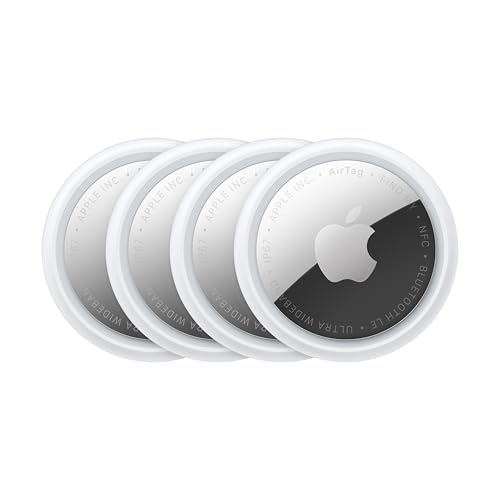
For iPhone users, the AirTag taps the enormous Find My network so a lost item is likely spotted by a passing device fast. Ultra-wideband and Precision Finding point you to within inches on recent iPhones. The replaceable coin battery lasts about a year, though the round shape needs a separate holder to clip onto keys.
Pros
- Massive Find My network finds items quickly
- Ultra-wideband guides you within inches
- User-replaceable coin battery
Cons
- No native Android app support
- Needs a separate holder to attach to keys

Tile Pro
Tile works identically on iPhone and Android, making it the flexible choice for a mixed-device home. The Pro model claims the longest Bluetooth range in the lineup for finding a tag across a large house or yard. A keyring hole is built in, and the coin battery is replaceable, though Tile’s finding network is smaller than Apple’s or Google’s.
Pros
- Same experience on iPhone and Android
- Long Bluetooth range for big spaces
- Built-in hole for keys
Cons
- Finding network smaller than Apple or Google
- Some features sit behind a subscription
Chipolo CARD Spot
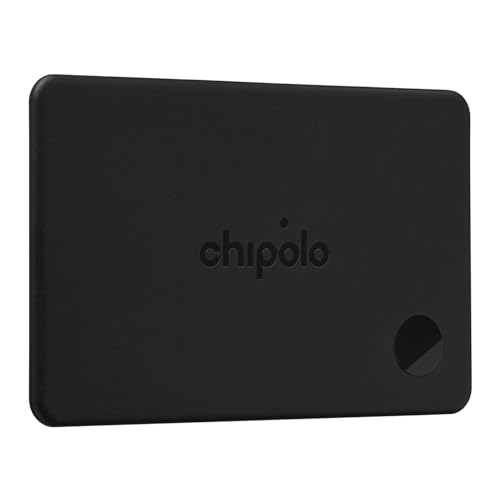
Shaped like a credit card, this slips into a wallet or passport holder where a round tag will not fit. It works on Apple’s Find My network, so iPhone users get the same wide reach as an AirTag. The battery is sealed and rated to last around two years, after which the whole card is replaced.
Pros
- Card shape fits a wallet perfectly
- Uses the wide Apple Find My network
- Loud ring is easy to hear
Cons
- Battery is not user replaceable
- Find My reach applies to iPhone users only

Chipolo ONE Spot
A round tag with a built-in keyring hole and one of the louder alarms available, useful when an item is buried under cushions. It rides Apple’s Find My network for a wide search reach. The coin battery is user replaceable, so unlike the card version you can keep it running for years.
Pros
- Built-in keyring hole, no holder needed
- Loud alarm for finding buried items
- Replaceable battery
Cons
- Apple network only, not for Android
- No ultra-wideband precision finding

Samsung Galaxy SmartTag2
Built for Galaxy owners, this tag uses Samsung’s SmartThings Find network and adds ultra-wideband direction finding on supported phones. A keyring loop is molded in, and the coin battery is rated for a long life. It only works within the Samsung ecosystem, so it is not a fit for iPhone or non-Samsung Android.
Pros
- Ultra-wideband finding on Galaxy phones
- Built-in keyring loop
- Long-lasting replaceable battery
Cons
- Requires a Samsung Galaxy phone
- No use on iPhone or other Android brands

Tile Mate
The most affordable way into Tile’s cross-platform system, with a keyring hole and a replaceable battery. Range is shorter than the Pro, but it covers a typical apartment or bag well. As with all Tile tags, it works the same on iPhone and Android, which suits a shared household on a budget.
Pros
- Low cost entry to Tile’s system
- Cross-platform on iPhone and Android
- Keyring hole and replaceable battery
Cons
- Shorter range than Tile Pro
- Smaller finding network than Apple or Google

Chipolo POP
This tag can register on either Apple’s Find My or Google’s Find My Device network, chosen at setup, which future-proofs a switch between phone brands. A keyring hole and a loud ring make it practical for keys or a bag. The coin battery is replaceable, and bright colors help spot the tag itself.
Pros
- Chooses Apple or Google network at setup
- Loud ring and built-in keyring hole
- Replaceable battery
Cons
- Runs on one network at a time, not both
- No ultra-wideband precision finding
Before you buy
What to look for in a Bluetooth tracker Your phone brand decides more than any spec. AirTags and Chipolo Spot tags lean on Apple’s Find My, so they shine for iPhone owners. Samsung’s SmartTag2 needs a Galaxy phone. Tile and Google-network Chipolo tags work across brands. After the ecosystem, weigh the finding-network size, since that determines how fast a lost item gets located. Then check the shape, because a wallet needs a card while keys need a ring hole.
How the finding network matters A Bluetooth tag has a short range on its own, often tens of meters. What locates a lost item across a city is the crowd network. When any compatible phone passes your tag, it anonymously reports the location to you. Apple’s and Google’s networks include hundreds of millions of phones, so items surface quickly. Tile’s own network is smaller, which is the tradeoff for its cross-platform reach.
Keys, wallets and bags need different shapes One tag does not fit every item. A round AirTag or Chipolo ONE Spot slips onto a keyring, though the AirTag needs a holder. A wallet or passport suits the slim Chipolo CARD Spot, which lies flat among the cards. For a bag or suitcase, a tag with a loud alarm and a strong keyring loop is easiest to hear and attach. Buy the shape that matches where the tracker will actually live.
Are Bluetooth trackers worth it? For frequently misplaced keys, wallets and bags, a tag pays for itself the first time it saves a frantic search. The value depends on matching it to your phone, since an iPhone user gets little from a Samsung tag and vice versa. Note the privacy angle too, as Apple and Google build in unwanted-tracking alerts that warn if an unknown tag travels with you. Weigh that before slipping one into a shared item.
Side by side
| # | Model | Ecosystem | Best for | Score | Price |
|---|---|---|---|---|---|
| 1 | Apple AirTag | Apple Find My, iPhone only | Best for iPhone | 9.4 | Check price |
| 2 | Tile Pro | Tile app, iOS and Android | Best cross-platform | 8.9 | Check price |
| 3 | Chipolo CARD Spot | Apple Find My | Best for wallets | 8.8 | Check price |
| 4 | Chipolo ONE Spot | Apple Find My | Best for keys on Find My | 8.7 | Check price |
| 5 | Samsung Galaxy SmartTag2 | Samsung SmartThings Find | Best for Samsung phones | 8.8 | Check price |
| 6 | Tile Mate | Tile app, iOS and Android | Best value | 8.5 | Check price |
| 7 | Chipolo POP | Apple Find My or Google Find My Device | Best dual network | 8.6 | Check price |
Questions worth asking
Do Bluetooth trackers work with any phone?
No. AirTags and Apple-network Chipolo tags need an iPhone, Samsung’s SmartTag2 needs a Galaxy phone, and Tile plus Google-network tags work across brands. Check the tag’s ecosystem against your phone before buying.
How far can a Bluetooth tracker reach?
Direct Bluetooth range is usually tens of meters. Beyond that, the tag relies on a crowd network of other phones to report its location, so real-world reach depends on how many compatible phones are nearby rather than the Bluetooth spec alone.
What is ultra-wideband on a tracker?
Ultra-wideband adds precise direction finding at close range, guiding you within inches once you are near the tag. The AirTag and Samsung SmartTag2 support it on recent phones. Tags without it just play a sound to help you home in.
Can someone track me with an AirTag?
Apple and Google build unwanted-tracking alerts into iPhone and Android that warn you if an unknown tag is moving with you. An AirTag separated from its owner also chimes after a while. These safeguards reduce but do not fully remove the risk.
Which tracker is best for a wallet?
A card-shaped tag like the Chipolo CARD Spot fits a wallet or passport where a round tag will not. It rides Apple’s Find My network, so iPhone users get wide reach, though its sealed battery lasts a couple of years and is not replaceable.
Do Bluetooth trackers need a subscription?
The core finding features work without one on AirTag, Chipolo and Samsung tags. Tile offers some extra features, like smart alerts and battery replacement, through a paid plan, but basic ringing and finding do not require it.
How long does a tracker battery last?
Most coin-battery tags last about a year and are user replaceable. Some sealed tags, like the Chipolo CARD Spot, last around two years but require replacing the whole unit when depleted.
Can I use one tracker for both iPhone and Android?
Tile works the same on both, making it the best single choice for a mixed household. Chipolo POP lets you pick Apple or Google’s network at setup, but it runs on one network at a time, not both simultaneously.
Are trackers waterproof?
Most are water resistant rather than fully waterproof, rated to survive splashes and rain but not submersion. Check the specific tag’s rating if it will ride on a dog collar or a water bottle.
Our take
The best tracker is the one that matches your phone, so iPhone owners should buy the Apple AirTag for its network and ultra-wideband, adding a Chipolo CARD Spot for the wallet where a disc will not fit. Galaxy users get the same precision from the Samsung SmartTag2. Only cross-platform households should pick Tile, trading a smaller finding network for identical behavior on both systems. Do not overpay for range specs, because the size of the crowd network, not the Bluetooth radius, decides how fast you find a lost item.