Bolt Cutters for Hardened Steel: What Actually Cuts It
Knipex 71 72 460 CoBolt delivers hardened jaw performance in a compact body, making it the top pick. Klein Tools 63324 is the best value full size 24 inch pair. WORKPRO’s 8 Inch Mini handles light chain and wire cheaply.
Knipex 71 72 460 CoBolt leads this comparison because it cuts hardened material well above its size class. Klein Tools 63324 is the sensible full size choice, and the WORKPRO 8 Inch covers pocketable backup duty.
Manufacturers quote cutting capacity in soft material, so the same tool can fail on hardened bolts or padlock shackles rated to a higher Rockwell number. We compared published capacities, jaw steel treatment, handle length and pivot design, alongside what owners report about jaw alignment holding up after repeated heavy cuts.
The best picks, ranked

Knipex 71 72 460 CoBolt Compact Bolt Cutter
Roughly the size of large pliers, this cuts material that stops far longer tools thanks to a refined lever ratio and jaw geometry. Owners report clipping hardened bolts and rebar tie wire one handed in spots where a 24 inch pair won’t fit. Cost runs highest in this group, which is the honest tradeoff.
Pros
- Cuts hardened material far above its size class
- Fits in a tool pouch or back pocket
- Jaw alignment stays true over heavy use
Cons
- Highest cost per cut in this group
- Short handles limit maximum diameter

Klein Tools 63324 Bolt Cutter, 24-Inch
Twenty four inches is the size most people should own, long enough for real leverage yet manageable in a truck bed. Heat treated jaws with a center cut design keep cutting edges aligned as the tool ages. Electricians and maintenance crews rate it highly for clipping threaded rod and cable in one pass.
Pros
- Good leverage without being unwieldy
- Adjustable stop keeps edges meeting cleanly
- Strong reputation among trade users
Cons
- Struggles on fully hardened padlock shackles
- Grips can slip in wet conditions

H.K. Porter 0190MC Power Pivot Bolt Cutter, 18-Inch
A compound linkage multiplies force so this 18 inch tool performs closer to a much longer pair. That matters when working inside a panel or under a vehicle, where swinging full length handles is impossible. Replaceable jaws mean it outlives its first set of edges.
Pros
- Cuts above its length thanks to compound leverage
- Replaceable jaws extend service life
- Manageable in confined work areas
Cons
- Heavier than its length suggests
- Replacement jaws add to long term cost

TEKTON 24 Inch Bolt Cutter
Full 24 inch leverage costs a fraction of what trade brands charge, a reasonable match for a home garage that reaches for cutters a few times a year. Hardened jaws and long handles manage chain, bolts and fencing wire without strain. Owners report the pivot needs occasional tightening.
Pros
- Full size leverage for a modest outlay
- Comfortable grips over long jobs
- Fine for fencing wire, chain and soft bolts
Cons
- Pivot may need periodic adjustment
- Not intended for hardened security chain

IRWIN VISE-GRIP Bolt Cutter, 36-Inch
Nothing substitutes for handle length on thick material, and thirty six inches gives enough mechanical advantage to cut heavy rod and chain using body weight rather than grip strength. It is a two handed tool that needs real storage space, so treat it as a specialist. Forged jaws hold an edge well if kept dry.
Pros
- Highest raw capacity in this roundup
- Body weight does most of the work
- Good reach over fencing and gates
Cons
- Awkward to store and transport
- Too large for confined spaces
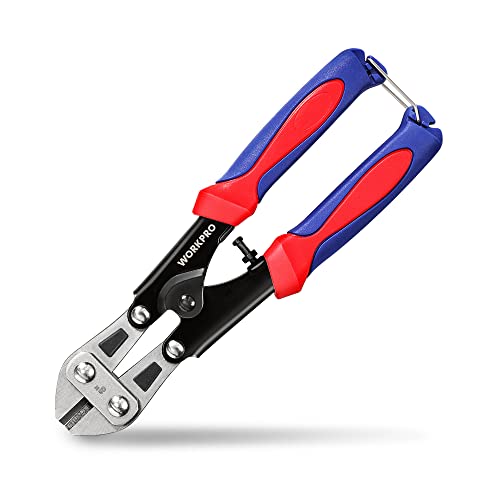
Neiko 00563A Mini Bolt Cutter, 8-Inch
This lives in a drawer for wire, small chain, bike spokes and zip tie stems. Low cost and a tiny footprint make it easy to keep on hand, and the compound joint gives more bite than ordinary side cutters. Do not expect it to touch a padlock, and treat the published capacity as an upper limit.
Pros
- Very inexpensive spare for light work
- One handed operation on wire
- Fits any toolbox or bike bag
Cons
- Limited to soft, thin material
- Edges dull faster than premium jaws

Olympia Tools Power Grip Bolt Cutter, 18-Inch
Wider than average handles spread load across the palm, making repeated cuts less punishing on hands unused to the work. Eighteen inches suits garden fencing, small chain and light bolts around a property. It is not a professional tool and jaws aren’t rated for hardened steel, but most homeowner jobs need nothing more.
Pros
- Comfortable grips reduce hand fatigue
- Sensible length for garden and fence work
- Light enough to use overhead briefly
Cons
- Not rated for hardened material
- Jaw adjustment is basic
What matters most
What size bolt cutter should you buy first? A cutter rated for half an inch is quoting soft material, usually mild steel, and the same tool may only manage a quarter of that in hardened stock. Hardened padlock shackles sit higher still on the Rockwell scale. Read the capacity table printed on the tool, which usually lists soft, medium hard and hard figures separately, then buy for the hardest material expected.
Does handle length matter more than jaw quality? Doubling handle length roughly doubles force at the jaws, which is why a 36 inch pair sails through stock that stalls an 18 inch tool. Compound linkages, as used on the Knipex CoBolt and H.K. Porter Power Pivot, multiply force internally so a shorter tool punches above its weight. That compact compound design costs more, buying access to tight spaces standard tools can’t reach.
Why do adjustable and replaceable jaws matter? Bolt cutter jaws drift out of alignment over time, and misaligned edges shear rather than cut, which chips them fast. An adjustable stop brings edges back into contact, while replaceable jaws turn a chipped edge into a spare part rather than a new tool purchase. Most mid and upper tier cutters here offer at least one of those features.
How do you use and maintain bolt cutters safely? Cut stock ends fly, so eye protection isn’t optional and bystanders should stand well clear. Keep material deep in the jaws near the pivot, where force is highest. Wipe jaws and oil the pivot after wet work, since surface rust on a cutting edge is the fastest way to ruin an otherwise good tool.
How they stack up
| # | Model | Overall length | Best for | Score | Price |
|---|---|---|---|---|---|
| 1 | Knipex 71 72 460 CoBolt Compact Bolt Cutter | About 200 mm | Best overall | 9.4 | Check price |
| 2 | Klein Tools 63324 Bolt Cutter, 24-Inch | 24 inches | Best value | 9.2 | Check price |
| 3 | H.K. Porter 0190MC Power Pivot Bolt Cutter, 18-Inch | 18 inches | Best for tight spaces | 9.0 | Check price |
| 4 | TEKTON 24 Inch Bolt Cutter | 24 inches | Best budget full size | 8.8 | Check price |
| 5 | IRWIN VISE-GRIP Bolt Cutter, 36-Inch | 36 inches | Best for thick stock | 8.6 | Check price |
| 6 | Neiko 00563A Mini Bolt Cutter, 8-Inch | 8 inches | Best budget | 8.3 | Check price |
| 7 | Olympia Tools Power Grip Bolt Cutter, 18-Inch | 18 inches | Best for occasional home use | 8.0 | Check price |
Good to know
What size bolt cutter do most people actually need?
A 24 inch pair covers the widest range of household and trade jobs, handling chain, fencing wire, threaded rod and soft bolts. Go to 36 inches only for regular thick stock, and add a mini cutter for wire work in tight spots.
Will bolt cutters go through a hardened padlock?
Often not. Security padlocks use boron alloy or hardened shackles specifically to resist cutters, and a standard pair chips its own edges trying. Compound cutters with oil hardened jaws stand the best chance, but grinders remain the usual answer for genuinely hardened shackles.
Center cut vs end cut bolt cutter jaws, what’s the difference?
Center cut jaws meet in the middle and suit general purpose work. End cut jaws sit at an angle, letting you cut flush against a surface such as a bolt protruding from a wall. Most people are better served by center cut.
Can bolt cutters cut rebar?
Light rebar tie wire, yes. Structural rebar is usually beyond hand cutters and risks damaging the jaws. Owners report success on small diameter rebar with compound cutters, but a cut off wheel is faster and safer for anything substantial.
How do you sharpen bolt cutter jaws?
Most manufacturers advise against it, since hardness is a surface treatment and grinding removes it. Adjust jaw alignment instead, and on tools with replaceable jaws, fit a new set once the edges chip.
Why do my bolt cutters crush instead of cut?
That’s almost always jaw misalignment or a loose pivot. Tighten the adjustment bolt so edges just meet along their length, and confirm the material isn’t harder than the tool’s rating.
Are compact compound bolt cutters worth the extra cost?
Yes for anyone working in panels, engine bays or crawl spaces. They cut hardened material longer budget tools can’t touch and fit where long handles can’t reach. For open garden and fencing work, a plain long handled pair is better value.
What is the best bolt cutter for cutting chain?
A 24 inch center cut pair like the Klein Tools 63324 handles most padlock and gate chain. For hardened security chain, step up to a compound design such as the Knipex CoBolt or a grinder.
How should bolt cutters be stored?
Hang them by the handles somewhere dry, with a light film of oil on the jaws and pivot. Leaving them on a damp garage floor puts rust straight onto the cutting edge, the part that matters most.
The bottom line
The Knipex 71 72 460 CoBolt is the pair to buy first, since it cuts hardened material that stops much longer tools and still fits in a pouch. Klein Tools 63324 at 24 inches is the sensible everyday size for conventional leverage on chain and fencing. The Neiko 00563A mini cutter is a cheap and genuinely useful addition to any toolbox.