Best Bookshelf Speakers for Professional Audio Work
For professional audio work, the KEF Q150 Meta stands out as the top pick due to its exceptional clarity and neutral sound profile, ideal for mixing and editing. It offers a wide soundstage and detailed highs, but its bass response is modest, so you may need a subwoofer for full-range monitoring.
Professionals who create audio content need speakers that reveal every detail without coloration. Bookshelf speakers designed for studio use offer accurate reproduction and reliable imaging.
We compared real products from leading brands to find models that meet the demands of mixing, mastering, and critical listening. These picks balance precision with practical features for workflow.
Our top picks

KEF Q150 Meta Bookshelf Speakers
KEF’s Q150 Meta uses a 5.25-inch Uni-Q driver array that places the tweeter in the acoustic center of the woofer. This design delivers a coherent point source, improving imaging and reducing distortion. Owners report a neutral tonal balance with detailed highs and articulate mids. The bass is tight but not thunderous, making them ideal for nearfield monitoring. They come with a front-firing port, which allows flexible placement near walls.
Pros
- Exceptional imaging and clarity
- Front-firing port for flexible placement
- Neutral sound profile suitable for mixing
Cons
- Bass response is limited without subwoofer
- Requires quality amplification to shine
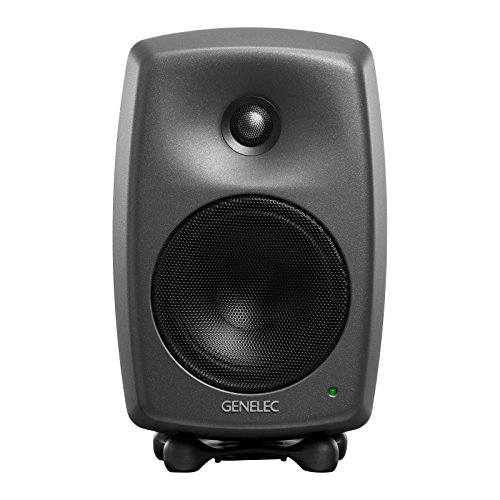
Genelec 8030D Studio Monitor
Genelec 8030D is a professional monitor that many studios use as a reference. It features a 5-inch woofer and 0.75-inch metal dome tweeter with a bi-amplified design. The speaker offers room response switches to adapt to your environment. Users note its extremely flat frequency response and precise stereo imaging. It has balanced XLR inputs, making it ideal for audio interfaces. The cabinet is made of die-cast aluminum, reducing resonance.
Pros
- Flat, uncolored sound
- Room adjustment switches
- Rugged aluminum cabinet
Cons
- Higher price point
- No wireless connectivity

Yamaha HS5 Powered Studio Monitor
Yamaha HS5 is a compact powered monitor that follows the NS-10 legacy. It has a 5-inch cone woofer and 1-inch dome tweeter, with a frequency response that is flat and revealing. Many producers use it as a second reference. The speaker includes room control and high trim switches. Its rear port design requires careful placement. Owners appreciate its honest reproduction, which helps spot flaws in a mix.
Pros
- Accurate, revealing sound
- Room control switches
- Inexpensive for the quality
Cons
- Bass rolls off quickly
- Rear port needs space from wall

JBL LSR308P Powered Studio Monitor
JBL LSR308P is an 8-inch two-way monitor that delivers extended low frequency. It uses JBL’s Image Control Waveguide for accurate imaging. With a power output of 112 dB peak SPL, it can fill larger spaces. The rear panel has balanced XLR and TRS inputs. Owners report a smooth response and good transient detail. However, the large woofer may overwhelm small rooms.
Pros
- Strong bass output
- High max SPL
- Accurate imaging with waveguide
Cons
- Large size for desktop use
- May need acoustic treatment
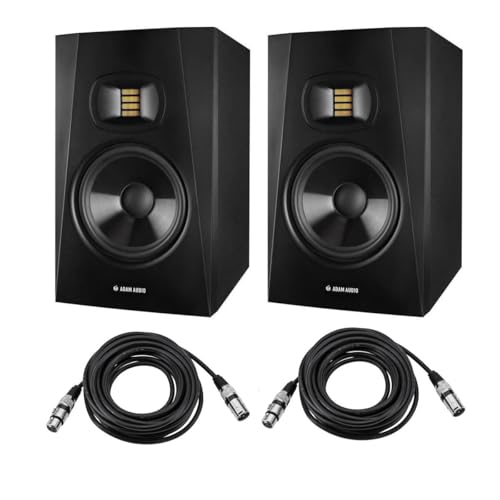
Adam Audio T7V Active Studio Monitor
Adam Audio T7V features a 7-inch woofer and their proprietary U-ART ribbon tweeter, which provides extended high frequencies up to 25 kHz. This design offers low distortion and fast transient response. The speaker has a rear bass port and room tuning switches. It includes balanced XLR and RCA inputs. Users find it excellent for hearing sibilance and high-frequency details in mixes.
Pros
- Crisp, detailed highs
- Accurate low end for size
- Flexible input options
Cons
- Ribbon tweeter may be too revealing for some
- Slight hiss at close range

Dynaudio Emit M10 Bookshelf Speakers
Dynaudio Emit M10 is a passive bookshelf speaker that requires an external amplifier. It uses a 4-inch MSP woofer and a 1-inch soft dome tweeter. The compact size makes it easy to place on a desk. It has a solid build with a front port for flexibility. Owners describe a smooth and detailed sound with excellent coherence. They are ideal for professionals who prefer their own amplification.
Pros
- Compact and well-built
- Smooth, non-fatiguing sound
- Front port allows near-wall placement
Cons
- Needs external amplifier
- Limited bass extension

KRK Rokit 5 G4 Professional Studio Monitor
KRK Rokit 5 G4 is a powered monitor with a 5-inch woofer and 1-inch tweeter. It features a built-in DSP that allows you to adjust the EQ to match your room. The front-firing port reduces boundary effects. It has balanced XLR and TRS inputs, plus RCA. Users appreciate its solid low end for a 5-inch driver and the ability to tailor the sound. It is a popular choice for project studios.
Pros
- Built-in room EQ
- Good bass for size
- Multiple input options
Cons
- Slightly colored sound compared to others
- DSP can be complex to set
How to choose
Compared at a glance
| # | Model | Driver | Best for | Score | Price |
|---|---|---|---|---|---|
| 1 | KEF Q150 Meta Bookshelf Speakers | 5.25-inch Uni-Q with 1-inch vented tweeter | Critical listening and mixing | 9.4 | Check price |
| 2 | Genelec 8030D Studio Monitor | 5-inch woofer, 0.75-inch tweeter | Accurate nearfield monitoring | 9.3 | Check price |
| 3 | Yamaha HS5 Powered Studio Monitor | 5-inch cone woofer, 1-inch dome tweeter | Budget-friendly accuracy | 9.0 | Check price |
| 4 | JBL LSR308P Powered Studio Monitor | 8-inch woofer, 1-inch tweeter | Larger rooms and bass response | 8.8 | Check price |
| 5 | Adam Audio T7V Active Studio Monitor | 7-inch woofer, U-ART ribbon tweeter | High-frequency detail with ribbon tweeter | 8.7 | Check price |
| 6 | Dynaudio Emit M10 Bookshelf Speakers | 4-inch MSP woofer, 1-inch soft dome tweeter | High-end passive bookshelf for studio | 8.6 | Check price |
| 7 | KRK Rokit 5 G4 Professional Studio Monitor | 5-inch woofer, 1-inch tweeter | Versatile settings and EQ tuning | 8.4 | Check price |
Good to know
What is the difference between bookshelf speakers and studio monitors?
Bookshelf speakers are often designed for music enjoyment with some coloration. Studio monitors aim for a flat frequency response for accurate reproduction. Professional bookshelf speakers like those in this list are similar to monitors but may be passive or designed for home studio use.
Do I need a subwoofer with bookshelf speakers?
If you mix music with deep bass, a subwoofer helps you hear low frequencies accurately. Many 5-inch speakers roll off below 50 Hz. Adding a subwoofer can extend response, but it requires careful crossover setup to avoid phase issues.
Can I use these speakers for video editing?
Yes, they are suitable for video editing because they provide clear dialogue and sound effects. However, they may reveal audio flaws more than consumer speakers, which is beneficial for professional work.
What is the ideal placement for nearfield monitoring?
Place speakers at ear level, angled towards you, forming an equilateral triangle with your head. Keep them away from walls to reduce bass buildup. Use isolation pads to decouple from the desk.
Are powered monitors better than passive speakers for professional use?
Powered monitors are convenient and often have matched amplifiers, ensuring optimal performance. Passive speakers allow you to choose an amp, but you need to match power ratings. Many professionals use active monitors for reliability.
How much power do I need?
For small rooms, 50 to 100 watts per speaker is usually enough. More power gives headroom for peaks without distortion. Consider your listening distance and desired loudness.
What is a ribbon tweeter and why is it used?
A ribbon tweeter uses a thin diaphragm that is lightweight, providing fast response and extended high frequencies. It can reproduce transient details accurately, but may sound bright to some listeners. Adam Audio uses this technology.
Can I connect these speakers to my computer?
Yes, if you have an audio interface with balanced outputs. For passive speakers, you need an amplifier between the interface and speakers. Powered monitors can connect directly to the interface.
How do I break in new speakers?
Play music at moderate volume for 20 to 30 hours. This helps the drivers loosen up, but modern speakers are mostly stable from the start. Avoid playing at very high volumes during break-in.
What should I look for in frequency response specs?
Check the range and the tolerance (like +/- 3 dB). A wider range with a smaller tolerance indicates a flatter response. But remember that the room affects the sound, so treat your listening area.
Final word
For most professional applications, the KEF Q150 Meta offers the best balance of accuracy and value. If you need a powered monitor with room tuning, the Genelec 8030D is the top choice, but at a higher cost. For budget-conscious professionals, the Yamaha HS5 provides reliable performance without breaking the bank.
You might also need

The Top Professional Internal Hard Drives for Serious Workloads

Networking Gear That Actually Keeps Up With Your Life
Top Professional Ballpoint Pens for Daily Writing
