Bottle Brushes for Baby Bottles vs Wide Mouth Tumblers
Dr. Brown’s Bottle Brush wins here because its shaped head clears the curved bottle shoulder that straight brushes miss. OXO Tot’s set adds a ventilated stand so the brush actually dries between uses. Munchkin’s Bristle Bottle Brush costs little enough to keep spares rotating through the wash.
Dr. Brown’s Bottle Brush reaches the curve where a bottle’s wall narrows toward the neck, the spot most brushes skip entirely. A similar head on the OXO Tot model gets paired with a ventilated stand, solving cleaning and drying in one buy. Munchkin’s Bristle Bottle Brush costs little enough to keep two or three in rotation. Silicone and travel picks round out the list for specific bottle types and diaper bags.
Bottle brushes look interchangeable in a store aisle, yet head shape alone decides whether the shoulder curve gets scrubbed or bypassed. A brush that never dries becomes the least hygienic item near the sink, so storage design matters as much as bristle stiffness. We compared bristle type and shoulder coverage, the nipple and valve tools included with each brush, grip security with wet hands, and how each model dries between uses based on specifications and owner feedback.
The top picks, ranked

Dr. Brown’s Bottle Brush
A flared head presses bristles against a bottle’s curved shoulder rather than spinning past it, the spot where straight brushes fail. A soft tip guards the base from scratches, and a built-in cleaner reaches the vent inserts on Dr. Brown’s own bottles. It also works well across most other brands.
Pros
- Clears the bottle shoulder that other brushes miss
- Built-in tool reaches vent system parts
- Long handle suits tall bottles
Cons
- Bristles splay after months of daily use
- No drying stand included

OXO Tot Bottle Brush with Nipple Cleaner and Stand
The nipple cleaner stores inside the handle, so it never gets lost in a drawer. A ventilated stand lets the wet brush dry upright instead of lying in a wet sink, the most overlooked hygiene detail in this category. A soft, non-slip grip stays secure even with soapy hands.
Pros
- Stand lets the brush dry properly between uses
- Nipple tool stores inside the handle
- Grip stays secure with soapy hands
Cons
- Stand takes up counter space
- Costs more than a basic brush

Munchkin Bristle Bottle Brush
Munchkin covers the fundamentals at a price that lets you keep a spare brush drying while the other is in use. A suction base holds it upright next to the sink, and a nipple cleaner tucks into the handle. Bristles run softer than premium rivals, so expect to replace this one more often.
Pros
- Cheap enough to keep several in rotation
- Suction base stands it upright by the sink
- Gentle on bottle interiors
Cons
- Bristles soften faster than firmer brushes
- Suction base loses grip over time
Philips Avent Bottle and Nipple Brush
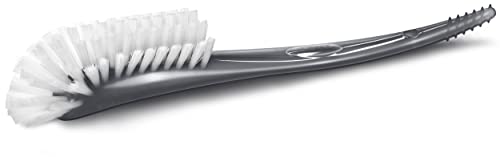
Avent sizes this brush around wide-neck bottles, so bristles contact the wall instead of rattling around inside. A rotating head follows the curve of the bottle, and a sponge tip reaches the base. Narrow-neck bottles are a poor match, since the head is simply too large to fit.
Pros
- Strong fit inside wide-neck bottles
- Rotating head follows the bottle wall
- Sponge tip cleans the base
Cons
- Too large for narrow-neck bottles
- Sponge tip wears down with heavy use

Comotomo Silicone Bottle Brush
Silicone bristles will not scratch soft silicone bottles or coated finishes, unlike a stiff nylon brush. Rinsing is quick and drying is fast, since silicone holds far less water than bristles do. Dried-on residue takes more scrubbing effort than a nylon brush needs.
Pros
- Will not scratch soft or coated bottles
- Dries fast and stays hygienic
- Fully dishwasher safe
Cons
- Less scrubbing power on dried residue
- No separate nipple tool included

Boon Cacti Bottle Cleaning Brush Set
This set groups small silicone brushes around a stand, built for valves, straws, sippy spouts and nipple interiors. It works alongside a full-size bottle brush rather than replacing one. Parents using vented bottle systems get the most use from it.
Pros
- Reaches parts a full-size brush cannot
- Stands upright to dry between uses
- Doubles for sippy cups and straws
Cons
- Not a substitute for a full-size brush
- Small pieces need careful storage

Tommee Tippee Bottle and Teat Brush
A short handle keeps this brush easy to pack into a changing bag or holiday wash kit. The teat cleaner sits at the opposite end, so there is only one item to carry rather than two. Reach suffers in taller bottles because of that shorter handle.
Pros
- Packs easily into a bag or wash kit
- Combines two tools in one item
- Inexpensive to replace
Cons
- Short handle limits reach in tall bottles
- No stand included for drying
Before you buy
What to look for in a bottle brush The dirty spot in most bottles is the curved shoulder where the wall narrows toward the neck. A straight cylindrical head skips past that curve entirely. Look for a flared or splayed head that presses bristles outward against the curve, plus a soft tip that reaches the base without scoring the plastic. Wide-neck bottles need a correspondingly wide head, since a narrow brush spinning inside a wide bottle barely makes contact.
Bristles or silicone: which cleans better? Nylon bristles scrub harder and clear dried formula more effectively, making them the better default for daily use. Silicone brushes are gentler, will not scratch soft bottles or coated finishes, and dry much faster since there is nothing for water to wick into. Many households keep one of each. Avoid anything abrasive on the inside of a plastic bottle, since scratches give bacteria somewhere to settle.
Do you need a separate nipple brush? Nipples, vent inserts and valve membranes hide residue that a full-size brush cannot reach. A dedicated nipple cleaner that pushes through the hole, plus a small parts brush for valves, is close to essential with a vented bottle system. Brushes that store the nipple tool inside the handle rarely end up lost in a drawer.
How to dry and replace a bottle brush A brush left wet in the sink becomes the least hygienic item near the bottles. Choose a design with a stand, suction base or hanging hole that lets it dry upright with airflow. Rinse thoroughly after every use rather than leaving soap trapped in the bristles. Replace a brush once bristles splay, flatten or discolor, typically every one to two months with daily use. Keeping a second brush in rotation makes proper drying realistic.
The lineup, side by side
| # | Model | Bristles | Best for | Score | Price |
|---|---|---|---|---|---|
| 1 | Dr. Brown’s Bottle Brush | Firm nylon with soft tip | Best overall | 9.4 | Check price |
| 2 | OXO Tot Bottle Brush with Nipple Cleaner and Stand | Nylon with soft splash guard | Best complete set | 9.2 | Check price |
| 3 | Munchkin Bristle Bottle Brush | Soft nylon | Best value | 9.0 | Check price |
| 4 | Philips Avent Bottle and Nipple Brush | Nylon with sponge tip | Best for wide-neck bottles | 8.8 | Check price |
| 5 | Comotomo Silicone Bottle Brush | Food-grade silicone | Best for silicone bottles | 8.6 | Check price |
| 6 | Boon Cacti Bottle Cleaning Brush Set | Multi-piece small parts set | Best for small parts | 8.3 | Check price |
| 7 | Tommee Tippee Bottle and Teat Brush | Nylon | Best for travel | 8.0 | Check price |
Good to know
How often should I replace a bottle brush?
Replace it once bristles splay, flatten or discolor, often every one to two months with daily use. A brush that has lost its shape no longer reaches the bottle wall properly.
Can bottle brushes go in the dishwasher?
Silicone brushes generally can, and many nylon brushes are top-rack safe, but check the specific product’s guidance. Even dishwasher-safe brushes still need full air drying afterward.
Do I need a separate nipple brush?
Yes, for anything with a narrow hole or a vent system, since a full-size brush cannot reach inside a nipple or valve. Most good brushes include a nipple tool built into the handle.
Are silicone brushes better than bristle brushes?
Silicone is gentler and dries faster, while nylon bristles scrub dried residue more effectively. Many parents keep both and reserve silicone for soft or coated bottles.
Should baby bottles get their own brush?
Keep a bottle brush exclusively for feeding equipment instead of general dishes. That avoids transferring grease or food residue onto bottles and nipples.
How do you clean a bottle brush itself?
Rinse it under hot running water after every use, squeeze out excess water, then stand it upright to dry. Wash it periodically in hot soapy water, or run silicone versions through the dishwasher.
Do you still need to sterilize bottles if you use a brush?
Brushing removes residue, which is a separate step from sterilizing. Follow your health provider’s current guidance on sterilizing for your baby’s age.
What size brush works for wide-neck bottles?
Choose a brush sized specifically for wide-neck bottles so bristles reach the wall. A standard narrow brush spins uselessly inside a wide bottle.
Bottle brush vs dishwasher: which cleans bottles better?
A dishwasher can sanitize bottles but often misses vent inserts and nipple interiors that need manual brushing first. Most parents brush by hand, then dishwasher-clean the parts for extra sanitizing.
Our take
Dr. Brown’s Bottle Brush earns the top spot because it reaches the shoulder curve where residue actually collects, and its built-in tool clears vent parts most brushes ignore. Want cleaning and drying solved in one purchase? The OXO Tot set with its stand is the better buy. Keep a second brush in rotation either way, so each one can dry fully between uses.