Which Bottle Nipples Actually Fit Your Baby’s Needs
Dr. Brown’s Options+ nipples pair with the most thorough venting system, Philips Avent Natural Response nipples suit babies who also breastfeed, and Comotomo silicone nipples are the softest and widest option. Lansinoh NaturalWave rounds out the list for a slower, more controlled flow.
Dr. Brown’s Options+ nipples are the pick when reflux or air intake is a concern. Philips Avent Natural Response suits babies who move between breast and bottle. Comotomo’s very soft, wide silicone nipple works for babies who reject firmer designs. Flow rate decides more than any of these shape choices.
Bottle nipples are hard to shop for since flow numbering is not standardized across brands. A level two from one company can flow faster than a level three from another. Nipples also rarely swap between bottle systems. We compared flow ranges, shape, base width, material, and venting, alongside the leaking and collapse problems parents report.
How to pick the right one
Why flow rate matters more than nipple shape Most feeding problems blamed on nipple shape actually come down to flow rate. Too slow, and a baby tires, gets frustrated, and falls asleep before finishing. Too fast, and you see gulping, choking, and milk spilling from the corners of the mouth. Watch how your baby actually feeds rather than following the age guide on the box, since those numbers are rough estimates. Flow numbering also is not standardized between brands, so a level two from one company can outpace a level three from another.
How shape and base width affect latch A wide, sloped base encourages a baby to open wide and take in more of the nipple, which is why it often suits babies who also breastfeed. Narrow nipples fit narrow bottles and are easier to handle and clean. Symmetrical shapes remove any guesswork about orientation during a nighttime feed. Babies have strong individual preferences, so a small two-pack before committing to a full set is the safer buy.
Venting, material, and why nipples collapse Venting reduces the air a baby swallows during a feed, and brands solve it two ways. Separate internal vent systems work best but add parts to wash. Valves built into the nipple base are simpler to clean but somewhat less effective. Silicone is now the standard material, since it holds shape, resists odor, and tolerates sterilizing. Latex is softer but degrades faster and raises allergy concerns. A nipple that collapses mid feed is usually blocked or seated wrong on the collar.
Compatibility, replacement, and care for bottle nipples Nipples rarely cross over between brands, so choosing a nipple effectively chooses a whole bottle system. Check whether a brand sells both narrow and wide neck versions before committing to one. Replace nipples roughly every couple of months with normal use. Swap them immediately if you spot thinning, stickiness, discoloration, tears, or a widened hole. Talk to a pediatrician about any ongoing feeding difficulty rather than cycling through nipple purchases alone.
The best picks, ranked
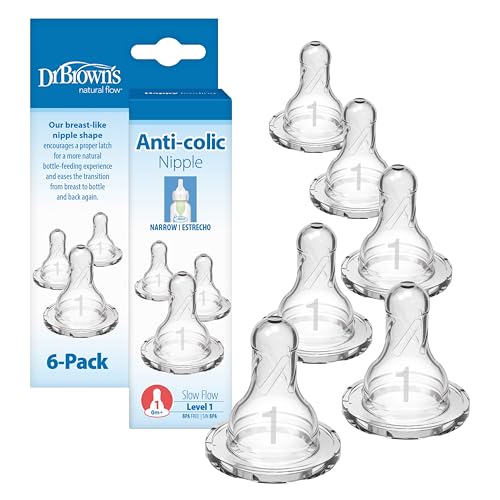
Dr. Brown’s Options+ Level 1 Bottle Nipples
An internal vent routes air away from milk instead of letting a baby swallow it during feeds. Silicone stays firm enough to resist collapsing, and flow levels step up in small increments. Extra vent parts mean more pieces to wash after each feed.
Pros
- Most thorough venting system here
- Wide range of flow levels
- Consistent shape that resists collapse
Cons
- Extra vent parts to clean
- Only fits Dr. Brown’s bottles

Philips Avent Natural Response Bottle Nipples
A wide, gently sloped shape mimics the latch a breastfed baby already knows. The valve releases milk only when the baby actively sucks, rather than flowing freely on its own. That behavior is what most combination-feeding parents look for, though the wide base needs a wide neck bottle.
Pros
- Shape suits babies who also breastfeed
- Valve reduces free flowing milk
- Widely stocked and easy to replace
Cons
- Only fits Avent Natural bottles
- Wide base is bulkier to clean

Comotomo Silicone Bottle Nipples
An unusually soft, wide nipple sits on an equally soft bottle body, which suits babies who reject firmer designs outright. Dual vents built into the base cut air intake without extra parts to assemble. Strong feeders can occasionally collapse it, especially at slower flow levels.
Pros
- Softest option for bottle refusers
- No separate vent parts to wash
- Wide base encourages a deep latch
Cons
- Can collapse for strong feeders
- Only fits Comotomo bottles

MAM Bottle Nipples
A fine textured surface covers a broad, symmetrical nipple, which many parents say helps a hesitant baby keep hold of it. Symmetry means orientation never matters when handing over a bottle. Flow levels are clearly numbered and simple to step through as a baby grows.
Pros
- Textured surface helps hesitant babies
- Symmetrical, no wrong orientation
- Clear flow level range
Cons
- Fits only MAM bottles
- Texture needs careful cleaning
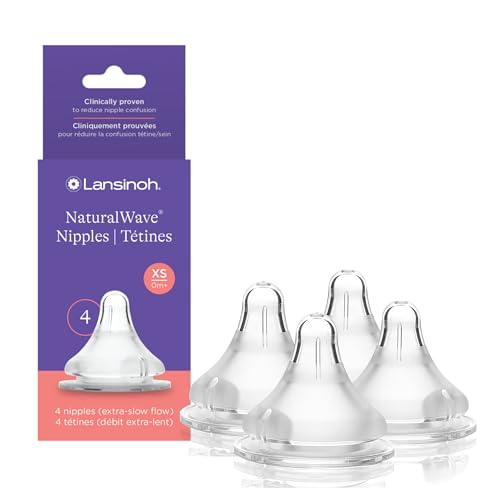
Lansinoh NaturalWave Bottle Nipples
A gradual flow requires the baby to actively work for milk rather than have it pour out, which suits babies who choke or gulp on faster nipples. The air vent sits in the base with no extra components to lose. Some parents find even the higher levels run slow for older babies.
Pros
- Genuinely slow and controlled flow
- No separate vent parts
- Good for babies who gulp
Cons
- Flow may be too slow for older babies
- Narrower fitment range

Tommee Tippee Closer to Nature Bottle Nipples
Multipacks bring the cost per nipple down, which matters since nipples are consumables that need regular replacement. The wide, soft shape feels familiar, and the anti-colic valve sits inside the nipple itself. Silicone softens sooner than firmer brands under frequent sterilizing.
Pros
- Lowest cost per nipple here
- Easy to find in multipacks
- Soft familiar shape
Cons
- Softens faster with repeated sterilising
- Valve can leak if not seated correctly

NUK Simply Natural Bottle Nipples
Several small holes replace one large opening, producing a steadier flow closer to how milk is delivered at the breast. The shape is broad and slightly flattened for a deep latch. Multiple small holes take more effort to clean, and thicker formula can block them.
Pros
- Steady flow from multiple holes
- Broad shape suits a deep latch
- Affordable and widely stocked
Cons
- Small holes need careful cleaning
- Thicker formulas can clog them
How they compare
| # | Model | Material | Best for | Score | Price |
|---|---|---|---|---|---|
| 1 | Dr. Brown’s Options+ Level 1 Bottle Nipples | Silicone | Best overall | 9.4 | Check price |
| 2 | Philips Avent Natural Response Bottle Nipples | Silicone | Best for combination feeding | 9.2 | Check price |
| 3 | Comotomo Silicone Bottle Nipples | Soft food grade silicone | Best soft silicone | 9.0 | Check price |
| 4 | MAM Bottle Nipples | Silicone with textured surface | Best for easy latching | 8.8 | Check price |
| 5 | Lansinoh NaturalWave Bottle Nipples | Silicone | Best slow flow | 8.6 | Check price |
| 6 | Tommee Tippee Closer to Nature Bottle Nipples | Silicone | Best value multipack | 8.3 | Check price |
| 7 | NUK Simply Natural Bottle Nipples | Silicone | Best multiple hole design | 8.0 | Check price |
Good to know
How do I know if a nipple’s flow rate is wrong?
A flow that runs too fast shows up as gulping, choking, and milk escaping the corners of the mouth. A flow that runs too slow causes frustration and tiring before the feed ends.
When should I move up a nipple flow level?
Follow your baby’s feeding behavior over the age printed on the pack, since that number is only an estimate. Frustration and noticeably longer feed times usually signal it is time to step up.
Are bottle nipples interchangeable between brands?
Generally not. Nipples are built for a specific bottle collar, so picking a nipple usually means picking that brand’s whole bottle system.
How often should bottle nipples be replaced?
Replace them roughly every couple of months with regular use. Swap sooner if you notice tears, stickiness, thinning, discoloration, or a hole that has widened. Frequent sterilizing shortens their life.
Silicone or latex nipples, which is better?
Silicone is the modern default, since it holds its shape, resists odor, and handles sterilizing well. Latex feels softer but wears out faster and is a factor for families managing allergies.
Why does a bottle nipple collapse during feeding?
It is usually blocked or seated wrong on the collar, which stops air from entering the bottle. Loosen the collar slightly and check that any vent parts sit assembled correctly.
Which bottle nipple works best for a breastfed baby?
Many parents choose a wide, sloped shape with a slow flow, since it encourages a deep latch without outpacing what the breast delivers. Preferences vary a lot between babies, so try a small pack first.
Should I use an anti-colic bottle nipple?
Venting designs cut the air a baby swallows, which some parents find eases fussiness after feeds. Talk to a pediatrician about persistent feeding discomfort rather than relying on product swaps alone.
Our pick
Dr. Brown’s Options+ nipples are the starting point when air intake is a concern, since the venting system here is the most thorough, even with extra parts to wash. Babies moving between breast and bottle often settle better with the Philips Avent Natural Response shape. Whichever brand you pick, get the flow rate right first, since that solves more feeding problems than switching shapes ever does.


