Bridge Cameras That Do It All Without Changing Lenses
The Sony Cyber-shot DSC-HX400V is the top pick for most people, offering a 50x optical zoom and excellent image quality in a compact body. Its main advantage is the combination of reach and portability, but it lacks 4K video and a touchscreen.
If you want the versatility of a DSLR without the hassle of changing lenses, a bridge camera is a smart choice. These all-in-one superzooms pack impressive zoom ranges into a single body, making them ideal for travel, wildlife, and everyday shooting.
We compared the most popular models on the market to highlight their strengths and weaknesses. From powerful zooms to 4K video, there’s a bridge camera here for every type of photographer.
The shortlist, ranked

Sony Cyber-shot DSC-HX400V
The Sony HX400V is a well-rounded bridge camera with a 50x Zeiss zoom lens (24-1200mm equivalent) and a 20.4MP Exmor R CMOS sensor. It offers fast autofocus and excellent image stabilization, making it great for handheld shooting at full zoom.
Pros
- Excellent 50x zoom range
- Fast and accurate autofocus
- Built-in Wi-Fi and NFC
Cons
- No 4K video recording
- Small sensor struggles in low light
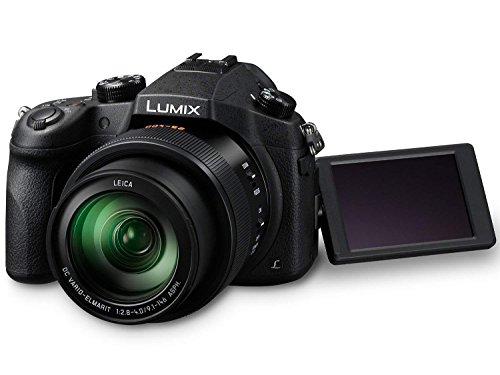
Panasonic Lumix FZ1000 II
The Panasonic FZ1000 II boasts a larger 1-inch sensor, delivering superior image quality and low-light performance. It features a 16x zoom lens (25-400mm eq.) and records stunning 4K video with advanced controls.
Pros
- Large 1-inch sensor for better photos
- 4K video with high bitrate
- Fast 12fps burst shooting
Cons
- Shorter zoom than many rivals
- Heavier and bulkier

Nikon Coolpix P1000
The Nikon P1000 holds the crown for the longest zoom lens ever on a fixed-lens camera: a staggering 125x optical zoom (24-3000mm eq.). It’s perfect for birdwatching and astrophotography, with a great ergonomic grip.
Pros
- Unbeatable 3000mm telephoto reach
- Dual detect image stabilization
- RAW shooting capability
Cons
- Very heavy and large
- Small sensor limits low light
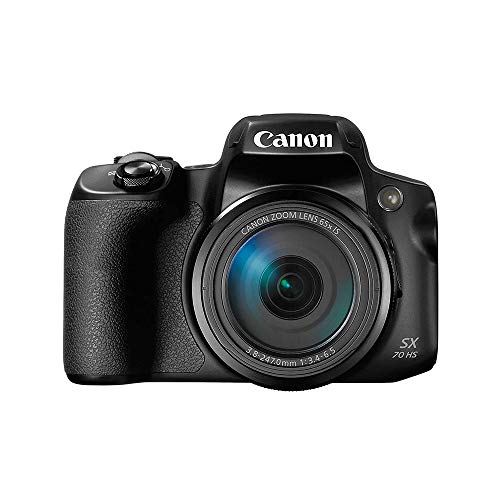
Canon PowerShot SX70 HS
The Canon SX70 HS packs a 65x optical zoom (21-1365mm eq.) into a compact body, making it an excellent travel companion. It offers 4K video and a vari-angle touchscreen, with fast and accurate Dual Pixel CMOS AF.
Pros
- Compact and lightweight
- Dual Pixel autofocus is quick
- Vari-angle touchscreen
Cons
- Short battery life
- No USB charging

Sony Cyber-shot RX10 IV
The Sony RX10 IV is a premium bridge camera with a 1-inch sensor and a fast 24-600mm equivalent lens (25x zoom). It offers class-leading autofocus with 315 phase-detection points and shoots 4K video with full pixel readout.
Pros
- Excellent image quality
- Blazing fast autofocus
- Durable build and weather-sealed
Cons
- Expensive
- Shorter zoom than some superzooms

Panasonic Lumix FZ80 (FZ82)
The Panasonic FZ80 offers a 60x optical zoom (20-1200mm eq.) at an affordable price. It features 4K video and a touchscreen, but its small sensor and contrast-detect autofocus are less impressive than pricier models.
Pros
- Very affordable
- Long 60x zoom
- Touchscreen LCD
Cons
- Autofocus can hunt in low light
- No hot shoe for external flash

Kodak PIXPRO AZ528
The Kodak AZ528 is a budget-friendly bridge camera with a 52x optical zoom (24-1248mm eq.) and a 16MP sensor. It’s easy to use with basic controls, but lacks 4K video and advanced features.
Pros
- Very low price
- Simple controls for beginners
- Lightweight and portable
Cons
- No 4K video
- Image quality is average
How they compare
| # | Model | Sensor | Best for | Score | Price |
|---|---|---|---|---|---|
| 1 | Sony Cyber-shot DSC-HX400V | 20.4 MP 1/2.3-inch CMOS | Best overall for most users | 9.4 | Check price |
| 2 | Panasonic Lumix FZ1000 II | 20.1 MP 1-inch MOS | Best for 4K video and low light | 9.2 | Check price |
| 3 | Nikon Coolpix P1000 | 16 MP 1/2.3-inch CMOS | Best for extreme zoom | 9.0 | Check price |
| 4 | Canon PowerShot SX70 HS | 20.3 MP 1/2.3-inch CMOS | Best for travel and portability | 8.8 | Check price |
| 5 | Sony Cyber-shot RX10 IV | 20.1 MP 1-inch Exmor RS CMOS | Best for all-around premium performance | 9.3 | Check price |
| 6 | Panasonic Lumix FZ80 (FZ82) | 18.1 MP 1/2.3-inch CMOS | Best budget-friendly superzoom | 8.4 | Check price |
| 7 | Kodak PIXPRO AZ528 | 16 MP 1/2.3-inch CMOS | Best entry-level bridge camera | 8.0 | Check price |
What to look for
Questions worth asking
What is a bridge camera?
A bridge camera is a fixed-lens camera that bridges the gap between compact point-and-shoots and DSLR/mirrorless cameras. They typically have a built-in superzoom lens and manual controls, but you cannot change lenses.
How does a bridge camera compare to a DSLR?
Bridge cameras are lighter and more convenient because you don’t have to carry multiple lenses. However, DSLRs usually have larger sensors (APS-C or full-frame) that produce better image quality, especially in low light. Bridge cameras often have smaller sensors, but some premium models feature 1-inch sensors.
What is the best zoom range for a bridge camera?
It depends on your subject. For general travel, 20x to 30x is sufficient. For wildlife and sports, 50x to 60x is better. The Nikon P1000 offers an extreme 125x zoom, which is great for moon photography but adds weight and cost.
Can I shoot 4K video on a bridge camera?
Many recent bridge cameras support 4K video, but not all. Models like the Panasonic FZ1000 II, Nikon P1000, Canon SX70 HS, and Sony RX10 IV offer 4K. Check the specifications before buying if 4K is important to you.
Are bridge cameras good for low-light photography?
Bridge cameras with 1-inch sensors, like the Sony RX10 IV or Panasonic FZ1000 II, perform decently in low light. However, those with smaller 1/2.3-inch sensors will produce more noise and less detail when ISO is high. A fast lens (wide aperture) also helps.
Do bridge cameras have interchangeable lenses?
No, bridge cameras have a fixed lens that cannot be removed. This is a trade-off for convenience and affordability, as you don’t need to buy extra lenses.
What is the best bridge camera for beginners?
The Kodak PIXPRO AZ528 is very affordable and easy to use, making it a good starting point. However, if you want better image quality and more features, the Panasonic FZ80 is a step up while still being budget-friendly.
How do I choose between the Sony RX10 IV and the Nikon P1000?
If you need extreme zoom (up to 3000mm) for birding or astrophotography, the Nikon P1000 is the choice. If you prefer better image quality, faster autofocus, and a more compact body, the Sony RX10 IV is superior but costs more.
Can I use a bridge camera for professional work?
Bridge cameras are not typically used by professionals due to sensor size limitations and lack of interchangeable lenses. However, some pros use them for travel or as a backup because of their convenience and long zoom.
Do bridge cameras have image stabilization?
Most bridge cameras have some form of image stabilization to reduce camera shake, especially at telephoto focal lengths. Look for models with optical stabilization, which is more effective than digital.
Our take
For most photographers, the Sony Cyber-shot DSC-HX400V offers the best balance of zoom, image quality, and price. If you can spend more and want superior video and low-light performance, choose the Panasonic FZ1000 II. For extreme reach, the Nikon P1000 is the ultimate choice, but be prepared for its bulk and cost.



