New Film Cameras You Can Actually Buy Today
Kodak M35 is the easy entry, a reusable 35mm point and shoot with a built in flash. Pentax 17 is the pick for enthusiasts, a new half frame camera with real controls. For instant prints on the spot, the Fujifilm Instax Mini 12 skips the lab entirely.
Kodak M35 is the pick for a first film camera, a cheap reusable 35mm point and shoot with a flash and no settings to learn, though its fixed focus and exposure limit control. Enthusiasts wanting real dials should jump to the Pentax 17, a newly made half frame that doubles the shots per roll. If you want a print in your hand instead of a lab wait, the Fujifilm Instax Mini 12 develops instantly. Curious about half frame on a budget? The Kodak Ektar H35 splits each frame in two.
Film camera advice gets confusing because half the recommendations are vintage bodies that may not survive a drop or a dead seal. This list sticks to cameras made and sold new today, so a warranty and spare parts still exist. Choices split by format, whether you reload or toss the camera, flash, and how many frames a roll yields. We compared format and exposures per roll, reusable against single use, flash and controls, and owner reports on reliability and how forgiving each is for someone shooting film for the first time.
The top picks, ranked

Kodak M35 35mm Film Camera
A reusable 35mm point and shoot with fixed focus and a single shutter speed, so you load a roll, wind, and press the button. A built in flash covers indoor and low light with a switch. It gives the analog look for very little, though you cannot adjust focus or exposure for tricky scenes.
Pros
- Reload and reuse for years
- Built in flash for indoor shots
- Nothing to set, just point and shoot
Cons
- Fixed focus and single exposure setting
- Struggles in mixed or harsh light

Pentax 17 Half Frame Film Camera
A newly manufactured half frame camera that shoots two vertical images per 35mm frame, doubling the pictures from a roll. Zone focusing, exposure modes and a real winding lever give control that toy cameras lack. It costs far more than a plastic point and shoot, aimed at people who want to shoot film seriously and long term.
Pros
- Doubles the shots from every roll
- Real focus and exposure control
- Newly made with a warranty
Cons
- Far pricier than point and shoots
- Half frame images are smaller

Kodak Ektar H35 Half Frame Camera
This reusable half frame splits each 35mm frame into two, so a 36 exposure roll gives about 72 pictures and cuts film cost per shot. A built in flash uses a single AAA battery, and the vertical format suits phone style framing. Sharpness and control stay basic, which fits its role as an affordable film starter.
Pros
- Doubles shots to lower film cost
- Built in flash on one AAA
- Vertical frames suit casual snaps
Cons
- Softer, lower resolution images
- No focus or exposure adjustment
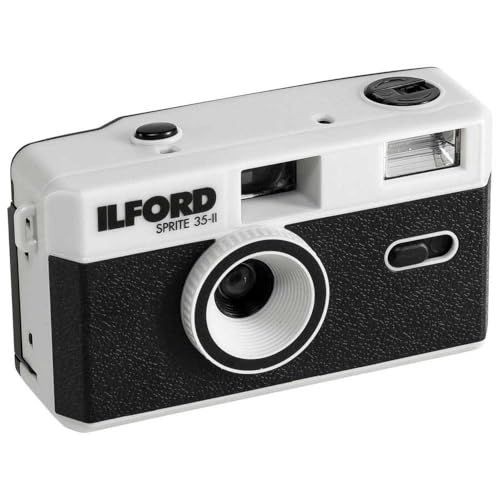
Ilford Sprite 35-II Film Camera
A lightweight reusable 35mm camera with a fixed focus lens and a flash you switch on for dark rooms. The aluminum front adds a little polish over all plastic rivals. It works with any 35mm film and keeps operation to loading, winding and shooting, making it an easy grab for everyday analog snaps.
Pros
- Simple load, wind and shoot
- Switchable flash for dark rooms
- Light and easy to carry daily
Cons
- Fixed focus limits sharpness control
- Basic single exposure setting

Fujifilm Instax Mini 12 Instant Camera
Rather than a roll for the lab, this camera ejects a credit card sized print seconds after the shutter. Automatic exposure sets brightness, and a twist of the lens enables a close up mode for selfies. Film packs are a recurring cost per print, and images are small, but you hold a photo instantly.
Pros
- Prints in your hand in seconds
- Automatic exposure is beginner friendly
- Fun close up mode for selfies
Cons
- Film packs cost per print add up
- Small print size and no negatives

Lomography Simple Use Reloadable Camera
Sold pre loaded with a roll but designed to be reloaded, this 35mm camera includes color gel flash filters for creative light effects. A built in flash and fixed focus keep it simple. Reloading takes a little care to avoid ruining film, but it rewards anyone who wants punchy, experimental analog color.
Pros
- Color gels create creative flash effects
- Reloadable rather than single use
- Comes ready to shoot out of the box
Cons
- Reloading needs a careful hand
- Fixed focus and basic exposure

Kodak Ultra F9 35mm Film Camera
A reusable 35mm camera with a wide f9 lens and a retro body that leans into a vintage look. The built in flash covers indoor shots, and a fixed focus keeps shooting simple. Its slightly wider lens suits group and street framing, though like its rivals it offers no manual focus or exposure.
Pros
- Wider lens suits groups and street
- Retro styling stands out
- Reusable with a built in flash
Cons
- No manual focus or exposure
- Wide lens can distort close subjects
How to choose
Why buy a new film camera instead of vintage Vintage bodies tempt with better glass, but a fifty year old camera can arrive with dead light seals, a stuck shutter or no repair path. Every camera here is made and sold new, so it comes with a warranty and works out of the box. That reliability matters most for a first film camera, where a mysterious fault is impossible to diagnose. Chase a vintage SLR later, once you know you enjoy shooting film.
Full frame or half frame: shots versus size Standard 35mm gives full sized negatives and about 36 shots per roll. Half frame cameras like the Pentax 17 and Kodak Ektar H35 split each frame in two, roughly doubling your pictures and halving film cost per shot. The trade is smaller negatives that show more grain when enlarged. If film cost worries you or you like shooting a lot, half frame stretches every roll much further.
Instant prints versus developing a roll Instant cameras such as the Fujifilm Instax Mini 12 hand you a print seconds after the shutter, with no lab and no waiting. The catch is cost per print and small photos with no reusable negative. Roll film cameras cost less per shot and give negatives you can scan or reprint, but you wait for developing. Decide whether the instant, physical print is worth paying more for each image.
Flash, focus and shooting in low light Most simple film cameras use fixed focus and a single shutter speed, so they need good light or the built in flash to avoid dark, blurry results. Every reusable camera here includes a flash you switch on indoors. The Pentax 17 adds zone focusing and exposure modes for tricky scenes, which is why enthusiasts pay more. Match your expectations to the controls: a point and shoot rewards bright daylight and honest flash use.
How they stack up
| # | Model | Format | Best for | Score | Price |
|---|---|---|---|---|---|
| 1 | Kodak M35 35mm Film Camera | 35mm full frame, reusable | Best for beginners | 9.2 | Check price |
| 2 | Pentax 17 Half Frame Film Camera | 35mm half frame, reusable | Best for enthusiasts | 9.1 | Check price |
| 3 | Kodak Ektar H35 Half Frame Camera | 35mm half frame, reusable | Best half frame value | 8.9 | Check price |
| 4 | Ilford Sprite 35-II Film Camera | 35mm full frame, reusable | Best simple reusable | 8.6 | Check price |
| 5 | Fujifilm Instax Mini 12 Instant Camera | Instax Mini instant film | Best instant prints | 8.5 | Check price |
| 6 | Lomography Simple Use Reloadable Camera | 35mm full frame, reloadable | Best for creative color | 8.2 | Check price |
| 7 | Kodak Ultra F9 35mm Film Camera | 35mm full frame, reusable | Best retro styling | 8.0 | Check price |
Common questions
What is the best film camera for beginners?
The Kodak M35 is the easiest start, a reusable 35mm point and shoot with a flash and nothing to set. Load a roll, wind and shoot. Its fixed focus and single exposure struggle in harsh light, but it delivers the film look cheaply and reliably.
Are new film cameras better than vintage ones?
For a first camera, usually yes. New models like the Kodak M35 and Pentax 17 come with warranties and work out of the box, while vintage bodies may have dead seals or a broken shutter with no repair path. Vintage glass can be better once you know you enjoy film.
What is a half frame film camera?
A half frame camera splits each 35mm frame into two images, so a 36 exposure roll yields about 72 pictures. The Pentax 17 and Kodak Ektar H35 both do this. It lowers film cost per shot but gives smaller negatives that show more grain when enlarged.
How many photos can you take on a roll of film?
A standard 35mm roll holds about 24 or 36 exposures. Half frame cameras double that to roughly 48 or 72 because they use half of each frame. Instant cameras like the Instax Mini 12 use film packs, typically ten prints per pack, rather than a roll.
Do I need to develop film from these cameras?
Most of them, yes. The 35mm cameras here produce a roll you send to a lab or develop at home to get prints or scans. The Fujifilm Instax Mini 12 is the exception, ejecting a finished print seconds after each shot with no developing needed.
Which film camera is best for instant prints?
The Fujifilm Instax Mini 12 hands you a credit card sized print in seconds with automatic exposure and a close up mode. It skips the lab entirely. The cost per print and lack of negatives are the trade offs against roll film cameras.
Can you reuse these film cameras or are they disposable?
Most here are reusable. The Kodak M35, Ilford Sprite, Kodak Ultra F9 and Ektar H35 all reload with fresh 35mm film. The Lomography Simple Use ships loaded but is designed to be reloaded with care. None on this list are throwaway single use cameras.
What kind of film do these cameras use?
The 35mm cameras take standard 35mm rolls, both color and black and white, in various ISO speeds. Half frame models use the same rolls but split each frame. The Instax Mini 12 needs Instax Mini instant film packs, which are specific to that instant format.
Is film photography expensive to shoot?
It has ongoing costs the vintage advice often skips: film rolls and developing per roll, or film packs per instant print. Half frame cameras like the Pentax 17 stretch each roll to lower cost per shot. Budget for film and lab fees, not just the camera body.
The bottom line
For a first film camera, the Kodak M35 is the sensible buy because it is cheap, reusable and reliable, as long as you shoot in good light or use the flash. Move up to the Pentax 17 if you want real focus and exposure control and plan to shoot seriously, or the Kodak Ektar H35 for half frame savings on a budget. Anyone who wants a physical print in hand right away should skip roll film and take the Fujifilm Instax Mini 12.