Capture More for Less: Top Budget Cameras Compared
For most people, the Canon EOS Rebel T7 is the best budget camera. It offers a full DSLR experience with an optical viewfinder and access to Canon’s huge lens lineup, all at a price that won’t break the bank. Its main limitation is the older 9-point autofocus system, which can struggle with fast action.
Finding a quality camera without spending a fortune is easier than ever. The market is full of capable models that deliver excellent photos for casual shooting, travel, vlogging, and even some professional work.
We compared the most popular budget cameras on Amazon based on specifications, user reviews, and real-world performance reports. Our goal is to help you choose the right one for your specific needs and skill level.
The top picks, ranked

Canon EOS Rebel T7 DSLR Camera with 18-55mm Lens
The Canon EOS Rebel T7 is a staple in the budget camera market. It features a 24.1-megapixel APS-C sensor, a 9-point autofocus system, and Full HD video recording. The included 18-55mm lens is versatile for everyday shooting. Users consistently praise its image quality and ease of use, making it an ideal first DSLR.
Pros
- Excellent image quality for the price
- Huge selection of affordable lenses
- Simple controls perfect for beginners
Cons
- Limited 9-point autofocus system
- No touchscreen or articulating LCD

Sony Alpha a6000 Mirrorless Camera with 16-50mm Lens
The Sony a6000 remains a top choice for budget-minded photographers who want mirrorless advantages. It packs a 24.3-megapixel APS-C sensor and a lightning-fast 179-point phase-detection autofocus system. The compact body makes it highly portable. Despite its age, it still outperforms many newer budget models.
Pros
- Blazing fast autofocus
- Compact and lightweight design
- Great image quality for the price
Cons
- Menu system can be intimidating
- No touchscreen functionality

Nikon D3500 DSLR Camera with 18-55mm VR Lens
The Nikon D3500 is renowned for its beginner-friendly approach. It includes a dedicated Guide Mode that walks you through settings and techniques. The 24.2-megapixel sensor delivers crisp images, and the camera offers excellent battery life. It’s a simple, no-frills DSLR that gets the job done.
Pros
- Excellent battery life
- Guide Mode helps beginners learn
- Comfortable grip and handling
Cons
- No touchscreen
- No 4K video recording

Fujifilm X-T200 Mirrorless Camera with 15-45mm Lens
The Fujifilm X-T200 offers a compelling mix of retro style and modern features. It has a 24.2-megapixel APS-C sensor, a fully articulating touchscreen, and 4K video recording. The camera is lightweight and offers a variety of film simulation modes for creative looks. It is an excellent choice for hybrid shooters.
Pros
- 4K video recording
- Fully articulating touchscreen
- Beautiful film simulations
Cons
- Autofocus can be less reliable in low light
- Battery life is modest

Panasonic Lumix G7 Mirrorless Camera with 14-42mm Lens
The Panasonic Lumix G7 is a Micro Four Thirds camera that brings 4K video and a fully articulating touchscreen to the budget segment. It features a 16-megapixel sensor, which is lower resolution than some, but it excels in video capabilities. The camera includes Wi-Fi and a high-resolution electronic viewfinder.
Pros
- Excellent 4K video quality
- Fully articulating touchscreen
- Great value for video features
Cons
- Sensor is smaller than APS-C
- Low-light performance is not stellar
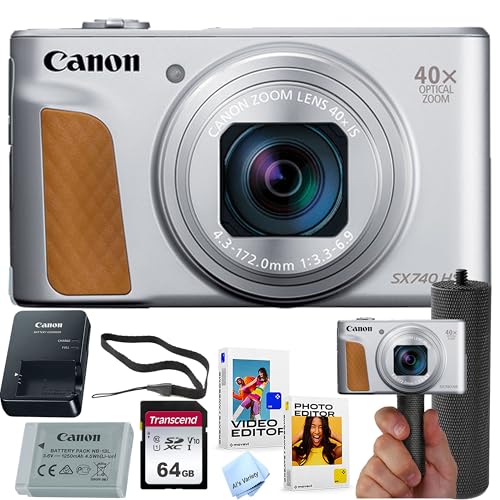
Canon PowerShot SX740 HS Digital Camera
The Canon PowerShot SX740 HS is a pocket-sized compact camera with a massive 40x optical zoom lens. It features a 20.3-megapixel CMOS sensor and 4K video recording. This camera is perfect for travel, concerts, or wildlife where you need reach. It is incredibly easy to use and fits in your pocket.
Pros
- Massive zoom range in a small body
- 4K video recording
- Simple point-and-shoot operation
Cons
- Small sensor limits low-light quality
- No viewfinder
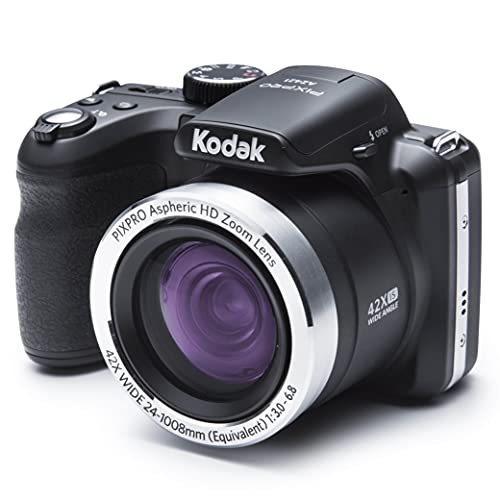
Kodak PIXPRO Astro Zoom AZ421-BK 16MP Digital Camera
The Kodak PIXPRO AZ421 is one of the most affordable cameras on the market. It offers a 16-megapixel sensor and a 42x optical zoom lens. While its image quality and features are basic, it provides a great entry point for kids or those who want a simple camera for occasional use. It records 720p HD video.
Pros
- Very affordable price
- Long zoom range
- Lightweight and easy to carry
Cons
- Image quality is limited
- No viewfinder or 4K video
Before you buy
Understand Your Needs Before buying a camera, think about what you will shoot. If you want to photograph sports or wildlife, prioritize autofocus speed and zoom. For vlogging, you need a flip screen and a microphone input. For travel, portability and battery life are key. Matching the camera to your primary use ensures you get the most value.
Sensor Size and Megapixels Sensor size matters more than megapixel count. A larger sensor, like APS-C, captures more light and produces better images in low light. Budget cameras often use APS-C or Micro Four Thirds sensors, which are good. Megapixels beyond 20 are plenty for most users. Focus on sensor size over pixel count.
Video Capabilities Video is now a standard feature. If you plan to record video, look for at least 1080p Full HD. Many budget cameras now offer 4K, but it can be limited by cropping or poor autofocus. Check if the camera has a microphone input if you need quality audio. Some cameras have features like clean HDMI output for streaming.
Lens Ecosystem and Expandability Interchangeable lens cameras allow you to grow your kit. Canon and Nikon have vast lens selections, while Sony and Fujifilm have excellent mirrorless lenses. Consider the cost and availability of lenses. If you prefer a simple all-in-one, a compact superzoom like the Canon SX740 offers flexibility without changing lenses.
How they compare
| # | Model | Sensor | Best for | Score | Price |
|---|---|---|---|---|---|
| 1 | Canon EOS Rebel T7 DSLR Camera with 18-55mm Lens | 24.1 MP APS-C CMOS | Beginners wanting a classic DSLR experience | 9.2 | Check price |
| 2 | Sony Alpha a6000 Mirrorless Camera with 16-50mm Lens | 24.3 MP APS-C Exmor CMOS | Compact mirrorless shooting with fast autofocus | 9.0 | Check price |
| 3 | Nikon D3500 DSLR Camera with 18-55mm VR Lens | 24.2 MP APS-C CMOS | Absolute beginners who want a guide mode | 9.0 | Check price |
| 4 | Fujifilm X-T200 Mirrorless Camera with 15-45mm Lens | 24.2 MP APS-C CMOS | Vloggers and content creators who want 4K | 8.8 | Check price |
| 5 | Panasonic Lumix G7 Mirrorless Camera with 14-42mm Lens | 16 MP Micro Four Thirds | 4K video and interchangeable lenses on a budget | 8.7 | Check price |
| 6 | Canon PowerShot SX740 HS Digital Camera | 20.3 MP 1/2.3-inch CMOS | Travel and zoom without changing lenses | 8.5 | Check price |
| 7 | Kodak PIXPRO Astro Zoom AZ421-BK 16MP Digital Camera | 16 MP 1/2.3-inch CCD | Ultra-budget shooting with long zoom | 8.0 | Check price |
Questions worth asking
What is the best budget camera for beginners?
The Canon EOS Rebel T7 and Nikon D3500 are both excellent for beginners. The Canon offers a huge lens selection and simple menus. The Nikon has a Guide Mode that teaches you photography basics. Either will serve you well as you learn.
Are budget cameras good enough for professional work?
Many budget cameras can produce professional-looking images if you have good lighting and technique. However, they may lack advanced features like weather sealing, high burst rates, or dual card slots. For many freelance projects, they can be sufficient.
What is the difference between DSLR and mirrorless cameras?
DSLRs use a mirror to reflect light into an optical viewfinder, which makes them larger. Mirrorless cameras have no mirror and use an electronic viewfinder or the rear screen, allowing smaller bodies. Mirrorless cameras often have faster autofocus and video features, while DSLRs typically have longer battery life.
How many megapixels do I need for high-quality prints?
For most purposes, 16 to 20 megapixels is enough. You can print large sizes, like 16×20 inches, with 12 megapixels. Higher megapixels only become important if you need heavy cropping or very large prints.
Do I need to buy additional lenses?
The kit lens that comes with the camera is versatile for general use. However, you might want a prime lens (like a 50mm f/1.8) for better low-light performance and portraits, or a telephoto zoom for wildlife. Budget-friendly lenses are available for most systems.
Is 4K video worth having in a budget camera?
If you plan to edit and crop your videos, 4K offers more flexibility. Many budget cameras provide 4K but with some limitations like crop or lower frame rates. For casual sharing, 1080p is still acceptable. Assess your video needs before paying extra for 4K.
How important is image stabilization?
Image stabilization reduces blur caused by camera shake. It is crucial for low-light shots and telephoto shooting. Many lenses come with optical stabilization, and some cameras have built-in stabilization. If you shoot handheld frequently, it is a valuable feature.
Can I use older lenses on a new budget camera?
It depends on the mount. Canon and Nikon DSLRs have maintained mount compatibility over the years. Mirrorless cameras may require adapters. Check the manufacturer’s compatibility list. Using older lenses can save money and extend your creative options.
What accessories should I buy with my budget camera?
A memory card, spare battery, and a camera bag are essential. A tripod and a basic cleaning kit are also recommended. If you plan to vlog, consider a microphone and a small light. Start with the essentials and expand as you grow.
How long will a budget camera last?
With proper care, a budget camera can last many years. Shutter life is typically rated at 100,000 to 150,000 shots. The sensor and electronics are durable. Weather sealing is not common at this price, so protect it from moisture and dust.
The bottom line
The Canon EOS Rebel T7 is the best budget camera for most people because it combines proven DSLR reliability with a vast ecosystem and excellent image quality. If you prefer a compact mirrorless design and fast autofocus, the Sony a6000 is a close second. For video creators, the Panasonic Lumix G7 offers the best 4K features at this price. No matter which you choose, you can start taking great photos without spending a fortune.