Compact Cameras Under 1000 Compared for Sensor and Zoom
Canon’s PowerShot G7 X Mark III suits most buyers under 1000, pairing a bright 24 to 100mm f1.8 to f2.8 zoom with uncropped 4K in a pocketable body. Ricoh’s GR IIIx wins outright image quality with its APS-C sensor, while the Sony ZV-1 II is the clear vlogging pick.
For most people the Canon PowerShot G7 X Mark III is the best compact camera under 1000, combining a bright one inch sensor zoom, uncropped 4K and a body that disappears into a jacket pocket. Stills purists should pick the APS-C Ricoh GR IIIx instead, and creators who mostly talk to camera belong with the Sony ZV-1 II.
Compact cameras earn their place against phones with bigger sensors, real optical zoom, brighter glass and proper video controls. Choosing between them is tricky because every model trades one strength for another: reach against brightness, sensor size against zoom, durability against image quality. We compared sensor formats, lens specifications, video features, autofocus behavior and viewfinder options, then weighed long term owner feedback on how each camera holds up in daily carry.
What to look for
How to choose a compact camera under 1000 Sensor size decides image quality before any other spec, so start there. One inch sensors, as in the Canon G7 X Mark III, balance quality against pocketability. APS-C in the Ricoh GR IIIx and Micro Four Thirds in the Panasonic LX100 II pull ahead in low light and background blur, at the cost of zoom or size. Once the sensor question is settled, rank your remaining priorities among lens brightness, zoom reach, video tools and rugged build, because no single model wins all four.
Zoom reach vs lens brightness: which matters more? Every compact lens trades reach for light. Panasonic’s ZS200 spans 24 to 360mm but closes to f6.4 zoomed in, which forces high ISO indoors. Short bright zooms like the G7 X Mark III’s f1.8 to f2.8 gather several times more light and blur backgrounds better, yet stop at 100mm. Travel photographers who shoot distant subjects in daylight should take the reach. Everyone shooting people, interiors or evenings should take the brightness.
What features make a compact good for vlogging? Three things separate a vlogging camera from a stills compact: a lens wide enough to frame your face at arm’s length, a screen that flips to face you, and autofocus that holds a moving subject. Sony’s ZV-1 II covers all three and adds a directional microphone plus a product showcase mode. Canon’s G7 X Mark III works as a second choice for creators who split time between video and stills, since its 24mm wide end is tighter but its 4K is clean and uncropped.
Is a viewfinder worth having in a compact? Direct sunlight washes out rear screens, and that is when an eye level finder earns its space. Built-in electronic viewfinders come with the Panasonic LX100 II and ZS200, while the Canon G5 X Mark II hides one in a pop-up housing. Screen only models, the Ricoh GR IIIx, Sony ZV-1 II and OM System TG-7, stay slimmer instead. Frequent outdoor shooters should prioritize a finder; casual and indoor shooters rarely miss it.
The shortlist, ranked
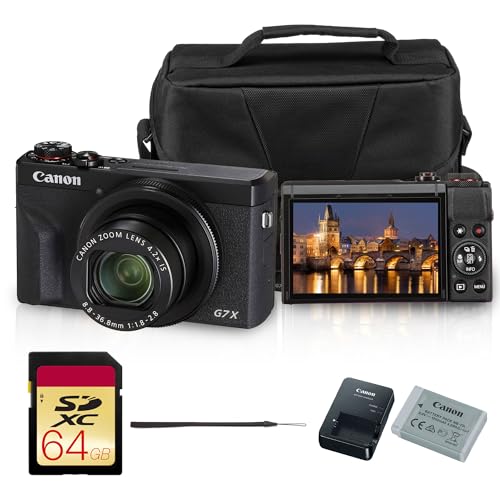
Canon PowerShot G7 X Mark III
One camera covering stills, video and daily carry is the pitch, and the G7 X Mark III delivers it. Its f1.8 to f2.8 zoom stays bright across the 24 to 100mm range, the stacked one inch sensor reads out fast, and 4K records without a crop. Creators stepping up from a phone name it constantly in owner feedback, though composing means using the rear screen since there is no viewfinder.
Pros
- Bright f1.8 to f2.8 zoom across a useful range
- Uncropped 4K plus live streaming support
- Slips into a jacket or trouser pocket
Cons
- No electronic viewfinder for bright sun
- Modest battery life demands spares

Ricoh GR IIIx
An APS-C sensor, the largest format in this group, sits behind a fixed 40mm equivalent f2.8 lens in a body slimmer than anything else here. Street and travel photographers who work one focal length get file quality no zoom compact matches, plus snap focus for instant candid frames. Zooming, 4K video and a viewfinder are all absent, which makes this a deliberate specialist tool.
Pros
- APS-C files from a body that fits any pocket
- Snap focus nails candid street moments
- Sharp fixed lens with distinctive rendering
Cons
- No zoom and no viewfinder
- Video tops out at 1080p

Sony ZV-1 II
Handheld selfie framing drives the whole design, starting with an 18 to 50mm equivalent zoom wider than any rival here. A three capsule directional microphone, product showcase focus mode and fully articulating screen round out the creator toolkit, and Sony’s subject tracking holds faces reliably in 4K. Stills come out fine, but stabilization gaps and the dimmer long end make this a video first camera.
Pros
- 18mm wide end frames arm’s length vlogging easily
- Subject tracking autofocus rarely loses a face
- Built-in directional microphone with wind screen
Cons
- No optical stabilization for stills
- Lens dims to f4 at the long end

Panasonic Lumix LX100 II
Physical aperture, shutter and exposure dials give this retro styled compact the handling of a classic rangefinder. Behind the Leica branded 24 to 75mm f1.7 to f2.8 zoom sits a Micro Four Thirds sensor used in multi aspect mode, so effective resolution lands around 17MP. Low light performance and depth of field control clearly beat one inch rivals, and a built-in viewfinder seals the enthusiast appeal.
Pros
- Large sensor paired with a bright Leica zoom
- Dedicated dials for aperture and shutter speed
- Strong low light and depth of field control
Cons
- Rear screen neither tilts nor articulates
- Multi-aspect design caps resolution near 17MP

Canon PowerShot G5 X Mark II
Canon fits a pop-up electronic viewfinder into a body barely larger than the G7 X Mark III, solving the washed out screen problem on sunny days. Reach extends further too, with a 24 to 120mm equivalent zoom that holds f1.8 to f2.8 brightness. Raising the finder takes a two step pop and pull motion that owners describe as fiddly, yet no other pocket camera here offers eye level framing this small.
Pros
- Pop-up viewfinder enables eye level framing
- 120mm reach without losing lens brightness
- Fast burst shooting for action moments
Cons
- Two step EVF deployment feels fiddly
- Sits above the G7 X Mark III in outlay
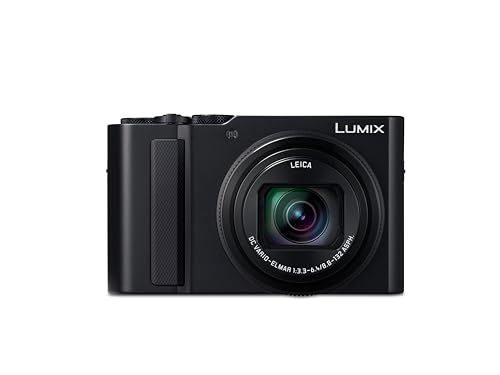
Panasonic Lumix ZS200
Fifteen times zoom, 24 to 360mm equivalent, stretches across a one inch sensor in a camera you can still pocket. Sold as the TZ200 in some regions, it replaces a bag of lenses on trips where packing light wins. Brightness is the sacrifice: the lens closes to f6.4 at full reach, so dim interiors and evening streets push the sensor harder than the bright zoom compacts here.
Pros
- 15x reach covers landscapes through distant detail
- Built-in viewfinder for bright conditions
- Replaces multiple lenses on a trip
Cons
- f6.4 long end struggles as light fades
- Weakest low light results of the zoom models

OM System Tough TG-7
Waterproof, freezeproof, crushproof and dropproof without a housing, the TG-7 goes where every other camera in this group would die. Snorkeling, ski days and dusty trails are its home turf, helped by dedicated underwater modes and a macro system that focuses almost against the lens. Image quality trails the pack because the 1/2.33 inch sensor is the smallest here, so treat it as an adventure specialist.
Pros
- Survives water, drops, crushing and freezing
- Class leading macro and underwater modes
- Bright f2 aperture at the wide end
Cons
- Small 12MP sensor limits image quality
- No touchscreen and no viewfinder
Side by side
| # | Model | Sensor | Best for | Score | Price |
|---|---|---|---|---|---|
| 1 | Canon PowerShot G7 X Mark III | 1-inch 20MP stacked CMOS | Best all-rounder | 9.4 | Check price |
| 2 | Ricoh GR IIIx | APS-C 24MP CMOS | Best image quality | 9.2 | Check price |
| 3 | Sony ZV-1 II | 1-inch 20MP stacked CMOS | Best for vlogging | 9.0 | Check price |
| 4 | Panasonic Lumix LX100 II | Micro Four Thirds 17MP (multi-aspect) | Best larger-sensor compact | 8.8 | Check price |
| 5 | Canon PowerShot G5 X Mark II | 1-inch 20MP stacked CMOS | Best with a viewfinder | 8.6 | Check price |
| 6 | Panasonic Lumix ZS200 | 1-inch 20MP CMOS | Best zoom range | 8.3 | Check price |
| 7 | OM System Tough TG-7 | 1/2.33-inch 12MP CMOS | Best rugged compact | 8.0 | Check price |
Questions worth asking
Are compact cameras still worth buying when phones are so good?
Yes, for specific reasons: true optical zoom, larger sensors and real video controls. Phones win on convenience and computational tricks, but a one inch or APS-C compact produces cleaner low light files, natural background blur and zoom that phones can only crop toward.
Which compact camera has the best image quality under 1000?
Ricoh’s GR IIIx leads on pure file quality thanks to its APS-C sensor, with the Micro Four Thirds Panasonic LX100 II close behind. Both beat every one inch rival in low light and depth of field, though they sacrifice zoom range or video features to do it.
What is the best compact camera for vlogging?
Sony’s ZV-1 II stands out with its 18 to 50mm equivalent zoom, fully articulating screen, product showcase mode and directional microphone. Canon’s G7 X Mark III makes a strong second pick for creators who shoot as many stills as videos.
Which of these compact cameras have a viewfinder?
Three of the seven. Built-in electronic viewfinders come with the Panasonic LX100 II and ZS200, and the Canon G5 X Mark II adds a pop-up finder. The Ricoh GR IIIx, Sony ZV-1 II and OM System TG-7 rely on their rear screens.
Which compact camera has the longest zoom?
Panasonic’s ZS200 reaches furthest by a wide margin, spanning 24 to 360mm equivalent for a 15x range. Nothing else here passes 120mm. Its lens does dim to f6.4 at full reach, so that zoom performs best in decent light.
Which compact is best for travel?
It depends on how you travel. The ZS200 replaces a lens bag with one 15x zoom, the GR IIIx weighs least and shoots the best files, and the TG-7 survives beaches, boats and ski slopes. For a single do everything answer, most travelers land on the G7 X Mark III.
Are these cameras good in low light?
Larger sensors cope best. The Ricoh GR IIIx and Panasonic LX100 II lead, followed by the bright lensed one inch Canons. Panasonic’s long zoom ZS200 and the small sensor TG-7 fall off fastest as light fades.
Is any compact camera here waterproof?
Only the OM System Tough TG-7, which is waterproof, freezeproof, crushproof and shockproof with no separate housing. Swimming, snorkeling and dusty trail use are exactly what it is built for. A smaller sensor is the trade for that durability.
Which compact camera is easiest to carry every day?
Ricoh’s GR IIIx is the slimmest, sliding into a trouser pocket like a phone. Canon’s G7 X Mark III comes close while adding a versatile zoom. Both disappear into daily carry in a way the viewfinder and long zoom models do not.
Final word
Canon’s PowerShot G7 X Mark III remains the best compact camera under 1000 for most people, balancing a bright zoom, clean uncropped 4K and true pocketability. Pick the Ricoh GR IIIx when image quality and street shooting outrank everything else, the Sony ZV-1 II when vlogging comes first, or the OM System Tough TG-7 when the camera has to survive water and drops.


