Cameras Built for Astrophotography and Night Sky Shots
The Sony Alpha 7S III leads astrophotography with huge photosites and remarkably clean high ISO files. The Nikon Z6 III balances resolution and low light for the money, and the Canon EOS R8 offers the most affordable full frame entry point.
Photographing the Milky Way rewards a specific sensor trait: large photosites that stay clean at high ISO. That points straight to the Sony Alpha 7S III. Buyers wanting resolution and night performance together should look at the Nikon Z6 III, and the Canon EOS R8 delivers full frame reach on the smallest budget.
Noise punishes astrophotography in a way most photography does not. Faint starlight forces high ISO settings, and how cleanly a sensor renders those shadows matters more than megapixel count ever will. We compared high ISO behaviour, photosite size, long exposure handling and how each camera processes stars to rank these seven for the night sky.
Our top picks

Sony Alpha 7S III
Resolution stays deliberately low at 12 megapixels, which makes each photosite large and hungry for light. That produces astonishingly clean files at the high ISO settings the night sky demands, with faint star detail intact and remarkably little noise. Daylight cropping is not its strength, but for the Milky Way and dim conditions nothing here matches its shadow performance.
Pros
- Cleanest high ISO files in this group
- Large photosites gather faint starlight
- Excellent for very dark skies
Cons
- Low resolution limits daytime detail
- Not suited to large landscape prints

Nikon Z6 III
A 24 megapixel sensor pairs with clean high ISO output and a viewfinder bright enough to compose in near darkness. Long exposure noise reduction and reliable bulb control keep star trails and Milky Way frames straightforward. Extra resolution over the a7S III adds usable foreground landscape detail without sacrificing much shadow cleanliness.
Pros
- Good balance of resolution and low light
- Bright viewfinder for composing in the dark
- Reliable long exposure handling
Cons
- Battery drains quickly on cold nights
- Smaller lens range than Sony
Canon EOS R8
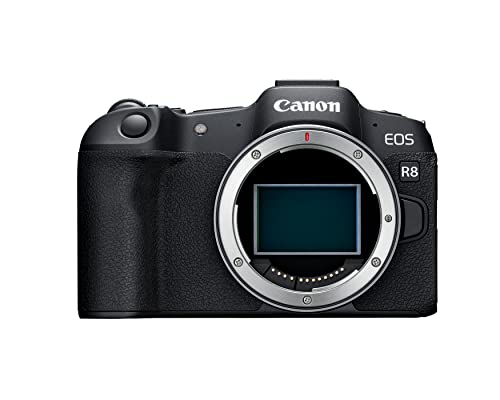
A capable full frame sensor sits inside a light, affordable body here, the cheapest sensible entry into serious night sky work. Its 24 megapixel sensor handles high ISO cleanly enough for Milky Way frames, and full frame light gathering gives it a real edge over crop bodies after dark. Travel to dark sky sites suits the compact size well, though the small battery needs spares for a long session.
Pros
- Full frame performance at a low price
- Light and easy to travel with
- Clean high ISO for the money
Cons
- Small battery needs spares for long nights
- No in body stabilisation

Sony Alpha 7 IV
Photographers who want the night sky and detailed foreground landscapes from one body find a strong match here. A 33 megapixel sensor resolves fine terrestrial detail while still delivering clean enough high ISO for star fields. The deep E mount catalogue includes many fast wide lenses suited to astrophotography, and long exposure control stays dependable for single frames and star trails alike.
Pros
- High resolution for foreground detail
- Wide choice of fast astrophotography lenses
- Strong dynamic range for blended exposures
Cons
- Higher resolution shows more noise than the a7S III
- Menus take time to learn

Nikon Z8
Capturing the widest sweep of sky with maximum detail calls for the Z8’s 45 megapixel stacked sensor and Nikon’s clean shadow rendering. That resolution suits large prints of the Milky Way arching over a landscape, and a rugged sealed body handles cold, damp nights well. Price runs higher, and the denser pixel count shows a little more noise than the low resolution specialists.
Pros
- Very high resolution for large prints
- Rugged sealed body for field nights
- Good shadow rendering for the pixel count
Cons
- More noise than low resolution rivals
- Large files need fast storage

Canon EOS R6 Mark II
Moderate resolution at 24 megapixels helps this body stay clean at the high ISO values astrophotography demands. In body stabilisation assists when framing handheld before a long exposure begins, and Canon’s colour science renders the subtle hues of the night sky well. As an all rounder that happens to be very capable after dark, it never feels like a narrow specialist.
Pros
- Clean files at very high ISO
- In body stabilisation for framing
- Pleasing night sky colour
Cons
- Lower resolution than hybrid rivals
- Limited third party RF lenses

Fujifilm X-T5
Staying with a smaller system does not rule out fine star field detail, since a 40 megapixel APS-C sensor resolves plenty here. Tactile exposure dials make manual night settings easy to adjust by feel in the dark. The crop sensor gathers less light than full frame rivals, so it performs best under genuinely dark skies paired with a fast wide lens.
Pros
- High detail for the sensor size
- Dials easy to adjust by feel in the dark
- Compact and light system
Cons
- Crop sensor gathers less light than full frame
- High resolution shows noise sooner
How to choose
Why high ISO cleanliness beats resolution here Faint starlight forces the sensor into high ISO territory, so how cleanly it renders those shadows decides the result. A low resolution full frame sensor with large photosites, like the a7S III, often produces cleaner night skies than a higher resolution body. Shadow noise behaviour deserves more weight than megapixel counts when the sky is the subject.
Full frame gathers the most light A larger sensor collects more of the limited light available after dark, which is why full frame bodies dominate this list. Crop sensors can still produce fine results under genuinely dark skies paired with a fast lens, though they start at a disadvantage. Full frame gives the most headroom for the Milky Way and faint detail when budget allows.
Long exposure control and star processing Reliable bulb mode, long exposure noise reduction and, for star trails, an intervalometer make night sessions far easier. Some cameras apply aggressive noise processing that can smear the faintest stars, so checking how each handles pinpoint light sources is worth the effort. Dependable manual control becomes essential once the sky goes fully dark.
Lenses and stability matter as much as the body A fast wide lens that opens to a low aperture number keeps ISO and exposure time manageable, reducing both noise and star trailing. A sturdy tripod is non negotiable, since every astrophotography exposure runs several seconds at minimum. Pairing the body with a fast wide lens and solid support gets the most out of any camera on this list.
How they stack up
| # | Model | Sensor | Best for | Score | Price |
|---|---|---|---|---|---|
| 1 | Sony Alpha 7S III | 12 megapixel full frame | Best overall | 9.5 | Check price |
| 2 | Nikon Z6 III | 24 megapixel partially stacked full frame | Best value all rounder | 9.2 | Check price |
| 3 | Canon EOS R8 | 24 megapixel full frame | Best budget full frame | 8.8 | Check price |
| 4 | Sony Alpha 7 IV | 33 megapixel full frame | Best hybrid for landscapes and sky | 8.9 | Check price |
| 5 | Nikon Z8 | 45 megapixel stacked full frame | Best for resolution and detail | 8.7 | Check price |
| 6 | Canon EOS R6 Mark II | 24 megapixel full frame | Best for very high ISO | 8.6 | Check price |
| 7 | Fujifilm X-T5 | 40 megapixel APS-C | Best APS-C option | 8.2 | Check price |
Questions worth asking
Do I need a full frame camera for astrophotography?
It helps considerably, since a larger sensor gathers more of the faint light from the night sky. A crop sensor can still deliver good results under truly dark skies with a fast wide lens, but full frame provides more headroom.
Why does lower resolution sometimes win for the night sky?
Fewer, larger photosites capture more light each and produce cleaner shadows at high ISO. That is why the 12 megapixel a7S III often renders the Milky Way with less noise than higher resolution bodies.
What lens should I use for the Milky Way?
A wide lens that opens to a low aperture number, such as f2.8 or brighter, works best. It gathers light quickly, keeping ISO and exposure time down to limit noise and star trailing.
How long can exposures run before stars start to trail?
Without a tracking mount, exposures beyond roughly ten to twenty seconds start showing star trails depending on focal length. A wider lens tolerates slightly longer exposures before the movement becomes visible.
Does in body stabilisation help for astrophotography?
Not during the exposure itself, since the camera sits on a tripod throughout. It only helps when framing or focusing handheld beforehand, making it a convenience rather than a core requirement.
What is a star eater and should I worry about it?
Some cameras apply noise processing that can dim the faintest stars, a behaviour nicknamed star eating. Most current bodies handle this far better than older models, but checking sample night images before buying is still worthwhile.
Do I need a tracking mount to start astrophotography?
Not at first. A fixed tripod paired with a fast wide lens produces fine Milky Way frames on its own. A tracking mount becomes necessary only for long exposures of deep sky objects without trailing.
Which camera works best for landscapes and the sky together?
The Sony Alpha 7 IV or Nikon Z8 suit photographers wanting detailed foregrounds alongside clean skies, offering higher resolution than the dedicated low light specialists.
Is the Nikon Z6 III good for astrophotography beginners?
Yes, its balance of resolution, clean high ISO and a bright viewfinder for composing in the dark make it forgiving for anyone starting out with night photography.
APS-C vs full frame, which matters more for astrophotography?
Full frame gathers more light overall, but a fast lens on an APS-C body like the Fujifilm X-T5 still performs well under genuinely dark skies away from light pollution.
Our take
The Sony Alpha 7S III is the clearest choice for pure night sky work, with large photosites and exceptionally clean high ISO files that render faint starlight with little noise. Photographers watching their budget get the best balance from the Nikon Z6 III, while the Canon EOS R8 offers the most affordable path to full frame performance after dark. Anyone wanting detailed foreground landscapes alongside the sky is better served by the higher resolution Sony Alpha 7 IV or Nikon Z8.