Which Budget Fish Food Actually Keeps Fish Healthy?
TetraMin Tropical Flakes leads for balanced nutrition at a low cost per feeding. Aqueon Tropical Flakes is the value alternative with a similar profile and less clouding. API Tropical Pellets is the cheapest genuinely sound option, and suits mid-water feeders that ignore surface flakes.
TetraMin Tropical Flakes is the budget staple that holds up best on nutrition, with Aqueon Tropical Flakes offering a near equivalent for less clouding and API Tropical Pellets covering mid-water feeders at the lowest cost per feeding.
Budget fish food is tricky because the cheapest tubs often lead with fish meal substitutes and cereal fillers that pass straight through, fouling the water and forcing more frequent changes. We compared ingredient panels, the order of named protein sources, added vitamin content, how each formula behaves in the water column and the real cost per feeding rather than per tub, then ranked the seven foods below.
Our top picks

TetraMin Tropical Flakes
The default community tank flake for decades, and it earns that position on a balanced ingredient panel rather than reputation alone. Fish meal leads the list, with added vitamin C and a formula that stays intact on the surface long enough for slower feeders. Owners report consistent colour and activity when it is used as the main staple.
Pros
- Balanced panel with named protein leading
- Holds together on the surface without disintegrating fast
- Bulk sizes bring the cost per feeding right down
Cons
- Flakes are wasted on strictly bottom-dwelling species
- Large tubs can lose potency before a small tank finishes them
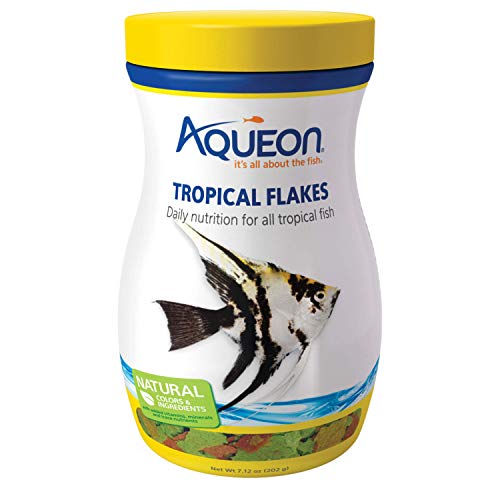
Aqueon Tropical Flakes
Aqueon markets this as a formula fish fully digest, and in practice owners report less visible waste and slower clouding than with some rivals. The nutritional profile is close to TetraMin, so the choice often comes down to which your fish take to. It is a sensible staple for a planted community tank where water clarity matters.
Pros
- Clouds the water less than many budget flakes
- Comparable nutrition to the category leader
- Widely stocked so easy to reorder
Cons
- Some fish take a few days to switch to it
- Flake size is fine, which suits smaller species better

API Tropical Pellets Fish Food
Pellets sink slowly, which puts food where mid-water and lower species actually feed instead of leaving it on the surface. The cost per feeding is the lowest here once you account for how little is needed per session. The panel is simpler than the premium formulas, so it works best as part of a varied diet rather than the only food.
Pros
- Lowest cost per feeding of the group
- Reaches mid-water and bottom feeders
- Pellets make portioning easier than flakes
Cons
- Simpler ingredient panel than premium staples
- Uneaten pellets need siphoning out promptly
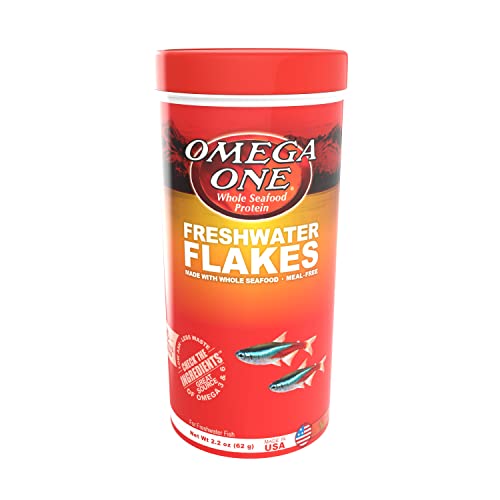
Omega One Freshwater Flakes
Built on whole fresh seafood rather than processed meal, with naturally occurring pigments that owners credit for stronger colour in tetras and gouramis. It sits at the upper end of the budget bracket but the ingredient panel is noticeably better than the price suggests. Worth using as the main staple if colour is what you care about.
Pros
- Whole seafood base rather than processed meal
- Owners report visible colour improvement
- Low filler content for the bracket
Cons
- Costs more per tub than basic flakes
- Stronger smell than processed alternatives

TetraFin Goldfish Flakes
Goldfish have different needs from tropicals, with more carbohydrate tolerance and a real risk of digestive trouble on the wrong food. This formula is built around that, and the flakes soften quickly so they are easier to swallow. It is inexpensive and widely available, which matters for a fish that can live for years.
Pros
- Formulated for goldfish rather than generic tropicals
- Softens quickly for easier swallowing
- Inexpensive and easy to find
Cons
- Not appropriate for tropical community tanks
- Surface feeding can lead to gulped air in some goldfish

Hikari Tropical Micro Pellets
Micro pellets solve the problem of small species that cannot manage a full flake and end up picking at fragments. Hikari builds these for tetras, rasboras and small barbs, and they stay suspended in the water column longer than standard pellets. Slightly pricier per tub but very little is needed per feeding.
Pros
- Correct particle size for small mouths
- Stays suspended long enough for shy feeders
- Very economical per feeding despite tub cost
Cons
- Too small to interest larger community fish
- Easy to overfeed because portions look tiny

Fluval Bug Bites Tropical Formula
Black soldier fly larvae lead the ingredient panel, which is closer to what many tropicals eat in the wild than fish meal is. Owners report it as the food that finally works on fish refusing standard flakes. It is at the top of the budget range and the granules are best matched to the size version you buy.
Pros
- Insect protein appeals to fish refusing flakes
- Named protein leads the ingredient panel
- Available in granule sizes matched to fish
Cons
- Highest cost per tub in this group
- Buying the wrong granule size wastes food
The lineup, side by side
| # | Model | Type | Best for | Score | Price |
|---|---|---|---|---|---|
| 1 | TetraMin Tropical Flakes | Flake | Best overall | 9.4 | Check price |
| 2 | Aqueon Tropical Flakes | Flake | Best value | 9.2 | Check price |
| 3 | API Tropical Pellets Fish Food | Slow sinking pellet | Best budget | 9.0 | Check price |
| 4 | Omega One Freshwater Flakes | Flake | Best for colour | 8.8 | Check price |
| 5 | TetraFin Goldfish Flakes | Flake | Best for goldfish | 8.6 | Check price |
| 6 | Hikari Tropical Micro Pellets | Micro pellet | Best for small fish | 8.3 | Check price |
| 7 | Fluval Bug Bites Tropical Formula | Granule | Best for picky eaters | 8.0 | Check price |
What matters most
Read the first three ingredients The ingredient panel is ordered by weight, so the first three entries tell you most of what you need. A named protein source such as fish meal, whole salmon or black soldier fly larvae should lead. When wheat flour, corn or unnamed cereal derivatives sit at the top, a large share of what you are buying passes through the fish and lands in your filter as waste.
Match the food to where your fish feed Surface feeders like hatchetfish and many gouramis take flakes readily. Mid-water species such as tetras do best with slow sinking pellets or granules. Corydoras, plecos and loaches feed on the substrate and need sinking wafers or pellets that reach them before the faster fish clear everything. A mixed tank often needs two foods rather than one compromise.
Cost per feeding, not cost per tub A small tub of a dense pellet food can work out cheaper per feeding than a large tub of flakes, because you use far less by volume. Consider how long a tub will actually last too. Fish food loses vitamin potency after opening, so a bulk container that takes a year to finish in a small tank is a false economy compared with a smaller size replaced more often.
Feeding amount and water quality Overfeeding is the most common cause of cloudy water and rising nitrate, and it makes any food look worse than it is. A useful rule is to feed only what the fish clear in two to three minutes, once or twice a day, and to siphon out anything left after that. Uneaten food is the single biggest variable in how clean a budget formula appears to keep the tank.
Questions worth asking
Is cheap fish food bad for fish?
Not automatically. What matters is whether a named protein leads the ingredient panel and how much cereal filler sits near the top. Several inexpensive staples have sound panels, while some mid-priced foods do not.
How often should I feed my fish?
Once or twice a day for most community species, giving only what they clear in two to three minutes. Adult fish cope with a skipped day far better than with consistent overfeeding.
Why does my water go cloudy after feeding?
Usually excess food breaking down. Reduce the portion, siphon out anything uneaten, and check whether your food disintegrates quickly on contact with water, which some cheaper flakes do.
Should I use flakes or pellets?
Flakes suit surface feeders and small mouths, pellets suit mid-water and larger fish and are easier to portion accurately. Many tanks do best with both, matched to where the different species feed.
Can I feed tropical food to goldfish?
It is not ideal. Goldfish have different digestive needs and do better on a formula built for them, since tropical foods are typically higher in protein than a goldfish requires long term.
How long does fish food stay good after opening?
Vitamin content degrades over months once air reaches it. Aim to finish a container within about six months of opening, store it sealed and away from heat and light, and buy a size that matches your tank.
Do I need a variety of foods or is one staple enough?
A good staple covers the basics, but rotating in a second food, and occasionally a frozen or freeze-dried treat, gives a broader nutrient range and helps with fish that get bored of a single formula.
Is insect-based food better than fish meal?
It is closer to the natural diet of many tropical species and tends to be well accepted by picky eaters. Nutritionally, a good fish meal formula and a good insect formula are both sound, so it comes down to what your fish take to.
Our pick
TetraMin Tropical Flakes remains the budget staple to beat, with a balanced panel and bulk sizes that push the cost per feeding low. Aqueon Tropical Flakes is the better pick if water clarity is your priority, and API Tropical Pellets is the cheapest sound option for mid-water feeders. If you keep small tetras or rasboras, the Hikari Tropical Micro Pellets are worth the extra for the correct particle size alone.


