Which Budget Laptop Actually Handles Daily Use Well?
Acer Aspire 3 A315-24P leads this roundup with a Ryzen chip, 8GB of RAM and a full HD screen that most budget laptops skip. ASUS Vivobook 15 F1504ZA follows close behind with a better keyboard and an upgradeable storage slot. Lenovo IdeaPad 1 14IGL7 covers light browsing and schoolwork on a tighter budget.
Acer Aspire 3 A315-24P holds up best for everyday multitasking, with 8GB of RAM standard where many rivals reserve that for pricier configurations. ASUS Vivobook 15 F1504ZA earns a close second thanks to a full size keyboard and an upgradeable drive. Lenovo IdeaPad 1 14IGL7 handles browsing and schoolwork when the budget is tighter still.
Budget laptops hide their biggest weakness in the spec sheet: memory. A 4GB configuration with slow eMMC storage crawls under a handful of browser tabs, no matter which processor name is attached. We compared seven currently sold models on RAM, storage type, screen resolution, port selection, weight and stated battery life. Then we checked those specs against what owners report about heat, hinge wear and daily reliability.
Our top picks

Acer Aspire 3 A315-24P
AMD’s Ryzen 3 7320U powers this Aspire 3, paired with 8GB of soldered LPDDR5 and a 128GB or larger SSD. That combination keeps a budget laptop responsive for years instead of months. A 15.6 inch full HD panel replaces the washed out 1366 by 768 screens still common at this price.
Pros
- Full HD screen instead of a low resolution panel
- 8GB of soldered LPDDR5 keeps multitasking smooth
- USB-C and HDMI cover most accessory needs
Cons
- Soldered memory means no upgrades later
- Plastic chassis flexes near the keyboard deck

ASUS Vivobook 15 F1504ZA
Intel’s Core i3-1215U handles everyday tasks inside the Vivobook 15, backed by a full size keyboard with a number pad. Storage lives on a standard M.2 slot, so a capacity upgrade is a simple swap. Owners repeatedly cite the typing feel as the reason they kept this over cheaper rivals.
Pros
- Full size keyboard with a dedicated number pad
- M.2 slot lets you swap in a larger SSD
- Fingerprint reader included on many configurations
Cons
- Screen brightness struggles in direct sunlight
- Battery life trails the AMD models in this list

Lenovo IdeaPad 1 14IGL7
Lenovo built the IdeaPad 1 for browsing, streaming and basic document work, nothing heavier. Its 14 inch frame stays genuinely portable, and the battery covers a school day of light use. Configuration matters here, since some listings ship with only 4GB of memory.
Pros
- Genuinely light for a full size clamshell laptop
- Fanless, quiet operation during normal use
- Long runtime on browsing and streaming tasks
Cons
- 4GB configurations struggle with more than a few tabs open
- Cheapest versions ship with a 1366 by 768 panel
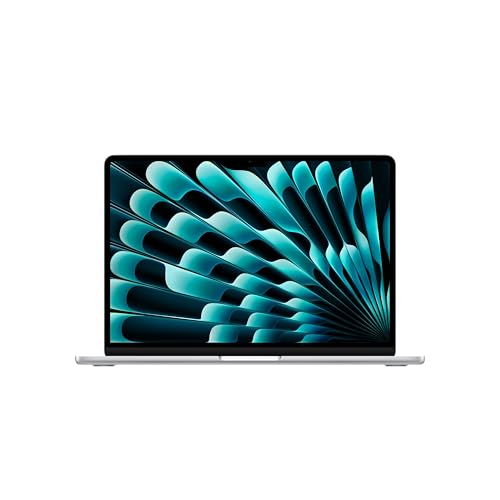
Apple MacBook Air 13 with M1
Apple’s original M1 chip still outruns most new budget Windows machines on sustained performance and battery. No fan means no noise, and the Retina display outclasses every other panel in this roundup. Only 8GB of unified memory and two ports come as the tradeoff.
Pros
- Stated battery life reaches up to 18 hours of video
- Silent, fanless design with no moving parts
- Retina display sharper than any Windows rival here
Cons
- Just two Thunderbolt ports plus a headphone jack
- Memory and storage are fixed at purchase

HP Laptop 15-fd0035dx
HP equips this 15 inch model with an Intel Core i3-1315U, 8GB of RAM and a proper SSD rather than eMMC. Micro edge bezels make the screen feel larger than the chassis size suggests. A physical camera shutter covers the webcam when it is not in use.
Pros
- Large full HD screen suits spreadsheets and study notes
- Physical shutter built into the webcam
- Full size HDMI plus a wide port selection
Cons
- Fan noise becomes noticeable under sustained load
- Trackpad feels less precise than rivals here

Acer Chromebook Plus 515
ChromeOS strips away most of what makes cheap laptops feel slow, provided your work stays inside a browser. Chromebook Plus certification guarantees a minimum spec of 8GB of RAM, a full HD screen and a capable processor. Automatic updates and near instant boot times keep upkeep minimal.
Pros
- Boots and resumes from sleep almost instantly
- Automatic updates remove most routine maintenance
- Plus certification guarantees a real minimum spec
Cons
- Cannot run full desktop Windows applications
- Offline capability depends on which apps you use

Dell Inspiron 15 3520
Dell makes the Inspiron 15 3520 the most repair friendly laptop in this group, with a bottom panel that opens on ordinary screws. A SODIMM memory slot and a replaceable M.2 drive mean upgrades stay simple later. Design is plain and the panel is average, but the platform underneath is sound.
Pros
- Memory and storage are both user upgradeable
- Replacement parts stay widely available
- 12th generation Intel Core i5 handles multitasking well
Cons
- Display panel looks dull with low contrast
- Bulkier than every other laptop on this list
How they compare
| # | Model | Processor | Best for | Score | Price |
|---|---|---|---|---|---|
| 1 | Acer Aspire 3 A315-24P | AMD Ryzen 3 7320U | Best overall | 9.4 | Check price |
| 2 | ASUS Vivobook 15 F1504ZA | Intel Core i3-1215U | Best value | 9.2 | Check price |
| 3 | Lenovo IdeaPad 1 14IGL7 | Intel Celeron or Pentium Silver | Best budget | 9.0 | Check price |
| 4 | Apple MacBook Air 13 with M1 | Apple M1, 8 core | Best for battery life | 8.8 | Check price |
| 5 | HP Laptop 15-fd0035dx | Intel Core i3-1315U | Best for students | 8.6 | Check price |
| 6 | Acer Chromebook Plus 515 | Intel Core i3-1215U | Best for simple everyday use | 8.3 | Check price |
| 7 | Dell Inspiron 15 3520 | Intel Core i5-1235U | Best for easy upgrades | 8.0 | Check price |
What matters most
How much RAM does a budget laptop actually need? Four gigabytes of RAM is the most common reason a budget laptop feels slow, not the processor badge on the lid. Modern browsers, video calls and office suites push past that ceiling on their own. Once a system starts swapping to disk, everything stutters. Treat 8GB as the practical floor. Choose the higher configuration up front if the memory is soldered, since a later upgrade is not possible.
Why does storage type matter more than storage size? A 128GB NVMe SSD feels dramatically faster than a 256GB eMMC module, even though the eMMC number looks bigger. Cheapest machines still ship with eMMC as of this comparison. Listings rarely flag this clearly, so scan the spec table for the words NVMe, PCIe or M.2. A large storage figure paired with an unusually low spec tier usually means eMMC or a mechanical hard drive underneath.
What screen resolution should a budget laptop have? 1366 by 768 panels leave little vertical room for documents and web pages on a 15.6 inch screen. Full HD, meaning 1920 by 1080, should be treated as a hard requirement at this size. Brightness rarely appears in listings, but owners report that anything under roughly 250 nits struggles near a window. That matters if you work in cafes, classrooms or other bright rooms.
Which ports and repair features are worth insisting on? Budget laptops age better when the case opens easily. A bottom panel secured with ordinary screws, a spare M.2 slot and a SODIMM socket let a machine get revived with a cheap memory or drive swap years later. Two USB-A ports plus one USB-C keep older accessories and newer chargers both usable. Full size HDMI saves you from carrying a separate dongle for an external monitor.
Frequently asked questions
How much RAM does a budget laptop really need?
Eight gigabytes covers browsing, video calls and office work without stutter. Four gigabyte machines still exist and technically run, but owners consistently report lag once several tabs and a call are open together. Choose 8GB or more at checkout if the memory is soldered, since it cannot be added afterward.
Is a Chromebook a better buy than a cheap Windows laptop?
It depends on where your work happens. Browser based tasks run smoother on a Chromebook Plus model, with less maintenance for the same spec tier. Desktop software such as full Microsoft Office or Windows only school tools still needs a Windows machine.
Are refurbished business laptops a smarter option?
Often, yes. A refurbished business class model typically brings a sturdier chassis, better keyboard and more ports than a new entry level consumer laptop. Shorter remaining warranty coverage and older battery cells are the tradeoffs, so check the seller’s return policy and stated battery condition first.
Can a budget laptop handle video calls and light photo editing?
Video calls run smoothly on modern budget processors once 8GB of RAM backs them up. Light photo editing, resizing, cropping and basic adjustments, stays comfortable too. Large RAW files, heavy layered edits or video timelines expose the thermal limits of these thin plastic chassis fast.
How long do budget laptops typically last?
Three to five years is realistic for a model with 8GB of RAM and an SSD, based on specifications and owner reports. Batteries usually degrade first, followed by hinges and keyboard switches. Laptops with upgradeable memory and storage tend to land at the longer end of that range.
Does screen resolution really matter on a budget laptop?
Yes, more than almost any other spec on the listing. A 1366 by 768 panel leaves noticeably less vertical space for documents and web pages than full HD. Full HD ships on plenty of affordable 15 inch models now, so accepting less has little upside.
What ports should a budget laptop include?
Two USB-A ports, one USB-C port, HDMI and a headphone jack cover most needs. USB-C charging is genuinely convenient, since it lets you travel with one small adapter for laptop and phone. An SD card slot is a bonus for photographers, though it is rare on affordable models now.
Is it worth waiting for a sale on a specific model?
Budget laptop configurations rotate often, and the same model number can ship with different memory and storage between batches. Read the spec table on the exact listing you are considering instead of waiting on timing, since a discounted 4GB unit is a worse buy than a full spec 8GB version.
Which budget laptop is best for college students?
HP Laptop 15-fd0035dx and Acer Aspire 3 A315-24P both fit typical coursework, with 8GB of RAM and full HD screens for note taking and research. Acer Chromebook Plus 515 suits students whose work stays inside Google Docs and browser based tools. Match the pick to whether campus software requires full Windows.
The bottom line
Acer Aspire 3 A315-24P remains the pick for most buyers, combining 8GB of memory, SSD storage and a full HD screen that keeps a budget machine usable. ASUS Vivobook 15 F1504ZA suits anyone who types constantly and wants an upgradeable drive slot. For browser only work, Acer Chromebook Plus 515 sidesteps most of the slowdown that plagues cheap Windows laptops.