Cable Machines That Bring a Full Gym Into Your Garage
REP Fitness FT-3000 Functional Trainer leads this list with dual weight stacks and smooth 2:1 pulleys for a full range of movements. Marcy MWM-988 Home Gym covers the essentials on a tighter budget. Mikolo Wall-Mounted Cable Station suits garages and apartments where floor space runs short.
REP Fitness FT-3000 Functional Trainer is the cable machine most home lifters should buy first. Marcy MWM-988 Home Gym handles the basics on a smaller budget. Mikolo Wall-Mounted Cable Station saves the most floor space of the seven machines here.
Pulley ratio, stack weight and footprint rarely match what a product photo suggests, and a machine that looks compact can still eat a two car garage. We compared published specifications, adjustment range and owner reports rather than any staged workout.
Before you buy
What pulley ratio should a home cable machine have? Pulley ratio decides how the pin weight you set translates into what your hands feel. A 1:1 ratio moves the full load per inch of cable travel. A 2:1 ratio halves resistance but doubles travel distance, which many lifters find smoother through a full range of motion. Strength-focused lifters often prefer 1:1 because the pin number matches the actual load.
Weight stack or plate-loaded, which is better? Fixed weight stacks change resistance with a single pin, which speeds up circuits and supersets. Plates never touch the floor, keeping cleanup simple. Plate-loaded frames cost less upfront and scale as high as your plate collection allows. They demand loading time between sets and separate plate storage.
How much space does a cable machine need? Cable towers need ceiling height for high pulley work and width for full crossovers. Measure your room before ordering rather than trusting a product photo. Wall-mounted stations and rack-mounted tower attachments deliver most of the same function in a fraction of the floor space. Garages under eight feet of clearance should rule out tall functional trainers early.
What attachments should you check before buying? A cable machine is only as versatile as the handles it accepts. Confirm the pulley uses a standard carabiner or hook connection before buying. That compatibility lets you add a lat bar, rope, single handles and ankle straps later. Attachment variety is what turns one frame into dozens of distinct exercises.
The best picks, ranked

REP Fitness FT-3000 Functional Trainer
Two independent weight stacks give this trainer true unilateral training, ideal for single arm rows or offset presses. Seventeen-plus pulley height positions cover everything from ankle work to overhead pulls. Nylon-lined cables run quietly, which owners note holds up after months of daily use.
Pros
- Dual independent stacks enable unilateral work
- Pulley travel stays smooth through the full range
- Seventeen-plus height settings cover most exercises
Cons
- Demands a large dedicated footprint
- Priced above most home gym cable stations

Body-Solid Powerline PCCO90X Cable Crossover
Wide-set towers on the PCCO90X open up true full-range flyes and pull-aparts. Plate loading means no fixed stack ceiling, so resistance keeps climbing as long as you add plates. Lifters who already own a plate collection get a sturdy frame without paying for a stack.
Pros
- Crossover width supports full range flyes
- Existing plates cut the total cost
- Frame stays rigid under heavy pulls
Cons
- Plates must be purchased separately
- Wide stance needs a broad wall

Marcy MWM-988 Home Gym
A 150 pound stack, high pulley, low pulley and leg developer arrive in one self-contained frame. Beginners get a complete circuit without buying separate attachments. Enclosed weights keep curious kids and pets away from moving plates.
Pros
- Complete circuit in a single frame
- Enclosed stack improves household safety
- Strong value for a first cable gym
Cons
- Stack tops out lower than premium units
- Pulley height adjustment is limited
Titan Fitness Plate-Loaded Cable Machine
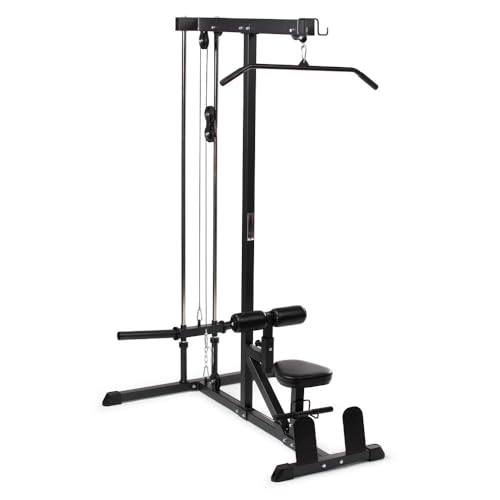
Dual plate-loaded carriages replace a fixed stack, so resistance scales with whatever plates you own. Adjustable pulleys move through multiple heights for presses, rows and crossovers. Cost sits below most stacked functional trainers, which suits lifters upgrading from a bare power rack.
Pros
- Lower cost than stacked functional trainers
- Adjustable carriages remove any stack limit
- Handles heavy loading for advanced lifters
Cons
- Plates are sold separately
- Assembly involves many bolted connections

Valor Fitness BD-62 Cable Crossover Station
A built-in pull-up bar sits above dual adjustable pulleys, adding a second training mode to one frame. Multiple grip attachments ship in the box, covering rows, presses and curls. Garage gyms with moderate ceiling height get the most use from this mid-size station.
Pros
- Pull-up bar adds a second training mode
- Several grip attachments included at purchase
- Footprint suits a mid-size garage gym
Cons
- Plates must be purchased separately
- Pulley travel falls short of premium towers
Mikolo Wall-Mounted Cable Station
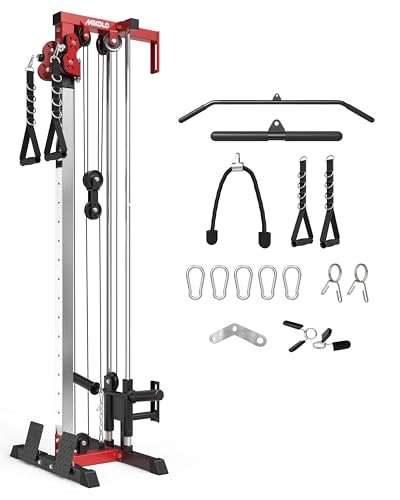
Wall studs carry the load on this folding pulley station, so it collapses flat between sessions. Apartments and tight garages gain cable training without a floor-standing tower. Single adjustable pulley height covers most pressing and pulling angles for one lifter at a time.
Pros
- Folds flat to reclaim floor space
- Pulley height adjusts for various exercises
- Costs less than freestanding towers
Cons
- Requires solid wall studs for mounting
- Only one pulley limits simultaneous exercises

Bells of Steel Cable Tower Attachment
This tower bolts onto a compatible power rack, adding lat pulldowns and low rows without a standalone machine. Plate loading keeps cost down for lifters who already own a rack. Vertical mounting means zero extra floor footprint beyond the rack itself.
Pros
- Uses a power rack you already own
- Adds lat and row movements cheaply
- Mounts vertically with no added footprint
Cons
- Only fits racks with compatible uprights
- Offers fewer functions than a standalone trainer
How they stack up
| # | Model | Weight stacks | Best for | Score | Price |
|---|---|---|---|---|---|
| 1 | REP Fitness FT-3000 Functional Trainer | Dual | Best overall | 9.4 | Check price |
| 2 | Body-Solid Powerline PCCO90X Cable Crossover | Plate-loaded | Best for full crossovers | 9.1 | Check price |
| 3 | Marcy MWM-988 Home Gym | 150 lb | Best value | 8.8 | Check price |
| 4 | Titan Fitness Plate-Loaded Cable Machine | Plate-loaded | Best plate-loaded value | 8.6 | Check price |
| 5 | Valor Fitness BD-62 Cable Crossover Station | Plate-loaded | Best for versatility | 8.4 | Check price |
| 6 | Mikolo Wall-Mounted Cable Station | Plate-loaded | Best for small spaces | 8.2 | Check price |
| 7 | Bells of Steel Cable Tower Attachment | Plate-loaded | Best rack add-on | 8.0 | Check price |
Questions worth asking
What is a good pulley ratio for a cable machine?
Most home buyers do well with 2:1 for smooth, long cable travel on flyes and rows. Strength-focused lifters often prefer 1:1 since the load matches the pin setting directly.
Is a weight stack or plate-loaded cable machine better?
Stacks adjust faster and keep the floor clear, useful for circuits. Plate-loaded frames usually cost less and scale with plates you already own, so budget and existing equipment decide the winner.
How much space does a cable machine need?
Full functional trainers and crossovers often need eight feet of width plus a tall ceiling for high pulley work. Wall-mounted stations and rack tower attachments fit far smaller rooms.
Can a cable machine replace free weights entirely?
It covers rows, presses, flyes and constant tension core work extremely well. Most lifters still keep some free weights for heavy compound lifts like squats and deadlifts.
Which attachments should I buy first for a new cable machine?
Start with single handles, a straight or lat bar, a rope and an ankle strap. Those four cover pushing, pulling, curls and lower body cable work through a standard hook or carabiner.
Are wall-mounted cable machines strong enough for serious training?
Yes, once bolted into solid studs or a compatible rack per the instructions. The trade-off is a single pulley and a real dependency on wall or stud quality.
Should I buy a functional trainer or a cable crossover?
A functional trainer offers many pulley heights in a compact tower for varied movements. A crossover favors wide-set arms for full-range flyes, so pick based on which movement pattern you use most.
How much weight stack does a home lifter actually need?
150 to 200 pounds per side covers most rows, pulldowns and pressing with room to progress. Stronger lifters doing heavy pulldowns should look at dual stacks or a plate-loaded frame that scales higher.
The bottom line
REP Fitness FT-3000 Functional Trainer earns the top spot for most serious home gyms, since dual stacks and smooth pulleys cover nearly every pulling and pressing movement. Budget-minded beginners get a complete circuit from the Marcy MWM-988 Home Gym. Anyone short on floor space should look first at the Mikolo Wall-Mounted Cable Station.