How to Pick Camera Batteries That Won’t Die Mid-Shoot
Canon shooters get full chip support from the LP-E6NH, which reads accurately in EOS R5, R6 and 5D Mark IV bodies. Sony’s NP-FZ100 matches that same accuracy in the Alpha line. Nikon owners on a budget do well with the BM Premium EN-EL15C, and Fujifilm shooters should check the Wasabi Power NP-W126S two pack.
Three packs cover most shooters: the Canon LP-E6NH, the Sony NP-FZ100 and the BM Premium EN-EL15C for Nikon bodies. Each one matches its camera’s exact voltage and communication protocol. That match keeps the in-camera meter accurate instead of guessing at charge level.
Camera batteries never cross brands, so compatibility comes before capacity. We compared listed capacity, charging method and owner reports of accurate readouts against genuine chip support. Each pack was then checked against its maker’s published compatible body list.
How to pick the right one
What separates an OEM battery from a third party one? A genuine battery ships with a manufacturer chip that reports true charge level and cycle count. Third party cells vary widely. BM Premium and Wasabi Power include a working chip and avoid warning messages. Cheaper unbranded cells skip that chip, so the camera either refuses to read the level or shows a generic error.
How do I match a battery to my camera system? Canon, Nikon, Sony and Fujifilm each use a different connector and voltage, so packs never cross brands. Check the exact code printed on your current cell, such as LP-E6NH or NP-FZ100, before buying. Even within one brand, older and newer models sometimes need different batteries.
Does video recording drain a camera battery faster? Continuous 4K recording keeps the sensor and processor active the whole time. Stills shooting lets the camera idle between frames instead. In-body stabilization and a bright rear screen add further draw, so video shooters should expect shorter runtime than the capacity number suggests.
What is the fastest way to charge camera batteries while traveling? In-camera USB-C charging is convenient but slower than a dedicated external charger, since most bodies limit input current to protect internal wiring. Bundles like the Neewer set solve this with a separate dual bay charger. Anyone shooting full weddings or travel days benefits from carrying at least two charged spares.
Our top picks

Canon LP-E6NH Battery Pack
A genuine Canon chip keeps the percentage readout accurate through a full shoot. Rated at 2130 mAh and 7.2 volts, it powers the EOS R5, R6, R7, 90D and 5D Mark IV. Bodies that support USB-C charging can trickle charge this pack without a separate charger.
Pros
- Accurate in-camera percentage readout
- Charges through the camera’s USB-C port
- Covers most current Canon mirrorless bodies
Cons
- Costs more than third party alternatives
- No charger included in the box
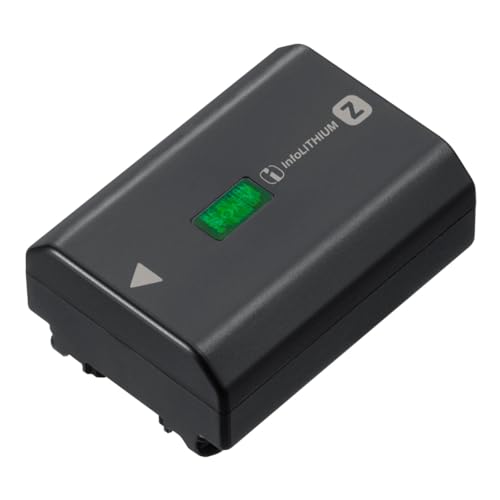
Sony NP-FZ100 Rechargeable Battery Pack
Sony packed 2280 mAh into this cell, well above the older NP-FW50 it replaced. The a7 III, a7R IV, a9 II and a1 all run it without a firmware warning. Genuine chip data lets these bodies show remaining shot count instead of a rough bar.
Pros
- Highest capacity pack in this comparison
- Shot count readout instead of a rough bar
- No firmware compatibility warnings
Cons
- Premium price versus third party packs
- Older Sony bodies still need the NP-FW50 instead
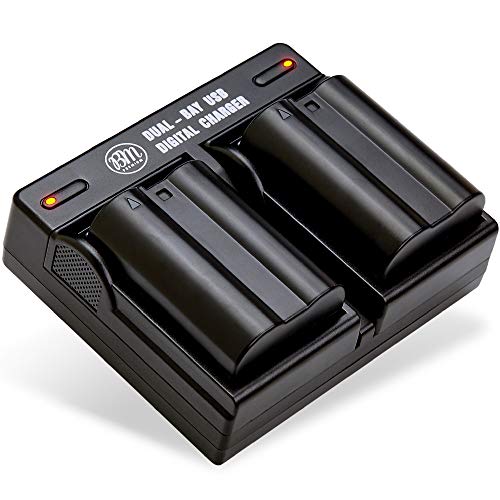
BM Premium EN-EL15C High Capacity Battery
This third party pack targets Nikon’s Z6, Z7, Z8, D780 and D850 lineup for a fraction of Nikon’s own price. Owners report capacity close to the genuine EN-EL15c in real shooting sessions. It also slots into bodies that support in-camera USB charging on the original part.
Pros
- Far cheaper than Nikon’s own battery
- Fits both mirrorless Z bodies and DSLRs
- Works with in-camera USB charging
Cons
- Some bodies show a third party battery notice
- Long term cell life is less proven than OEM

Nikon EN-EL15c Rechargeable Li-ion Battery
Nikon built the EN-EL15c to fit older EN-EL15 and EN-EL15a cameras as well as new ones. In-camera USB-C charging works on newer bodies like the Z8 and Zf. One spare pack can serve two camera generations in the same bag.
Pros
- Backward compatible with older EN-EL15 bodies
- USB-C charging on newer Z series cameras
- No compatibility warnings on any Nikon body
Cons
- Lower capacity than Sony’s NP-FZ100
- Priced well above third party equivalents

BM Premium LP-E6NH High Capacity Batteries (2-Pack)
Two batteries cost close to one genuine LP-E6NH, which makes this a practical backup option. Each cell carries a built-in chip that reports charge level on EOS R, R5, R6 and 90D bodies. No compatibility warning appears on screen with either battery installed.
Pros
- Two batteries for close to single OEM pricing
- Chip reports accurate charge level
- No warning message on supported Canon bodies
Cons
- Runtime can trail genuine Canon cells slightly
- No charger included with the batteries

Neewer Replacement Battery and Charger Set for NP-FZ100
A dual slot USB charger arrives alongside two batteries, with an LCD screen tracking charge status for each cell. Travel photographers skip packing a separate charger this way. Both cells fit the same Sony a7 and a9 series bodies as the genuine NP-FZ100.
Pros
- Charger included so no separate purchase
- LCD screen shows each battery’s status
- Fits the same bodies as Sony’s own pack
Cons
- Bundle is bulkier to pack than loose cells
- Charger cable is fixed length

Wasabi Power NP-W126S Battery (2-Pack)
Fujifilm’s X-T4, X-T30, X100V and X-Pro3 all take the NP-W126S. This two pack covers a full day of shooting without the genuine price tag. Wasabi backs its cells with a three year warranty, longer than most third party camera battery makers offer.
Pros
- Covers most current Fujifilm X series bodies
- Three year warranty beats most rivals
- Two cells cost less than one genuine pack
Cons
- No charger included in this listing
- Fujifilm firmware updates can affect third party cells
How they compare
| # | Model | Capacity | Best for | Score | Price |
|---|---|---|---|---|---|
| 1 | Canon LP-E6NH Battery Pack | 2130 mAh | Best overall | 9.4 | Check price |
| 2 | Sony NP-FZ100 Rechargeable Battery Pack | 2280 mAh | Best for Sony mirrorless | 9.1 | Check price |
| 3 | BM Premium EN-EL15C High Capacity Battery | Rated near genuine EN-EL15c | Best value for Nikon | 8.8 | Check price |
| 4 | Nikon EN-EL15c Rechargeable Li-ion Battery | 1900 mAh | Best for Nikon shooters | 8.6 | Check price |
| 5 | BM Premium LP-E6NH High Capacity Batteries (2-Pack) | Rated near 2250 mAh | Best budget bundle | 8.4 | Check price |
| 6 | Neewer Replacement Battery and Charger Set for NP-FZ100 | Rated 2250 mAh each | Best charger bundle | 8.2 | Check price |
| 7 | Wasabi Power NP-W126S Battery (2-Pack) | Rated near genuine NP-W126S | Best for Fujifilm | 8.0 | Check price |
Frequently asked questions
Do third party camera batteries work as well as OEM?
Reputable brands like Wasabi Power and BM Premium come close in real world capacity and include a working communication chip. Cheaper unbranded cells skip that chip and often trigger warning messages or inaccurate readouts.
Can a Nikon EN-EL15c fit an older EN-EL15 camera?
Yes. Nikon designed the EN-EL15c to be backward compatible with bodies that originally shipped with the EN-EL15 or EN-EL15a, including many D series DSLRs.
How long does a Sony NP-FZ100 last on a full charge?
Sony rates it for roughly 500 to 700 shots depending on the body and screen usage, well above the older NP-FW50’s rated count.
Is USB-C in-camera charging slower than an external charger?
Generally yes, since cameras cap input current for safety. A dedicated external or dual bay charger typically returns a full charge faster.
What happens if a battery has no communication chip?
The camera may show a generic battery icon instead of a percentage, skip the remaining shot count, or in some cases display a compatibility warning at startup.
How many spare batteries should I carry for a full day of shooting?
Two to three spares covers most full day events for mirrorless bodies. Continuous autofocus and a bright screen draw more power than older DSLRs did.
Do cold temperatures reduce camera battery life?
Yes. Lithium ion cells lose usable capacity as temperature drops, so cold weather shoots can cut runtime noticeably compared to room temperature use.
Can Fujifilm and Sony batteries be used interchangeably?
No. The NP-W126S and NP-FZ100 use different shapes, voltages and contacts, so neither battery physically fits the other brand’s camera.
Which camera battery has the highest capacity?
Among these seven, the Sony NP-FZ100 rates highest at 2280 mAh, ahead of the Canon LP-E6NH at 2130 mAh.
Is it worth buying a charger and battery bundle?
For travel it often is. Sets like the Neewer bundle include a dual bay charger, so there is no separate charger purchase or extra item to pack.
The bottom line
Match the battery to your camera brand before comparing capacity numbers. A mismatched chip causes more trouble than a slightly smaller cell. The Canon LP-E6NH and Sony NP-FZ100 deliver dependable OEM runtime, while BM Premium and Wasabi Power save money for Nikon and Fujifilm owners willing to trust a proven third party brand.


