What Should Be in a Camera Sensor Cleaning Kit?
Most photographers get full coverage from the VSGO Camera Cleaning Kit DKL-15, which pairs sensor swabs with lens tools in one case. Budget buyers should pick the Altura Photo Professional Cleaning Kit. Anyone who swabs a full frame sensor often will prefer the wider swabs in the K&F Concept Sensor Cleaning Kit.
Dust on a sensor leaves the same dark blob in every frame until someone removes it. The VSGO Camera Cleaning Kit DKL-15 covers both sensor and lens work in a single case. Photographers on a budget can start with the Altura Photo Professional Cleaning Kit instead, and anyone who swabs full frame sensors often should add the K&F Concept Sensor Cleaning Kit.
Sensor cleaning worries new owners, since one wrong swipe can scratch a coating worth more than the camera body. We compared swab width against sensor formats, checked blower bulb volume, and read owner reports on streaking, lint and residue left behind.
How to choose
What should a camera cleaning kit include? Three tools cover most situations. An air blower clears loose dust first, before anything touches the glass. A lens pen or cloth removes smudges and fingerprints next. Sensor swabs handle spots that actually show up in photos, which matters most for mirrorless bodies where the sensor sits exposed during a lens change. Skip any kit that leaves out a blower.
How to size a sensor swab correctly Swab width should match sensor format, not the other way around. Full frame sensors need 24mm swabs; APS-C bodies use 16mm. Load just enough solution for a faint sheen, never a drip. One pass per direction, then a fresh swab if spots remain, avoids dragging dust across the glass repeatedly.
Best routine for casual lens and body care Shooters who never open the lens mount rarely need sensor tools at all. A rocket blower and lens pen clear fingerprints, LCD dust and body grime in a couple of minutes. Neither the Altura Photo kit nor the LENSPEN NLP-1 requires mixing or dosing solution, which suits this lighter routine.
What full frame and professional bodies need Full frame sensors show dust more obviously at narrow apertures and against bright skies, so working photographers clean more often. Wider swabs, sensor specific fluid and a static brush for dry debris between wet cleanings cut down on full cleanings. The VisibleDust EZ Kit Plus and K&F Concept kit both target this heavier use case.
The shortlist, ranked

VSGO Camera Cleaning Kit DKL-15
Two swab sizes, 16mm and 24mm, cover both APS-C and full frame sensors in one box. A cleaning solution rated for both formats ships with a carbon fiber lens pen and microfiber cloths. Owners report no residue when swabs are used wet rather than dry.
Pros
- Sensor and lens tools in a single kit
- Swab sizes match APS-C and full frame formats
- Zippered pouch keeps supplies free of dust
Cons
- Solution bottle is small and needs refilling
- Swabs are single use only
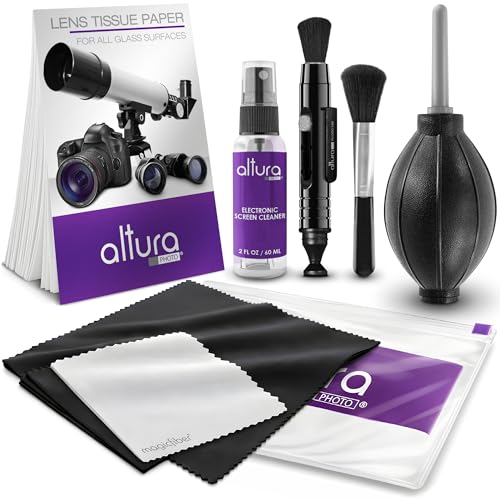
Altura Photo Professional Cleaning Kit
A rocket air blower, lens pen and cleaning solution handle routine dust and fingerprints for less than most single purpose kits. Microfiber cloths wipe the LCD screen and viewfinder without scratching the coating. Many owners keep one in every camera bag for quick cleanups between shoots.
Pros
- Five pieces cost less than most single purpose kits
- Rocket blower clears dust without touching glass
- Compact pouch fits any bag pocket
Cons
- No dedicated sensor swabs included
- Solution bottle is easy to overfill
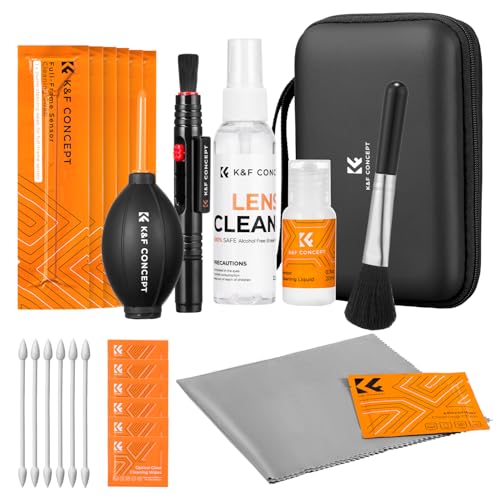
K&F Concept Sensor Cleaning Kit
Ten swabs ship individually wrapped at 24mm wide, sized for full frame sensors. Each one arrives pre loaded with cleaning fluid, so there is no bottle to dose by hand. Full frame shooters report fewer streaks than with reusable swab and solution combos.
Pros
- Pre-wetted swabs remove dosing guesswork
- Individual wrapping prevents cross contamination
- Wide swabs clear a full frame sensor in fewer passes
Cons
- No blower or lens tools included
- Opened packs cannot be resealed

LENSPEN NLP-1 Lens Pen Cleaning System
A retractable brush clears loose dust before a carbon compound tip lifts fingerprints and smudges. No liquid touches the glass, so nothing dries into a streak. Many photographers carry it in a jacket pocket for a quick clean before a shot.
Pros
- No liquid means no streaking or uneven drying
- Small enough for any pocket
- Retractable brush needs no separate case
Cons
- Compound tip wears down and cannot be refilled
- Cleans lenses only, not sensors

Giottos Rocket-Air Blaster Large
A wide rubber bulb pushes roughly twice the air of the small blowers bundled in most kits. Dust clears from mirrors and sensors without any contact. A one way valve stops it from pulling dust back in on the intake stroke.
Pros
- Larger bulb moves more air per squeeze
- One way valve blocks dust from re-entering
- Needs no batteries or compressed air
Cons
- Bulkier than pocket sized blowers
- Handles dust only, not smudges or fingerprints

VisibleDust EZ Sensor Cleaning Kit Plus
Green Vswabs sized for full frame sensors pair with Sensor Clean fluid formulated to lift oil based dust without hazing coatings. A static dissipating brush handles dry debris between wet cleanings. Working photographers cite it as a kit that survives repeat use without shedding fibers.
Pros
- Fluid formulated specifically for sensor coatings
- Brush clears dry dust without liquid
- Trusted by working photographers for repeat use
Cons
- Costs more than general purpose kits
- Smaller swab counts run out quickly
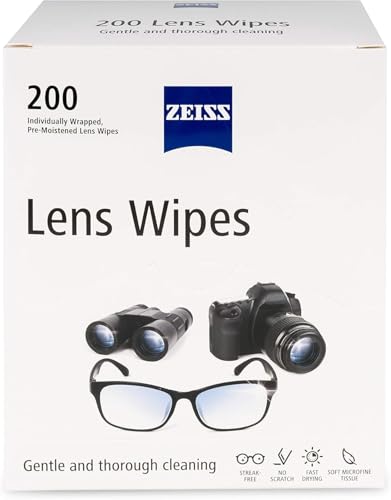
Zeiss Lens Wipes Pre-Moistened (100 count)
Each of the 100 wipes carries just enough solution for one lens, sealed individually so the box stays shelf stable for years. A single swipe clears fingerprints from lenses, filters or eyeglasses. Many owners keep a stack in the bag as backup to reusable cloths.
Pros
- Individually sealed wipes never dry out in the bag
- Alcohol free formula is safe for coated glass
- Cheapest way to always have a clean wipe ready
Cons
- Produces more waste than reusable cloths
- Not suitable for sensor cleaning
Side by side
| # | Model | Swab sizes | Best for | Score | Price |
|---|---|---|---|---|---|
| 1 | VSGO Camera Cleaning Kit DKL-15 | 16mm and 24mm | Best overall | 9.4 | Check price |
| 2 | Altura Photo Professional Cleaning Kit | Air blower, lens pen, cleaning solution, microfiber cloths, cotton swabs | Best value | 9.1 | Check price |
| 3 | K&F Concept Sensor Cleaning Kit | 24mm, individually wrapped | Best for sensor cleaning | 8.9 | Check price |
| 4 | LENSPEN NLP-1 Lens Pen Cleaning System | Carbon compound, non liquid | Best for quick lens touch-ups | 8.7 | Check price |
| 5 | Giottos Rocket-Air Blaster Large | Large, roughly 2x standard bundled blowers | Best air blower | 8.5 | Check price |
| 6 | VisibleDust EZ Sensor Cleaning Kit Plus | Green Vswabs for full frame | Best for full frame sensors | 8.3 | Check price |
| 7 | Zeiss Lens Wipes Pre-Moistened (100 count) | 100 individually wrapped wipes | Best budget | 8.0 | Check price |
Frequently asked questions
How often should you clean a camera sensor?
Clean only when dust actually shows in photos as dark spots at narrow apertures like f16. Cleaning more than needed raises the risk of a scratch for no benefit. Most mirrorless shooters swab a sensor a few times a year.
Can eyeglass wipes clean a camera lens?
Plain eyeglass wipes often carry alcohol or additives that strip lens coatings over repeated use. Lens specific wipes, like the Zeiss Lens Wipes, use a coating safe formula instead. Reach for a dedicated lens wipe whenever one is available.
Is a rocket blower better than canned air for cameras?
Yes. Canned air can spray propellant droplets onto the sensor at close range. A rocket blower like the Giottos moves air mechanically with no chemical risk. Save canned air for keyboards, not camera interiors.
What size sensor swab do I need?
Full frame sensors need 24mm swabs. APS-C and Micro Four Thirds bodies use 16mm swabs. An undersized swab leaves the sensor edges uncleaned, so check your camera’s sensor format before buying separately.
Can beginners clean a camera sensor safely?
Yes, especially with pre-wetted, individually wrapped swabs that remove dosing guesswork. Follow a single pass per direction and stop if smears remain after two attempts. A camera shop cleaning is the fallback for stubborn spots.
Do lens pens work on smartphone cameras?
Yes. The same carbon compound tip that lifts fingerprints from a DSLR lens works on a phone lens. Its small size suits the tiny glass on a phone. Skip liquid cleaners on phone lenses with anti-reflective coatings.
Lens pen vs microfiber cloth, which is better?
A lens pen carries a dry cleaning compound built into the tip, useful for oily fingerprints without liquid. A microfiber cloth needs a separate solution for stubborn smudges but covers larger surfaces faster. Many kits include both for different jobs.
How do you know if a cleaning kit is safe for coated lenses?
Check the label for an alcohol free, ammonia free formula, since both can degrade lens and filter coatings over time. Zeiss and VSGO list coating safe formulas on their packaging. A dry microfiber cloth alone is the safest fallback when unsure.
What is inside a typical camera cleaning kit?
Most kits combine an air blower, a lens pen or microfiber cloth, and some form of sensor swab or solution. Higher end kits add pre-wetted swabs or a static brush for dry debris. Basic kits skip sensor tools and focus on lens and body exterior.
Are sensor swabs reusable?
Most sensor swabs are single use, discarded after one cleaning pass to avoid dragging dust back across the glass. Reusable swabs exist but need careful storage to stay lint free. Pre-wrapped, pre-wetted swabs are single use by design.
Final word
Sensor dust prints the same spot on every frame until someone physically removes it, and the VSGO Camera Cleaning Kit DKL-15 handles that job alongside routine lens care. Casual shooters who never touch the sensor do fine with the Altura Photo kit and a lens pen. Full frame owners cleaning often should add the wider swabs in the K&F Concept kit to their bag.