Camera Remotes That Actually Improve Your Shots
For most photographers, the JJC TM-RS60E3 Wired Remote is the top pick because it offers reliable, lag-free shutter release for Canon cameras at a budget price, though it is tethered to the camera. If you need wireless freedom, the Pixel Pro Wireless Shutter Release stands out for its long range and versatility across brands.
A camera remote is a small tool that makes a big difference. It lets you trigger the shutter without touching the camera, reducing shake and enabling sharp long exposures. It is also essential for self-portraits, group shots, and astrophotography.
The market offers wired, wireless, and Bluetooth options, each with trade-offs. Wired remotes are cheap and reliable, but limit movement. Wireless remotes provide range, but may have compatibility issues. Bluetooth remotes work with phones and some cameras, but often have limited features.
The best picks, ranked
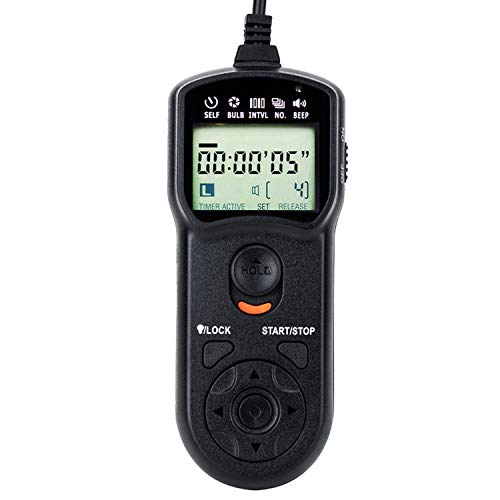
JJC TM-RS60E3 Wired Remote
This wired remote is a direct replacement for Canon’s RS-60E3. It features a half-press for autofocus and a full press for shutter release. The 3-foot cord gives you enough slack for basic tripod work. Owners report it feels sturdy and works flawlessly with Canon cameras like the Rebel series and 5D Mark IV.
Pros
- Very affordable
- Reliable wired connection
- Works with many Canon models
Cons
- Limited range
- Only for Canon with E3 port

Pixel Pro Wireless Shutter Release
The Pixel Pro is a wireless remote that works with Canon, Nikon, Sony, and other cameras via interchangeable cables. It offers a range of up to 100 meters, making it great for wildlife or self-portraits. It includes a timer and intervalometer for time-lapse. Users appreciate its reliable connection and build quality.
Pros
- Long wireless range
- Multi-brand support
- Built-in intervalometer
Cons
- Requires separate cables for each brand
- Bulkier than wired remotes

Canon BR-E1 Bluetooth Remote
Canon’s BR-E1 is a compact Bluetooth remote designed for Canon EOS R, RP, and PowerShot cameras. It pairs easily with the camera via Bluetooth and offers a range of about 5 meters. It has a simple two-button design for shutter release and movie start/stop. Owners like its small size and no need for line-of-sight.
Pros
- Compact and lightweight
- No pairing hassle with compatible cameras
- Can trigger movies
Cons
- Limited range
- Only works with recent Canon models
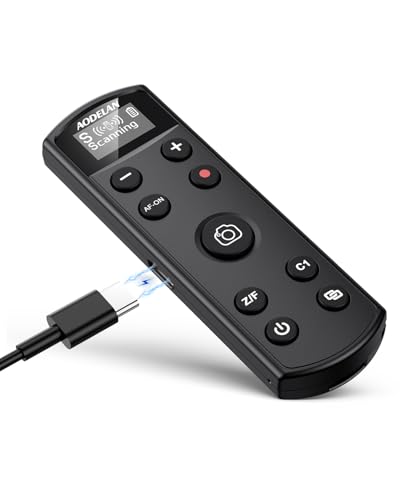
Sony RMT-P1BT Wireless Remote Commander
Sony’s RMT-P1BT is an official Bluetooth remote for Sony alpha cameras. It offers a range of about 5 meters and supports both stills and movies. The buttons are responsive and the grip is comfortable. It connects via Bluetooth and can also work as a wired remote when connected with a cable. Owners report excellent build and seamless integration with Sony cameras.
Pros
- Official Sony accessory
- Reliable connection
- Works with movies
Cons
- Shorter range
- Premium price

GoPro The Remote (Volt)
GoPro’s remote, also known as the Volt, is a waterproof remote that controls GoPro cameras from up to 60 meters away. It features a built-in battery that can charge the camera on the go. It has a simple button layout and a wrist strap. Users find it essential for helmet or handlebar mounts.
Pros
- Waterproof
- Long range
- Can charge the camera
Cons
- Only works with GoPro
- Bulky for some setups

Satechi Bluetooth Remote Shutter
The Satechi Bluetooth Remote Shutter is a small, keychain-sized remote that pairs with iOS and Android phones. It has a simple button to trigger the camera app. It is ideal for group selfies or remote phone shots. Owners report it pairs quickly and works with the native camera app and many third-party apps.
Pros
- Very portable
- Works with most phones
- Affordable
Cons
- No half-press for focus
- Limited features

Viltrox JY-80 Wireless Timer Remote
The Viltrox JY-80 is a budget-friendly wireless remote that works with cameras having a 2.5mm shutter release socket, like many Nikon and Fuji models. It includes a transmitter and receiver, offering a range of about 15 meters. It also features a timer for interval shooting. Owners note it is a good entry-level option for time-lapse.
Pros
- Very affordable
- Wireless with timer
- Works with many DSLRs
Cons
- Build quality feels less premium
- Range shorter than higher-end remotes
Compared at a glance
| # | Model | Compatibility | Best for | Score | Price |
|---|---|---|---|---|---|
| 1 | JJC TM-RS60E3 Wired Remote | Canon cameras with E3 port | Canon DSLR and mirrorless owners on a budget | 9.2 | Check price |
| 2 | Pixel Pro Wireless Shutter Release | Canon, Nikon, Sony, Pentax, Olympus (with cable) | Photographers needing long range and multi-brand support | 9.0 | Check price |
| 3 | Canon BR-E1 Bluetooth Remote | Select Canon EOS R, RP, PowerShot G series | Canon users with compatible mirrorless cameras | 8.8 | Check price |
| 4 | Sony RMT-P1BT Wireless Remote Commander | Sony Alpha and Cyber-shot with Bluetooth | Sony mirrorless users wanting a genuine accessory | 8.7 | Check price |
| 5 | GoPro The Remote (Volt) | GoPro HERO9 and newer | GoPro action camera users | 8.5 | Check price |
| 6 | Satechi Bluetooth Remote Shutter | iOS and Android smartphones | Smartphone photography and vlogging | 8.4 | Check price |
| 7 | Viltrox JY-80 Wireless Timer Remote | Cameras with 2.5mm shutter socket (Nikon, Fuji, etc.) | Cameras with a 2.5mm shutter port | 8.2 | Check price |
How to choose
Good to know
Can I use a camera remote with any camera?
No, remotes are often brand-specific or require a compatible port. Check your camera’s manual for remote compatibility. Some remotes offer interchangeable cables for multiple brands, but not all cameras support wireless triggering.
What is the difference between a wireless remote and a Bluetooth remote?
Wireless remotes typically use radio frequency (RF) and have a longer range, often up to 100 meters. Bluetooth remotes use Bluetooth technology and have a shorter range, usually around 5-10 meters. Bluetooth may also require pairing, while RF remotes often work out of the box with a receiver.
Do I need a remote for long exposure photography?
Yes, using a remote helps prevent camera shake when pressing the shutter button. Even with a timer, touching the camera can cause vibration. A remote allows you to trigger the shutter without physical contact, ensuring sharp images in long exposures.
Can I use a remote for time-lapse photography?
Many remotes have an intervalometer function, which allows you to set the interval between shots and the total number of frames. If your remote does not have this, you can use an external intervalometer or a camera app if your camera has built-in interval shooting.
Are wired remotes more reliable than wireless?
Generally, yes. Wired remotes do not suffer from interference or battery issues, and they provide an instant connection. However, they restrict your movement. For studio work or when you are near the camera, wired is reliable. For distant triggering, wireless is more convenient.
Do camera remotes work with smartphones?
Some remotes are designed for smartphones, like the Satechi model. They pair via Bluetooth and trigger the camera app. However, remotes made for cameras usually do not work with phones unless they have a headphone jack plug that simulates a volume button, which is not common.
How do I connect a wireless remote to my camera?
For most wireless remotes, you attach a small receiver to the camera’s remote port, then the transmitter communicates with the receiver. Some modern cameras have built-in wireless, so you pair the remote directly via the camera’s menu, like with Sony’s RMT-P1BT or Canon’s BR-E1.
What is the range of a typical camera remote?
Wired remotes have a cable length of about 1 to 3 feet. Wireless RF remotes can range from 15 to 100 meters. Bluetooth remotes typically have a range of around 5 to 10 meters. The actual range can be affected by obstacles and interference.
Can I use a camera remote for video recording?
Some remotes have a separate button for video start/stop, or you can assign the shutter button to do so if the camera supports it. Check the remote’s features. Many remotes that support movie recording are specifically designed for mirrorless cameras or action cameras.
Do I need to buy an expensive remote for basic use?
No, a basic wired remote is often enough for most photographers. It is cheap and works reliably. Only invest in a wireless or feature-rich remote if you need distance or interval shooting. Consider your specific needs before spending more.
The verdict
For most photographers, the JJC TM-RS60E3 Wired Remote is the best choice. It is affordable, reliable, and does exactly what a remote should do. If you need wireless freedom for self-portraits or wildlife, the Pixel Pro offers the best versatility with its long range and multi-camera compatibility. For smartphone shooters, the Satechi Bluetooth Remote Shutter is a no-brainer due to its convenience and low price. Ultimately, choose the one that matches your camera and shooting style.