Which Battery Maintainer Actually Stops Winter Dead Batteries?
The NOCO Genius5 leads for its multi stage charging and cold weather mode. Reliable simplicity comes from the Battery Tender Plus. Motorcycle and small battery owners should look at the Battery Tender Junior instead of a full size unit.
Parked cars lose charge slowly through the clock, alarm and onboard computer even with the key out. The NOCO Genius5 senses that drain and tops the battery back up automatically.
Output amperage, charge stages and battery type compatibility separate a maintainer that protects a battery from one that slowly damages it. We compared listed specifications and owner reports on units left connected for months at a time.
What to look for
What to look for in a car battery maintainer Output amperage, charge stages and battery type compatibility matter most. Amperage sets how fast it recovers a low battery, though faster is not always better for maintenance duty. Multi stage designs switch automatically between bulk charging and a gentle float mode. AGM or lithium compatibility only matters if your vehicle actually uses one of those chemistries.
Battery maintainer vs a standard charger A charger is built to push a fast, heavy charge into a dead battery. A maintainer trickles just enough current to offset natural drain over weeks or months. Leaving a fast charger connected long term risks overcharging, while a true maintainer is designed to stay connected safely.
Best maintainers for cold garages and winter storage Cold temperatures slow the chemical reaction inside a battery, which changes how much voltage it needs to charge properly. Units with a dedicated cold weather mode, like the CTEK MXS 5.0, compensate automatically. Skipping that adjustment in freezing conditions can leave a battery undercharged despite the maintainer running.
Choosing a maintainer for motorcycles and small engines Full size car maintainers often push too much current for a small powersports battery. Lower amp units built for motorcycles, like the Battery Tender Junior, charge gently enough to avoid damage. Quick connect harnesses also speed up swapping the maintainer between multiple seasonal vehicles.
Our top picks
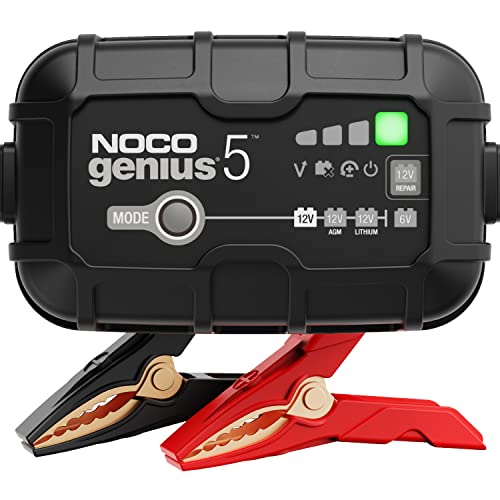
NOCO Genius5 Battery Charger and Maintainer
Seven charge modes cover everything from a deeply discharged battery to routine maintenance mode. Compatibility spans standard, AGM and lithium batteries, which most single mode maintainers cannot claim. According to owner reports, it stays connected through entire winters without overcharge damage.
Pros
- Works with lithium batteries unlike most rivals
- Automatic mode switching needs no monitoring
- Water resistant housing suits outdoor parking
Cons
- Higher cost than single mode maintainers
- Cable length is shorter than some competitors

CTEK MXS 5.0 Battery Charger
A dedicated cold weather setting raises voltage slightly to charge properly in freezing garages. Reconditioning mode recovers batteries that sat too long between drives. Northern climate owners rate it above standard maintainers that skip temperature compensation entirely.
Pros
- Cold weather mode suits freezing climates
- Reconditioning mode revives sulfated batteries
- Clear step indicator lights show charge status
Cons
- No lithium battery support
- Clamps feel less rugged than NOCO’s

Battery Tender Plus Battery Charger
Two charge stages keep the design simple, which buyers credit for years of trouble free use. A microprocessor prevents overcharging by switching to float mode once the battery reaches full charge. Many report the same unit still running after a decade of seasonal storage.
Pros
- Long track record of reliable operation
- Simple two stage design needs no menus
- Suits AGM and gel batteries as well as standard
Cons
- Slower charge rate than higher amp units
- No dedicated cold weather setting

NOCO Genius10 Battery Charger and Maintainer
Ten amp output charges larger batteries faster than the 5 amp Genius5 without giving up its multi mode flexibility. It still supports lithium, AGM and standard chemistries in one unit. Truck and larger engine owners generally prefer the extra charging speed for a full recovery.
Pros
- Faster charging suits larger battery banks
- Same broad chemistry support as the Genius5
- Water resistant for garage or driveway use
Cons
- Larger and heavier than 5 amp units
- Costs more than most single stage maintainers

Schumacher SC1281 Battery Charger
A higher amperage rating lets it double as a faster charger, not just a slow maintainer. An LCD screen displays voltage and charge percentage instead of a simple light. Both routine maintenance and jump starting a nearly dead battery fall within its use case.
Pros
- Higher amperage handles faster full charges
- LCD display gives more detail than LED lights
- Doubles as an engine start assist
Cons
- Bulkier housing than dedicated maintainers
- Not rated for long unattended maintenance duty

NOCO Genius1 Battery Charger and Maintainer
A low 1 amp output suits smaller batteries and infrequent top offs rather than a daily driver. Its compact size stores easily in a glove box or garage shelf. Seasonal car and small engine battery owners rate it as enough for light duty use.
Pros
- Affordable entry into smart charging
- Supports lithium despite the low price
- Compact size stores almost anywhere
Cons
- Slow output for anything but small batteries
- Takes longer to recover a deeply discharged battery

Battery Tender Junior Battery Charger
A gentle 0.75 amp output suits motorcycle, ATV and lawn tractor batteries better than a full car sized charger. Its small size and quick connect harness make swapping between vehicles easy. Powersports owners with seasonal gear often keep several units on hand.
Pros
- Gentle output suits small powersports batteries
- Quick connect harness speeds up swaps
- Compact and easy to store off season
Cons
- Too slow for full size car batteries
- No lithium battery support
How they stack up
| # | Model | Output | Best for | Score | Price |
|---|---|---|---|---|---|
| 1 | NOCO Genius5 Battery Charger and Maintainer | 5 amps | Best overall | 9.4 | Check price |
| 2 | CTEK MXS 5.0 Battery Charger | 4.3 amps | Best for cold weather charging | 9.1 | Check price |
| 3 | Battery Tender Plus Battery Charger | 1.25 amps | Best for reliability | 8.8 | Check price |
| 4 | NOCO Genius10 Battery Charger and Maintainer | 10 amps | Best for larger batteries | 8.6 | Check price |
| 5 | Schumacher SC1281 Battery Charger | 15 amps, adjustable | Best value | 8.3 | Check price |
| 6 | NOCO Genius1 Battery Charger and Maintainer | 1 amp | Best budget | 8.1 | Check price |
| 7 | Battery Tender Junior Battery Charger | 0.75 amps | Best for motorcycles and small batteries | 8.0 | Check price |
Common questions
Can you leave a battery maintainer connected all winter?
Yes, true maintainers are built for exactly that. They switch to a float or maintenance mode once the battery reaches full charge, preventing overcharging. Confirm the specific unit is rated for long term connection rather than short term charging only.
What is the difference between a trickle charger and a maintainer?
A basic trickle charger sends a constant low current regardless of battery state. A smart maintainer monitors voltage and adjusts, switching to float mode automatically. Leaving an old style trickle charger connected too long risks overcharging.
Do I need a maintainer with AGM or lithium support?
Only if your vehicle actually uses an AGM or lithium battery. Standard flooded lead acid batteries do not need those specific charge profiles. Check your battery’s label before paying more for broader chemistry support.
How often should you check a battery maintainer?
Most modern smart maintainers need no regular checking once connected properly. A quick glance at the status light every few weeks confirms it is still working. Inspect the clamps and cable for damage if the vehicle sits for several months.
Will a battery maintainer overcharge my battery?
A properly functioning smart maintainer will not overcharge, since it switches to float mode automatically. Older trickle chargers without that feature can overcharge if left connected too long. Choosing a maintainer with multiple charge stages avoids this risk entirely.
Can a battery maintainer charge a completely dead battery?
Most maintainers are designed for upkeep, not deep recovery from a fully dead state. Some, like the NOCO Genius line, include a recovery mode for deeply discharged batteries. A severely sulfated battery may need a dedicated charger or replacement instead.
Is a higher amp maintainer always better?
Not for long term maintenance duty, where a gentle low amp output is actually preferred. Higher amp units suit faster charging needs or larger battery banks. Match amperage to your battery size rather than assuming more is better.
Do motorcycle batteries need a different maintainer than car batteries?
Motorcycle and powersports batteries are smaller and benefit from a lower amp output like the Battery Tender Junior provides. A full size car maintainer can push too much current for these smaller batteries. Check the maintainer’s minimum battery size rating before connecting it to a motorcycle.
Battery maintainer vs a jump starter, what is the difference?
A jump starter delivers a short burst of high current to start a dead engine immediately. A maintainer works over days or weeks to keep a battery topped up between drives. Owners who park a car for extended periods need a maintainer, not a jump starter.
What is the best battery maintainer for a car parked for months?
The NOCO Genius5 suits long term storage since it adapts across battery chemistries without manual switching. Its water resistant housing also tolerates an unheated garage or outdoor driveway. Multi stage charging keeps a battery at full charge without risking overcharge damage.
The bottom line
Daily drivers left parked for weeks benefit most from the NOCO Genius5, since it adapts across battery types automatically. Cold climates favor the CTEK MXS 5.0 for its temperature compensated charging. Motorcycle and small engine owners should reach for the Battery Tender Junior instead of a full size unit.