Car Polish Kits to Bring Back That Shine
For restoring paint at home, the Chemical Guys TORQ 10FX kit is the best all-around choice, the Meguiar’s Complete Car Care kit offers the best value, and the Chemical Guys buffing pad kit is the strongest budget pick. Each bundles the polish and applicators most owners need to start.
The Chemical Guys TORQ 10FX kit is the car polish kit most enthusiasts recommend because it pairs a beginner-friendly random orbital with matched pads and polish, with the Meguiar’s Complete Car Care kit close behind on value and the Chemical Guys buffing pad kit best on a budget.
Choosing a polish kit is trickier than grabbing one bottle because pad type, polish aggressiveness, and machine safety all shape the result, and the wrong combo can leave holograms or do nothing at all. We compared included components, ease of use, and the finish owners report based on specifications.
The best picks, ranked

Chemical Guys TORQ 10FX Polisher Kit
The TORQ 10FX kit centers on a forgiving random orbital polisher that owners say is hard to burn paint with, bundled with matched pads and polishes for correction and finishing. It takes the guesswork out of building a system, making it the kit most first-timers reach for when they want real swirl reduction without a steep learning curve.
Pros
- Beginner-safe random orbital action
- Matched pads and polishes included
- Real correction on light defects
Cons
- Costs more than pad-only kits
- Heavier work needs extra passes

Meguiar’s Complete Car Care Kit
The Meguiar’s Complete Car Care kit bundles trusted wash, polish, wax, and applicators into one box that owners find covers the whole detailing process by hand. It is a strong value for anyone who wants a proven all-in-one starting point, delivering a clean, glossy finish without committing to a machine.
Pros
- Covers the whole wash-to-wax process
- Trusted, proven products
- Great value all-in-one box
Cons
- Hand polishing is slower
- Less correction than a machine

Chemical Guys Buffing Pad and Polish Kit
This Chemical Guys pad-and-polish kit skips the machine and gives you the applicators and polishes to use with a buffer you may already own. Owners on a budget like that it fills in the consumables cheaply, though you supply the polisher, so it is best for someone building on gear they have rather than starting from zero.
Pros
- Low cost for pads and polish
- Great top-up for existing gear
- Range of pad cuts included
Cons
- No polisher in the box
- Better with some experience
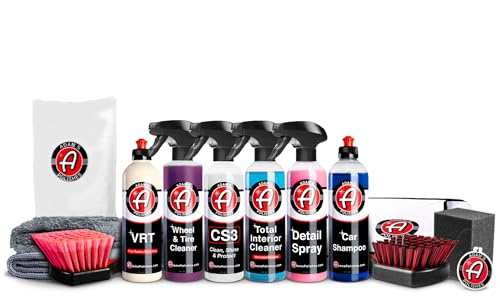
Adam’s Polishes Complete Car Care Kit
Adam’s Polishes bundles well-regarded correction and finishing products that owners praise for cutting swirls and hazing while leaving a deep gloss. The kit’s polishes are formulated to work in stages, so with the right pad it tackles more serious paint defects than a simple one-step product.
Pros
- Strong on swirls and hazing
- Staged correction products
- Leaves a deep gloss
Cons
- Best results need a machine
- Step system has a learning curve
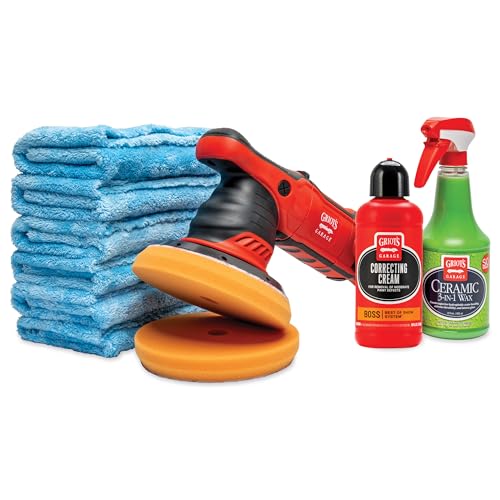
Griot’s Garage Random Orbital Polisher Kit
Griot’s Garage pairs a compact random orbital with small pads and polish, a setup owners favor for tight areas like pillars, mirrors, and bumpers. Its smaller throw makes it maneuverable for detail work, so it complements a full-size polisher rather than replacing it for large panels.
Pros
- Great for tight, curved areas
- Maneuverable compact design
- Beginner-safe orbital action
Cons
- Small pads slow large panels
- Not a whole-car primary tool

Mothers California Gold Car Care Kit
The Mothers California Gold kit gathers familiar cleaner, polish, and wax products into one box for hand use, a reliable classic owners have trusted for years. It is aimed at maintenance shine and light cleanup rather than heavy correction, delivering a warm gloss on paint that is already in decent shape.
Pros
- Trusted classic products
- Simple by-hand process
- Warm gloss on good paint
Cons
- Light on serious correction
- Hand application takes effort

Turtle Wax Hybrid Solutions Ceramic Kit
The Turtle Wax Hybrid Solutions ceramic kit focuses on shine and a slick, water-beading finish rather than heavy correction. Owners like the easy application and the protection it adds after polishing, making it a good finishing layer for paint that is already smooth and cleaned up.
Pros
- High gloss and water beading
- Easy to apply by hand
- Adds protection after polishing
Cons
- Not a paint-correction kit
- Works best on prepped paint
How they stack up
| # | Model | Type | Best for | Score | Price |
|---|---|---|---|---|---|
| 1 | Chemical Guys TORQ 10FX Polisher Kit | Random orbital kit | Best overall | 9.4 | Check price |
| 2 | Meguiar’s Complete Car Care Kit | Hand detailing kit | Best value | 9.1 | Check price |
| 3 | Chemical Guys Buffing Pad and Polish Kit | Pad and polish kit | Best budget | 8.8 | Check price |
| 4 | Adam’s Polishes Complete Car Care Kit | Correction and finishing kit | Best for swirl removal | 9.0 | Check price |
| 5 | Griot’s Garage Random Orbital Polisher Kit | Compact random orbital kit | Best for detail work | 8.7 | Check price |
| 6 | Mothers California Gold Car Care Kit | Hand care kit | Best classic all-rounder | 8.5 | Check price |
| 7 | Turtle Wax Hybrid Solutions Ceramic Kit | Ceramic finishing kit | Best for gloss and protection | 8.3 | Check price |
How to choose
Know what polishing actually does Polishing removes a very thin layer of clear coat to level out swirls, light scratches, and oxidation, restoring gloss that washing alone cannot. It is different from waxing, which adds protection on top. A correction-focused kit uses more aggressive polishes and pads, while a maintenance kit leans on lighter products for shine. Match the kit to your goal, because using an aggressive system on paint that only needs a refresh is unnecessary work.
Machine versus hand kits A random orbital polisher does far more correction with far less effort than working by hand, and modern beginner-friendly machines are hard to damage paint with because their motion spreads heat and pressure. Hand kits cost less and suit maintenance gloss or small areas, but they struggle with real swirls. If your paint has visible defects, a machine kit is worth the extra cost; for upkeep on good paint, a hand kit is plenty.
Match pads and polish to the defect Pads and polishes come in cutting levels, and pairing them correctly is what separates a great result from holograms or no change at all. A cutting pad with an abrasive polish removes deeper defects, while a soft finishing pad with a fine polish refines gloss. Kits that include a matched range let you step down from correction to finishing on the same job, which is why a coordinated set beats buying random bottles.
Prep and protect around the polish Polishing works best on clean, decontaminated paint, so wash and dry the car first and consider a clay step to remove bonded grime. After polishing, seal the fresh finish with a wax or ceramic product so the gloss lasts and the paint gains protection. Some kits bundle these steps together, which simplifies the process, so check whether a kit is polish-only or a full wash-to-protect system before buying.
Frequently asked questions
What is the difference between polishing and waxing?
Polishing removes a fine layer of clear coat to level swirls and restore gloss, while waxing adds a protective layer on top of the paint. You polish to fix defects and wax or seal afterward to protect the result, so the two steps work together.
Do I need a machine polisher or can I do it by hand?
A random orbital machine corrects swirls far faster and more effectively than hand work, and beginner-friendly models are hard to damage paint with. Hand kits are fine for maintenance gloss or small areas, but for visible defects a machine kit is the better tool.
Will a polish kit remove deep scratches?
Polishing removes swirls and light scratches within the clear coat, but scratches you can catch a fingernail in usually reach too deep to buff out fully. A kit can improve their appearance, though deep scratches often need paint repair rather than polishing.
How often should I polish my car?
Polishing removes a little clear coat each time, so it is a once-or-twice-a-year task at most for correction, not a routine step. Between polishes, rely on washing and a wax or sealant to maintain gloss and protection without thinning the clear coat.
What pad should I use with a polish kit?
Match the pad to the job: a cutting pad with an abrasive polish for defects, and a soft finishing pad with a fine polish to refine gloss. Kits with a matched range let you step from correction to finishing on the same panel.
Can beginners use these kits safely?
Yes, especially the random orbital kits, which are designed to be forgiving because their motion spreads heat and pressure. Start on a test area, keep the pad moving, and follow the included instructions to build confidence before doing the whole car.
Should I clay the paint before polishing?
Claying removes bonded contaminants that washing leaves behind, giving the polish a clean surface to work on. It is not always required, but on neglected paint a clay step before polishing improves both the process and the final finish.
Do I still need to wax after using a polish kit?
Yes, polishing restores gloss but leaves the paint unprotected, so sealing with a wax or ceramic product afterward locks in the shine and shields the clear coat. Some kits include this step, so check whether yours is polish-only.
Our pick
For most home detailers the Chemical Guys TORQ 10FX kit is the car polish kit worth buying, pairing a forgiving random orbital with matched pads and polish for real swirl reduction. Choose the Meguiar’s Complete Car Care kit for the best by-hand value, or the Chemical Guys buffing pad kit to top up gear you already own.

