How to Pick a Carrier for a Nervous Indoor Cat
Sherpa Original Deluxe leads for indoor cats, pairing a den like interior with airline sized dimensions. Petmate Two Door Top Load Kennel simplifies loading a reluctant cat, and Sleepypod Mobile Pet Bed doubles as furniture so the carrier never looks unfamiliar.
Sherpa Original Deluxe suits most indoor cats first, since its enclosed soft sided shell feels like a den and still meets common airline size limits. Cats that brace at a front door do better with Petmate Two Door Top Load Kennel, which lowers them in from above. Sleepypod Mobile Pet Bed sidesteps the fear altogether by living in the house as an everyday bed.
Indoor cats treat carriers as a threat because the box only appears before something unpleasant happens. Top loading access, a carrier left out as furniture, and a top half that removes for exams all reduce that trigger. We compared access design, rigidity, ventilation, cleaning and what owners report about latch security across seven current listings.
The best picks, ranked

Sherpa Original Deluxe Pet Carrier
A padded, enclosed interior pairs with mesh panels so a nervous cat can hide yet still see out. A spring wire frame lets the top flex under an aircraft seat without crushing the space inside. Owners report the removable washable liner keeps it usable after an accident.
Pros
- Enclosed design suits anxious cats
- Both top and end access
- Washable liner handles accidents
Cons
- Soft sides offer less protection in a car
- Zips need care with determined escape artists

Petmate Two Door Top Load Kennel
Front door and top hatch give two ways in, so a resistant cat can be lowered rather than pushed through a narrow gap. Plastic shell walls wipe clean fast and sit solid in a car footwell. Based on specifications, this is the sensible pick for cats that actively fight the carrier.
Pros
- Top hatch removes the loading struggle
- Rigid shell protects in transit
- Very easy to clean thoroughly
Cons
- Bulkier to store than soft carriers
- Open sides offer less hiding space
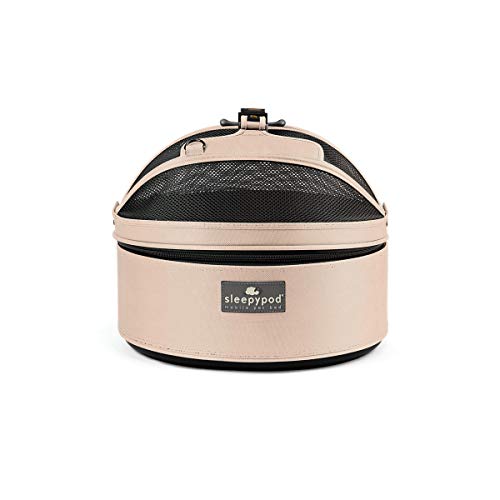
Sleepypod Mobile Pet Bed
This carrier lives in the home as a bed, so the cat links it to sleeping rather than vet visits, and a mesh dome zips on when it is time to travel. Crash test performance sets it apart from most soft carriers. Cost and floor space are the tradeoffs for that dual role.
Pros
- Cat is already familiar with it before travel
- Crash tested for car safety
- Bedding removes for washing
Cons
- Takes up floor space permanently
- Round shape is awkward to carry far

Mr. Peanut’s Gold Series Expandable Airline Carrier
Under seat dimensions hold on the plane, then a side panel unzips into a wider space once you land. Multiple openings, including a top zip, and an internal tether that stops a bolt when the carrier opens make loading manageable. A light internal frame adds more rigidity than typical budget soft carriers.
Pros
- Expands for more room at the destination
- Several access points including the top
- Internal tether reduces escape risk
Cons
- Expanded panel needs floor space
- More zips means more failure points

Necoichi Portable Stress Free Cat Cage
Fabric walls fold nearly flat for storage between trips, and the wide top opening lets a vet examine a cat without lifting it out. That single feature removes one of the most stressful moments of an appointment. Long car rides suit a rigid carrier better, since the frame here is fabric over wire.
Pros
- Vet can examine the cat in place
- Folds flat for easy storage
- Good all round visibility and airflow
Cons
- Less protective than a hard shell
- Fabric structure flexes when carried

Petsfit Expandable Cat Carrier
An expansion section gives a cat room to shift position on longer drives, backed by a fleece mat and mesh windows on three sides. Footprint stays compact even with the extra interior room. Short trips favor a snug den instead, which this carrier is not built for.
Pros
- Extra room for long journeys
- Removable mat washes easily
- Plenty of ventilation panels
Cons
- Too open for cats that prefer to hide
- Expansion reduces stability when carried
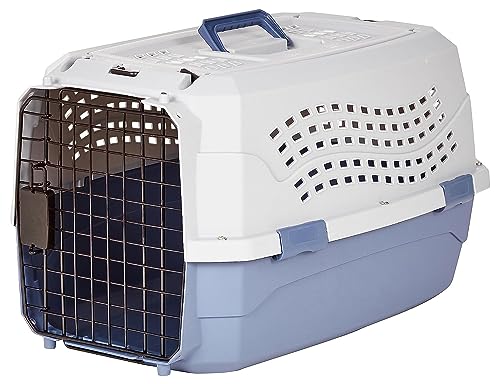
Amazon Basics Two Door Top Load Pet Kennel
Front and top doors cover the essentials of getting a cat safely to the vet and home again. Halves clip together for assembly, and the top lifts off for cleaning. Fit and finish trail premium kennels, though the core function matches them.
Pros
- Lowest cost hard carrier here
- Top loading despite the price
- Splits apart for thorough cleaning
Cons
- Latches feel less solid than premium models
- Thin plastic flexes when carried loaded
What to look for
Hard shell or soft sided for an indoor cat Hard kennels protect better in a vehicle, clean thoroughly after accidents, and split apart so a vet can examine a cat in the base half. Soft carriers weigh less, fit under aircraft seats, and feel more den like, which suits an anxious indoor cat. Short local vet trips work with either. Flying usually requires soft sided.
Why top loading solves most loading fights A cat braces its legs against a front door frame and becomes nearly impossible to push through once it refuses. Lowering the cat in from above, rear first, works far more often. Any carrier for a reluctant indoor cat needs a top hatch or a removable top half. This single feature cuts stress more than padding or fabric choice.
Securing the carrier for the car ride An unsecured carrier slides during normal driving and becomes a projectile in a collision, which frightens the cat inside. Route a seatbelt through the handles or strap loops, set it in a footwell where it cannot tip, and skip the front passenger seat near an airbag. Genuine crash testing is rare among carriers, so confirm it rather than assume it.
Turning the carrier into a normal object An indoor cat panics at the carrier because it only appears before something unpleasant. Leaving it out year round with familiar bedding, feeding treats inside, and occasionally closing the door for a minute rewires that association over a few weeks. Sleepypod builds bed like design in from the start, but any carrier left out achieves most of the same effect.
How they stack up
| # | Model | Type | Best for | Score | Price |
|---|---|---|---|---|---|
| 1 | Sherpa Original Deluxe Pet Carrier | Soft sided carrier | Best overall | 9.4 | Check price |
| 2 | Petmate Two Door Top Load Kennel | Hard sided plastic kennel | Best value | 9.2 | Check price |
| 3 | Sleepypod Mobile Pet Bed | Convertible bed and carrier | Best for anxious cats | 9.0 | Check price |
| 4 | Mr. Peanut’s Gold Series Expandable Airline Carrier | Soft sided expandable carrier | Best for air travel | 8.8 | Check price |
| 5 | Necoichi Portable Stress Free Cat Cage | Collapsible fabric cage | Best for vet visits | 8.6 | Check price |
| 6 | Petsfit Expandable Cat Carrier | Soft sided expandable carrier | Best for longer journeys | 8.3 | Check price |
| 7 | Amazon Basics Two Door Top Load Pet Kennel | Hard sided plastic kennel | Best budget | 8.0 | Check price |
Good to know
What is the best type of carrier for a cat that hates going in?
One with top loading access. Lowering a cat in from above avoids the bracing reflex that makes front door loading a struggle. Petmate Two Door Top Load Kennel is a straightforward example, and most current soft carriers include a top zip too.
Is a hard or soft cat carrier better?
Hard carriers clean more thoroughly and protect better in a car, and the top half usually removes for a vet exam. Soft carriers weigh less, feel more enclosed, and are what most airlines require for cabin travel.
How big should a cat carrier be?
Large enough for the cat to stand, turn around, and lie down, but not so roomy that the cat slides inside during a drive. Airline travel adds its own under seat dimension limits, so check those first.
How can I make my indoor cat less afraid of the carrier?
Leave it out permanently with familiar bedding, feed treats inside, and close the door briefly without going anywhere. Over several weeks the carrier stops predicting a vet visit, which is the actual source of the fear.
Where should a cat carrier sit in a car?
In a footwell, or secured on a seat with a belt through the handles or strap loops, away from a front airbag. An unsecured carrier slides under braking and turns dangerous in a collision.
Can two cats share one carrier?
It is usually better not to. Even bonded cats can redirect stress onto each other during a frightening ride, and a shared box makes a vet exam harder. Separate carriers placed side by side work better.
Do soft cat carriers meet airline size requirements?
Many are built to, including Sherpa Original Deluxe and Mr. Peanut’s Gold Series, but every airline sets its own dimensions and updates them. Confirm the specific carrier against your airline before booking.
What is the best carrier for an indoor cat that struggles at vet visits?
Necoichi Portable Stress Free Cat Cage opens wide enough for an exam without lifting the cat out, which removes a major stress point during the appointment.
How do I clean a carrier after an accident?
Hard kennels split apart for a full wash, which is their main advantage over soft designs. For soft carriers, look for a removable washable liner and use an enzymatic cleaner rather than ammonia, since ammonia smells like urine to a cat.
The verdict
Sherpa Original Deluxe strikes the best balance for indoor cats, combining an enclosed den with top access and travel ready dimensions. Petmate Two Door Top Load Kennel fits households where loading is the fight, and Sleepypod Mobile Pet Bed suits owners who want the carrier to never feel like one.