How to Pick a Bird Swing Your Parrot Will Actually Use
Prevue Pet Products Birdie Basics Swing fits the widest range of cages and birds, which makes it the safe first buy. JW Pet Insight Activitoy Swing adds a contoured perch that changes width. Super Bird Creations Boing gives active conures a springy coil to climb and chew.
Prevue Pet Products Birdie Basics Swing is the starting point for most parakeets and small parrots. JW Pet Insight Activitoy Swing wins on foot comfort thanks to its varying perch width. Super Bird Creations Boing suits climbers that never settle in one spot.
Swing choice trips people up because width, texture and attachment style decide whether a bird uses it or ignores it for months. We compared perch dimensions, grip surfaces, chew resistance and cage hardware across seven current models, then weighed owner reports on fraying, tipping and how quickly birds accepted each one.
How to choose
What to check before buying a bird swing Three things decide fit: perch width, cage clearance and attachment style. Measure the cage across at the height where the swing will hang, then subtract room for the bird to turn. Width of the bar should let toes wrap partway around without overlapping. Attachment matters last but breaks most often, so look for closed hooks or clamps rather than open S shapes that slide off a bar.
Which swing width fits budgies, cockatiels and conures Finches and budgies do well on bars around three to four inches across, held on a slim dowel. Cockatiels want a wider span and a thicker perch, closer to three quarters of an inch through the grip. Conures and small parrots need sturdier bars they can wrap a full foot around, plus vertical room for the swing to move. Oversized swings get ignored just as often as undersized ones.
Rope or wood: which swing lasts longer with chewers Cotton rope feels kind on feet and satisfies a beak, but it thins, frays and eventually poses a snagging risk. Hardwood dowels survive far longer while offering nothing to chew. Natural branch swings sit in between, since bark comes off first and the core lasts. Moulded plastic outlasts all of them and cleans fastest, so many owners run one plastic swing plus separate chew toys.
How to get a nervous bird onto a new swing Placement does most of the work. Hang the swing beside a favourite perch or near the food dish so it joins the daily route rather than blocking it. Some birds step on the first afternoon; others take a week of walking past. Setting a familiar toy or a treat within reach speeds acceptance. Avoid hanging anything new directly over the roosting spot, since that reads as a threat.
The best picks, ranked

Prevue Pet Products Birdie Basics Swing
Simplicity is the selling point. A hardwood dowel about four inches wide hangs from a single top hook, fitting small and medium cages without crowding existing perches. Smooth wood gives steady footing, which is why hesitant birds usually step on within a day or two.
Pros
- Fits most small and medium cage widths
- Sanded dowel is easy on unaccustomed feet
- Hangs from one hook in seconds
Cons
- Uniform dowel adds no foot exercise
- Undersized for large parrots

JW Pet Insight Activitoy Swing
JW built this around a contoured perch whose diameter changes across its span, so foot muscles keep adjusting instead of locking into one grip. Moulded plastic rinses clean and does not absorb droppings. Owners report budgies and cockatiels settle onto it within a couple of days.
Pros
- Changing width works the foot muscles
- Non porous surface rinses clean
- Bright colouring draws curious birds over
Cons
- Plastic gives dedicated chewers nothing
- One fixed size rules out larger birds

Super Bird Creations Boing Coil Rope Perch
Spiral cotton rope over a wire core turns a swing into a climbing frame. It bounces under body weight and springs back, so a conure can grip, chew and balance on the same item. Medium and large cages suit it best, since the coil needs vertical room to move.
Pros
- Springy motion burns off nervous energy
- Soft rope suits birds with sore feet
- Works as a climbing route as well as a swing
Cons
- Cotton frays under determined chewing
- Loose threads need trimming to prevent snags
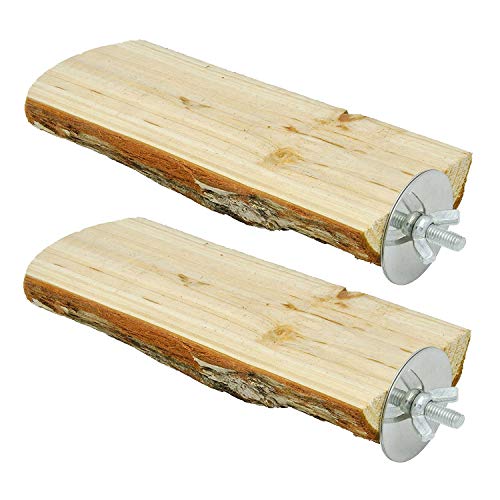
Niteangel Natural Wood Bird Swing
Irregular branches replace the machined dowel here, so grip changes across the bar the way it does on a real tree. Bark stays on, which invites light chewing and adds traction. Every unit differs slightly in thickness because the wood is not milled to a spec.
Pros
- Uneven surface spreads foot pressure
- Untreated wood satisfies light chewing
- Blends visually with branch perches
Cons
- Thickness varies between individual units
- Bark sheds small pieces into the tray
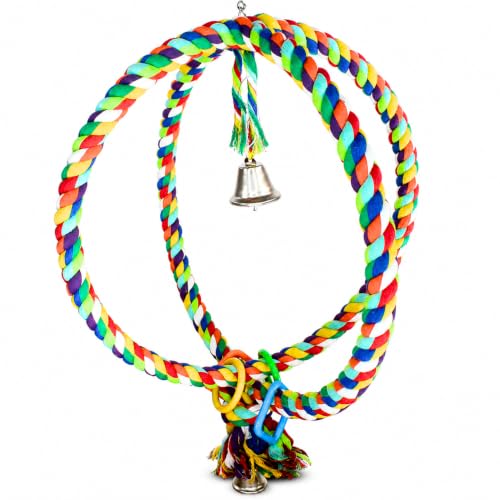
Bonka Bird Toys Rope Swing
Cotton rope over a bendable core holds whatever shape you set, from a shallow U to a tight corner curve. Birds perch along it, hang beneath it, or climb from clip to clip. Awkward cage corners that waste a rigid swing become usable space.
Pros
- Bends into corners rigid swings cannot use
- Soft grip helps nervous or older birds
- Two clip mounting stops it spinning
Cons
- Cotton loosens under steady chewing
- End clips work loose and need checking

Penn-Plax Wood Bird Swing
Turned wood and a metal frame cover the basics for finches, budgies and small parakeets. Its perch spans about three and a half inches, which is why it fits small cages other swings crowd. Sensible as a first swing, and easy to move once you learn where the bird prefers it.
Pros
- Compact width suits finch and budgie cages
- Plain shape birds learn within a day
- Light enough to reposition one handed
Cons
- Smooth dowel adds no grip variety
- Too narrow for medium parrots
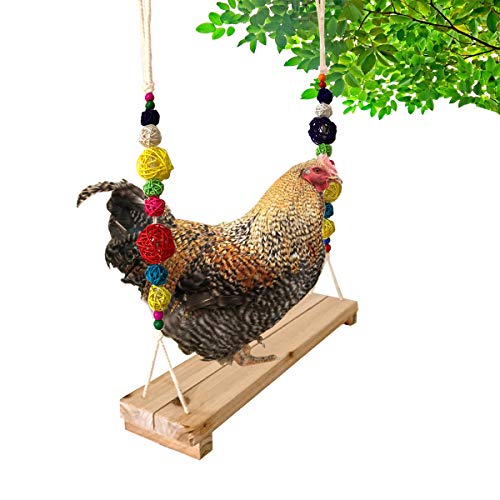
Vehomy Bird Perch Swing
Sold as a multi pack, these natural wood swings equip several cages or give one busy bird a choice of hanging spots. Branch style bars provide varied grip, and the compact frame suits budgies and lovebirds. Finish quality differs across a set because the wood is natural.
Pros
- One pack covers several cages
- Branch grip supports foot health
- Small footprint leaves flight room
Cons
- Bars run thin for bigger birds
- Finish varies from piece to piece
Compared at a glance
| # | Model | Material | Best for | Score | Price |
|---|---|---|---|---|---|
| 1 | Prevue Pet Products Birdie Basics Swing | Hardwood dowel and metal | Best overall | 9.4 | Check price |
| 2 | JW Pet Insight Activitoy Swing | Textured molded plastic | Best for comfort | 9.2 | Check price |
| 3 | Super Bird Creations Boing Coil Rope Perch | Cotton rope with wire core | Best for active birds | 9.0 | Check price |
| 4 | Niteangel Natural Wood Bird Swing | Natural branch wood | Best natural wood | 8.8 | Check price |
| 5 | Bonka Bird Toys Rope Swing | Cotton rope with bendable core | Best value | 8.6 | Check price |
| 6 | Penn-Plax Wood Bird Swing | Wood and metal | Best budget | 8.3 | Check price |
| 7 | Vehomy Bird Perch Swing | Natural wood | Best for small flocks | 8.0 | Check price |
Questions worth asking
How do you get a bird to use a new swing?
Hang it along an existing route, near a favourite perch or the food dish. Leave it in place for a week before moving it. A treat or familiar toy nearby usually shortens the standoff.
What swing width is right for a budgie?
Around three to four inches across, on a slim bar. Toes should wrap partway around without overlapping underneath, which keeps the grip secure while the swing moves.
Are rope swings safe for birds?
Cotton rope is safe while trimmed and intact. Frayed threads catch toes, so inspect weekly and retire the swing once the weave thins. Aggressive chewers should skip designs with an exposed wire core.
Is wood or plastic better for a bird swing?
Wood and natural branches give grip variety plus a chewing outlet but wear out. Plastic lasts longer and rinses clean while offering nothing to gnaw. Running one of each covers both needs.
How often should a bird swing be replaced?
Rope and soft wood swings often need swapping every few months with active chewers. Hardwood and moulded plastic run far longer. Check hardware weekly for loose links and sharp edges.
Can two birds share one swing?
Small birds sometimes share a wide bar, though most prefer their own. Crowding triggers squabbling, so a bonded pair usually does better with one swing each.
How do you clean a bird swing?
Plastic wipes down with warm water and a bird safe cleaner, then rinses. Wood and rope get brushed and spot cleaned, since soaking warps wood and traps moisture in fibres. Dry anything damp before it goes back.
Where should a swing hang inside the cage?
Set it clear of food and water bowls and away from the roosting corner. Leave enough space that a moving swing never strikes a perch or the bars behind it.
Do bird swings help with boredom?
They add movement and a fresh vantage point, which breaks up a static cage. Pair one with chew and foraging toys, because variety rather than any single item is what keeps a bird occupied.
Final word
Prevue Pet Products Birdie Basics Swing is the low risk choice that fits the most cages and suits the most birds. Active climbers get more from the Super Bird Creations Boing, whose coil doubles as a chew and climb surface. Birds with tender feet do best on the JW Pet Insight Activitoy Swing and its varying perch width.