How to Pick a Carrier for Safe Bird Travel
Prevue Pet Products Travel Bird Cage 1305 handles routine vet runs best, with a fitted perch, latching door and a slide out tray. A&E Cage Company Travel Carrier brings the bar strength amazons and greys demand. Kaytee Come Along Carrier covers short trips with a budgie or finch.
Prevue Pet Products Travel Bird Cage 1305 fits the most common job, a vet trip with a budgie, cockatiel or conure, and it cleans out in seconds afterward. Larger parrots need A&E Cage Company Travel Carrier, where heavier bar gauge and a secure latch do the work. Kaytee Come Along Carrier covers occasional short drives with a small bird.
Product photos hide the failures that matter. Bar spacing sized for a conure lets a budgie push its head through, a simple catch is an escape route for a parrot with time on its hands, and a carrier with no perch leaves a bird sliding across smooth plastic for the whole drive. Heat is the other risk, since solid sided carriers calm nervous birds and hold warmth. We compared published dimensions, bar spacing, perch height and fixing, latch type, vent area and cleaning access, then ranked seven carriers by the trip each one handles best.
The shortlist, ranked

Prevue Pet Products Travel Bird Cage 1305
Wire travel cage arrives with a fitted perch, two cups and a slide out bottom tray, covering what a vet trip actually asks for. Open sides let a vet assess posture and breathing before the door ever opens. Owners report the tray makes cleanup after a stressful journey a two minute job.
Pros
- Ships with a real perch, not a bare floor
- Slide out tray empties without unloading
- Vet can assess the bird through the bars
Cons
- Open wire gives little draft protection
- Bulkier than a soft sided bag

A&E Cage Company Travel Carrier
Bar gauge and latch design target beaks that dismantle lighter carriers, which is what African greys and amazons do given a quiet twenty minutes. Interior perch sits high enough to keep long tail feathers off the floor. Weight is the trade, so this suits car travel rather than a walk across a parking lot.
Pros
- Bar and latch strength suit strong beaks
- Perch height protects tail feathers
- Rigid shell resists crushing in a loaded car
Cons
- Heavy to carry any distance
- More carrier than a small bird needs
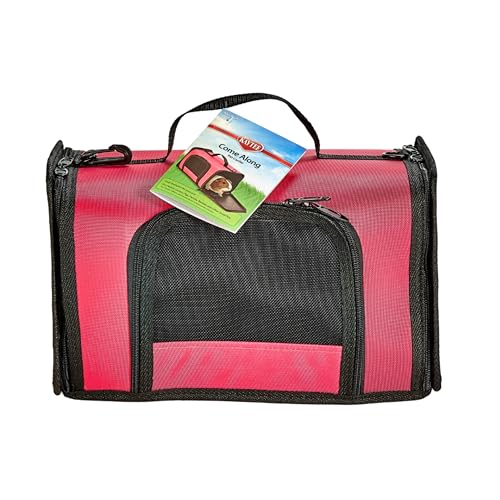
Kaytee Come Along Carrier
Hard sided shell with a wire front door and a top handle, built for short small pet journeys. Twenty minutes to the vet with a budgie is well within what it handles. No perch is supplied, so most owners fit a low dowel before the first trip.
Pros
- Light enough to carry one handed
- Solid sides block drafts and passing views
- Easy to keep one per bird
Cons
- Perch has to be added yourself
- Vent area is limited on warm days

Wingabago Bird Carrier
Designed around birds from the start rather than adapted from a small animal kennel, with a perch, seed guard and a shape a seat belt routes across cleanly. That belt path matters on a long drive, since an unsecured carrier slides at every corner. Owners report it survives repeated cross country trips.
Pros
- Belts into a car seat properly
- Seed guard keeps the cabin clean
- Perch and layout designed for birds
Cons
- Sizing options are limited
- Bulky to store between trips

Texsens Innovative Traveler Bubble Backpack
Ventilated backpack with a clear bubble window frees both hands at a vet counter or on a bus. Calm, well socialized birds handle the moving view fine, while nervous ones do not. Most owners add a low perch and line the base rather than using it as shipped.
Pros
- Keeps both hands free on foot or transit
- Mesh panel and side vents move air
- Confident birds get a clear view out
Cons
- Motion unsettles nervous birds
- Bubble window heats up in direct sun

Living World Pet Carrier
Compact plastic shell opens at the top as well as the front, so a small bird can be lifted in from above instead of chased through a side door. Top loading cuts handling time, which matters more than any other feature with a stressed finch. Modest vent area keeps it best suited to short journeys.
Pros
- Top opening makes loading calmer
- Light and simple to store
- Smooth interior wipes out completely
Cons
- Airflow is limited on long trips
- Too small for medium parrots

Petmate Two Door Top Load Pet Kennel
Rigid two door kennel earns its place in an evacuation bag, where crush resistance outranks refinement. Loading happens from above while a vet reaches in through the front. Sold as a general pet kennel, so add a low perch and a towel liner before it counts as a bird carrier.
Pros
- Tough shell suits a go bag
- Two doors ease loading and vet access
- Splits in half for thorough cleaning
Cons
- Not designed around birds
- Ventilation slots are narrow
The lineup, side by side
| # | Model | Type | Best for | Score | Price |
|---|---|---|---|---|---|
| 1 | Prevue Pet Products Travel Bird Cage 1305 | Wire travel cage | Best overall | 9.4 | Check price |
| 2 | A&E Cage Company Travel Carrier | Rigid travel carrier | Best for large parrots | 9.2 | Check price |
| 3 | Kaytee Come Along Carrier | Hard sided small pet carrier | Best budget | 9.0 | Check price |
| 4 | Wingabago Bird Carrier | Purpose built bird carrier | Best for long drives | 8.7 | Check price |
| 5 | Texsens Innovative Traveler Bubble Backpack | Backpack carrier | Best hands free option | 8.5 | Check price |
| 6 | Living World Pet Carrier | Compact plastic carrier | Best for small birds | 8.3 | Check price |
| 7 | Petmate Two Door Top Load Pet Kennel | Rigid two door kennel | Best for emergency kits | 8.0 | Check price |
How to pick the right one
What makes a good bird carrier Four things decide it. A perch mounted low enough that a slip is a short drop, bar or vent spacing that matches your species, a latch a beak cannot work, and airflow that suits the season. Size comes last and smaller usually wins. Cleaning access is the practical extra, since most birds soil a carrier within minutes of a stressful trip and a slide out tray saves scrubbing corners.
Why a smaller carrier is safer than a roomy one Buying big feels generous and works against the bird. A bird that can fully open its wings inside a large carrier gets thrown against the sides under braking, while one in a snug space grips a perch and rides it out. Aim for room to turn around and sit comfortably without spreading both wings. Height matters more than floor area, because height is what lets you mount a perch low with clearance above the head. Tail length is the dimension owners forget, and a cockatiel or macaw tail needs real clearance.
How to check bar spacing and door latches Match spacing to the smallest bird that will use the carrier. Gaps sized for a medium parrot let a budgie push its head through, which is the most serious hazard in a mismatched carrier. Latches are next, since many parrots open simple catches within a couple of trips. Adding a carabiner or stainless quick link to the door is standard practice among owners of larger birds, not a sign of a bad carrier. Check hinges too, because a door that lifts off its pin is as much a risk as one that unlatches.
How to secure a bird carrier in the car An unrestrained carrier slides, tips and exaggerates every corner, which frightens a bird more than the trip itself. Route a seat belt through the handle or around the body, or wedge it into a footwell behind a front seat where it cannot travel. Keep the carrier out of direct sun and never leave it in a parked car, since interior temperatures climb fast even on mild days. Skip open water cups, which spill and soak feathers, and offer cucumber or orange for moisture instead.
Frequently asked questions
Do I need a perch in a bird carrier?
For anything past a few minutes, yes. Gripping a perch keeps a bird stable through braking and cornering, while a flat plastic floor leaves it sliding. Fix the perch low so a slip is a short drop, and make sure it cannot roll loose mid journey.
What size carrier does my bird need?
Enough height for a perch with clearance above the head, and enough width to turn around comfortably. A bird should not be able to open both wings fully, since that invites injury during braking. Check tail length, which is the measurement most owners overlook.
Should I cover a bird carrier during travel?
Covering three sides usually helps, cutting visual stress while leaving airflow and one open view. Fully covering a solid sided carrier restricts ventilation and is a bad idea in warm weather. Lift the cover periodically to check breathing and posture.
Can I use a cat carrier for a bird?
It works for short trips once you add a low perch and line the floor, and top loading models are genuinely easier to load a bird into. Vent slot size and the lack of a seed guard are the compromises. Treat it as occasional use rather than a travel setup.
How do you get a nervous bird into a carrier?
Leave the carrier open in the room for several days with a favorite treat inside, so it becomes furniture rather than a trap. Load from above where the design allows, since chasing a bird through a side door raises stress on both sides. Keep the room quiet and the curtains partly drawn.
Is it safe to leave food and water in during a drive?
Open water cups spill and soak feathers, which is a chill risk. Most keepers travel dry for journeys under a couple of hours and offer moisture rich fruit such as orange or cucumber. On longer trips, provide water at each stop rather than in transit.
Are backpack carriers safe for parrots?
They suit calm, socialized birds on short trips. Constant motion and passing scenery unsettle nervous birds, and bubble windows heat quickly in direct sun. Panting, held out wings or frantic climbing mean it is time to switch to a shaded rigid carrier.
Which carrier suits a vet visit best?
Wire travel cages such as the Prevue 1305 let a vet see posture and breathing before the door opens, which shortens handling. A fitted perch and a slide out tray cover the rest. For a large parrot, latch strength moves ahead of visibility.
What should go in a bird evacuation kit?
A rigid carrier such as the Petmate two door kennel, a low perch, towel liners, several days of pellets, bottled water, spare bowls and a copy of vet records. Store it packed rather than assembling it under pressure. Check the food and water every few months.
How should a bird carrier be cleaned between trips?
Empty and wash it after every use with a bird safe cleaner, rinse well and dry fully before storage. Avoid aerosols and anything with strong fumes, since bird respiratory systems react badly to airborne chemicals. Replace towel liners rather than washing droppings out repeatedly.
Final word
Prevue Pet Products Travel Bird Cage 1305 covers the widest range of everyday journeys, from vet visits to short drives, with a fitted perch and a tray that cleans out fast. Owners of amazons, greys and larger parrots should step up to A&E Cage Company Travel Carrier for its bar and latch strength. For occasional short trips with a budgie or finch, Kaytee Come Along Carrier does the job once you add a low perch.