6 Grooming Tools That Cut Down on Cat Shedding
FURminator’s deShedding Tool pulls loose undercoat that causes hairballs, earning the top pick here. Hertzko’s Self-Cleaning Slicker Brush suits daily tangle removal on short and medium coats. JW Pet’s GripSoft Nail Clipper gives a clear view of the quick, making home claw trims safer.
Loose undercoat drives most shedding and hairballs, so a proper deshedding tool changes more than any brush. FURminator’s edge reaches under the topcoat without cutting it, which is why it tops this list. Hertzko’s slicker handles routine tangles, and JW Pet’s clipper gives a clear sight line for trimming claws.
Grooming a cat is harder than grooming a dog because patience runs out fast, and one rough session teaches a cat to bolt from the drawer. Coat type matters more than price: a deshedding blade suited to a dense double coat can irritate a short haired cat, while a slicker built for shorthairs never reaches a longhair’s undercoat. We compared blade and pin design, coat suitability, cleaning mechanism, handle grip, clipper noise and how each tool behaves when a cat squirms, then weighed that against what owners report about matting, shedding season and nail trims at home. Any cat with skin lesions or mats pulled tight against the skin needs a veterinarian or professional groomer, not a home fix.
Before you buy
What grooming tool matches your cat’s coat? Coat type decides the right tool more than price does. Short coats need loose hair lifted from the surface, a job for a mitt, a soft slicker or a rubber curry. Long coats need the layer underneath separated before it tangles, which calls for a comb or a deshedding edge that reaches past the topcoat. A professional grade tool used on the wrong coat usually causes more irritation and removes less hair. Start from what your cat actually has, not what looks impressive on the box.
How long should a grooming session last? Cats tolerate grooming in minutes, not half hours. A session that ends because the cat objected teaches the cat that objecting works. Two or three short sessions a day, stopped while the cat still seems relaxed, cover more coat across a week than one long struggle. Keep tools somewhere you pass often, and pair sessions with a treat so the drawer opening becomes a good sign instead of a warning.
Is it safe to cut a mat with scissors? No. Cat skin is thin and mobile, so it lifts into scissor blades far more easily than owners expect. A mat that will not brush out calls for clippers held flat against the skin, working from the edge inward, or a trip to a groomer or vet. Hot, damp mats or red skin underneath are a veterinary matter, not a grooming project.
How do you trim claws without hitting the quick? Pale claws show the quick as a pink triangle inside the nail, and the safe cut sits at the clear, hooked tip well beyond it. Dark claws hide the quick, so take small slices and stop once the cut surface looks moist or dark in the center. Trim one or two claws per session rather than all eighteen at once. Keep styptic powder nearby, and reward the cat right after so the routine builds a positive association.
Our top picks

FURminator Undercoat deShedding Tool for Cats
A stainless edge reaches beneath the topcoat and lifts dead undercoat that regular brushes miss. Owners report noticeably less shed hair on furniture within a few sessions. Skip daily use on the same patch, since repeated passes can irritate skin, and this tool will not break up an existing mat.
Pros
- Lifts dead undercoat that brushes leave behind
- Button release clears trapped fur in seconds
- Separate short coat and long coat versions available
Cons
- Repeated use on one spot can irritate skin
- Will not break apart an existing mat

Hertzko Self-Cleaning Slicker Brush
Fine angled pins on a cushioned pad work through surface tangles without digging at skin. Retracting the pins pulls the collected hair into one clump you lift off in seconds. Established mats still snag the fine pins, and the plastic housing feels lighter than professional grade slickers.
Pros
- Gentle enough for daily sessions
- Retracting pins make cleanup nearly instant
- Cushioned pad reduces scratching
Cons
- Fine pins catch on established mats
- Housing feels light for the price

JW Pet GripSoft Cat Nail Clipper
Small scissor blades and a narrow head let you see the quick before you cut, which matters most on pale claws. A rubberized handle keeps grip steady when a cat squirms. Blades run cat sized, so a thick dewclaw on an older cat can overwhelm them, and the pivot needs an occasional drop of oil.
Pros
- Narrow head gives a clear view of the quick
- Rubberized grip helps during a wriggling trim
- Light squeeze action needs little hand strength
Cons
- Struggles with thick, older dewclaws
- Pivot needs occasional oiling

Safari Cat Self-Cleaning Slicker Brush
Safari keeps the retracting pin design but adds a sturdier body with stiffer bent wire pins. Medium and long coats respond better to this brush than a soft slicker, which tends to skate over them. Short haired cats need a lighter hand here, and the wider head can bother sensitive cats around the face.
Pros
- Stiffer pins reach through longer coats
- Solid build with few parts to fail
- Retracts quickly for emptying
Cons
- Needs a light hand on short haired cats
- Wide head is awkward near the face

Wahl Bravura Lithium Pet Clipper
Cutting away a tight mat is safer than brushing it out, and this clipper runs quiet enough that many cats tolerate it. A five in one adjustable blade covers several lengths without swapping attachments, and a lithium battery runs a full session cordless. Regular oiling keeps the blade from dragging on dense coat.
Pros
- Quiet motor suits nervous cats
- Adjustable blade skips swapping attachments
- Long cordless runtime per charge
Cons
- Significant cost for occasional use
- Blade needs regular oiling and cleaning
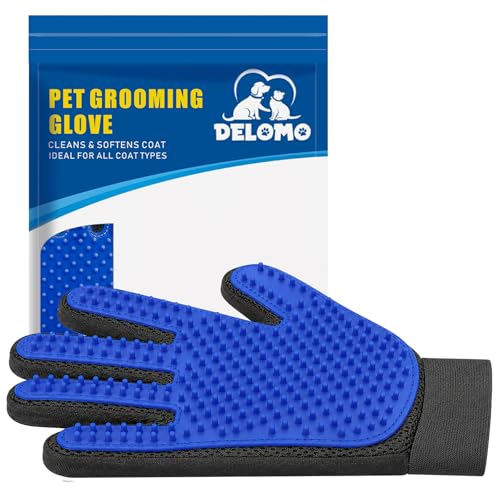
ConairPRO Cat Pet-It Grooming Mitt
Soft rubber nubs on this glove feel like petting rather than grooming, which wins over cats that flee at the sight of a brush. It lifts loose surface hair and spreads natural coat oils as you stroke. Undercoat and mats stay out of reach, so treat this as the tool that keeps a nervous cat in the routine.
Pros
- Accepted by cats that refuse brushes
- Doubles as a hair collection tool
- No sharp edges to catch on skin
Cons
- Cannot reach undercoat
- No effect on established mats
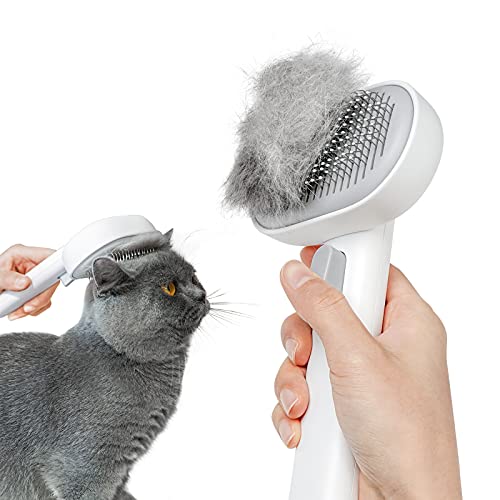
Aumuca Cat Brush for Shedding
Rounded pin tips and a self cleaning button make this a low risk starting point for cats new to grooming. It pulls a surprising amount of loose hair from short and medium coats. Build quality reflects the price, and the mechanism can loosen with heavy, repeated use.
Pros
- Low cost way to test grooming tolerance
- Rounded tips are gentle on skin
- Button release clears hair quickly
Cons
- Mechanism feels light under heavy use
- Ineffective on long, dense coats
The lineup, side by side
| # | Model | Type | Best for | Score | Price |
|---|---|---|---|---|---|
| 1 | FURminator Undercoat deShedding Tool for Cats | Deshedding edge | Best overall | 9.4 | Check price |
| 2 | Hertzko Self-Cleaning Slicker Brush | Self cleaning slicker brush | Best for everyday brushing | 9.2 | Check price |
| 3 | JW Pet GripSoft Cat Nail Clipper | Scissor style claw clipper | Best nail clipper | 9.0 | Check price |
| 4 | Safari Cat Self-Cleaning Slicker Brush | Self cleaning slicker brush | Best value | 8.7 | Check price |
| 5 | Wahl Bravura Lithium Pet Clipper | Cordless lithium ion | Best clipper for mats | 8.5 | Check price |
| 6 | ConairPRO Cat Pet-It Grooming Mitt | Grooming mitt with rubber tips | Best for nervous cats | 8.2 | Check price |
| 7 | Aumuca Cat Brush for Shedding | Self cleaning pin brush | Best budget | 8.0 | Check price |
Common questions
How often should I brush my cat?
Short haired cats do well with two or three sessions weekly. Long haired cats usually need daily brushing to stay ahead of tangles. Increase frequency, not session length, during spring and autumn shedding peaks.
Do deshedding tools cut a cat’s coat?
No, a properly used deshedding edge pulls loose dead undercoat rather than cutting living hair. Manufacturers specify light pressure for this reason. Pressing hard or repeating the same patch causes skin irritation, so keep strokes light and move around the body.
What can I do if my cat hates being brushed?
Start with a grooming mitt so contact feels like petting. Work only where the cat already enjoys touch, usually the cheeks and along the spine. Keep early sessions under a minute, stop before the cat objects, and build outward over weeks.
Can I shave a long haired cat in summer?
Coat insulates against heat as well as cold and guards against sunburn, so routine shaving is rarely advised. Clipping suits severe matting or a vet’s recommendation. For heat relief, focus on shade, water and airflow instead.
What is the difference between a slicker brush and a comb?
A slicker has many fine pins on a flat pad and lifts loose hair and surface tangles fast. A steel comb has widely spaced teeth that reach the full depth of the coat and reveal tangles a slicker skims over. Long haired cats benefit from both tools.
How do grooming tools help with hairballs?
Most swallowed hair comes from self grooming, so removing loose hair before the cat does is the practical lever. Regular deshedding plus adequate hydration reduces frequency for many cats. Frequent hairballs or repeated retching without one warrants a veterinary check.
Are nail grinders better than clippers for cats?
Grinders leave a smoother edge and reduce the chance of cutting too far in one pass. Noise and vibration are the tradeoff, and many cats refuse them outright. A quality clipper with small, frequent trims works for most households.
Should I bathe my cat regularly?
Most cats never need a bath since self grooming handles it. Exceptions include contamination with something harmful, medical conditions, or elderly and overweight cats that can no longer reach their full coat. Any bath should use a product formulated for cats only.
What is the best tool for mats close to the skin?
A quiet, low vibration clipper such as the Wahl Bravura is the safer route once a mat sits too tight to brush out. Hold the blade flat against the skin and work from the edge inward. Severe or widespread matting is better handled by a groomer or vet.
The verdict
FURminator’s deShedding Tool removes the loose undercoat that drives both shedding and hairballs, making it the single most useful pick here. Pair it with Hertzko’s Self-Cleaning Slicker Brush for the short, frequent sessions that stop tangles from forming. For claws, JW Pet’s GripSoft Clipper gives the clear sight line that keeps home trims manageable.