7 Horse Feeders That Cut Down on Wasted Hay
Thick polyethylene and a corner shape that fits an existing stall make the Little Giant DuraFlex Corner Feeder the top pick. The Fortiflex Feed Trough is the value option for grain. Horses that bolt hay do best with the Derby Originals Supreme Slow Feed Hay Bag.
Kicks survive better against heavy polyethylene than lighter moulded plastic, which puts the Little Giant DuraFlex Corner Feeder ahead here, and its corner shape uses stall space that otherwise goes to waste. Daily grain calls for something simpler, which is where the Fortiflex Feed Trough fits in as the value choice. A horse that clears a flake in twenty minutes and then stands empty for hours needs the Derby Originals Supreme Slow Feed Hay Bag instead.
Grain or forage, stall or pasture, one horse or a group: the right feeder depends on all of it, which is what makes this choice trickier than it looks. Grain feeders need a sensible mounting height, proper drainage and easy cleaning. Forage feeders need to control intake rate without creating a dental or entanglement risk. We compared wall thickness and material, mounting hardware, capacity, mesh or hole sizing on slow feeders and drainage, then weighed those against what owners report about cracking in cold weather, chewed edges and hardware that works loose.
Before you buy
Match the feeder to the feed Grain and forage need different hardware, and mixing them up causes most of the frustration owners report. Grain wants a smooth walled feeder that drains, cleans easily and sits at a height where a horse is not straining upward. Forage wants either a rack that keeps hay off bedding or a slow feed net that controls intake rate. Feeding a full hay ration from a grain feeder means constant refilling and hay dragged across the stall, so plan for both separately.
Material and cold weather behavior Wall thickness and cold tolerance vary enormously between polyethylene feeders. Thin moulded plastic turns brittle in a hard freeze and cracks the first time a horse leans on it, while flexible formulations like DuraFlex and Fortiflex keep giving instead of shattering. Rotationally moulded bunks are the heaviest option and suit outdoor use. Steel racks last well but need edges checked for sharp spots once the coating wears. Based on specifications, wall thickness predicts feeder lifespan better than any other single factor.
Slow feeding and why it matters Grazing for most of the day is what horses evolved to do, so a large meal eaten in twenty minutes leaves the stomach empty for long stretches. Slow feed bags and nets restore something closer to a trickle intake, which owners report reduces boredom behaviors and bedding waste. Mesh opening size sets the pace, so a horse new to slow feeding should start with a larger opening and step down gradually. Supervision matters most with shod horses, and bags need to hang high enough that a hoof cannot reach the opening.
Mounting height and safety Chest height for the individual horse is the usual compromise between a natural posture and keeping feed out of bedding. Too high strains the neck and lets dust fall into the eyes, too low invites pawing and manure contamination. Recessed or capped fasteners matter here, along with rounded corners and no protruding bolt ends. Retightening mounting hardware every few months keeps up with how fast a leaning horse works screws loose.
Our top picks
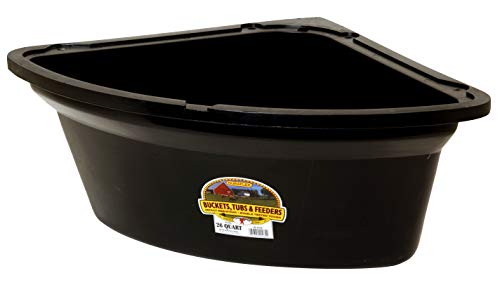
Little Giant DuraFlex Corner Feeder
DuraFlex polyethylene flexes instead of shattering when a horse leans on it, which is why many barns standardise on this feeder for stall grain. The corner profile mounts into framing on two walls, spreading the load and keeping the feeder out of the traffic path. Cleaning stays easy since the moulded interior has no seams for feed to pack into.
Pros
- Flexes rather than cracking under impact
- Uses dead corner space in a stall
- Smooth interior wipes clean quickly
Cons
- Needs solid framing on both walls
- Not suited to feeding large hay volumes

Fortiflex Feed Trough
Genuinely cold weather is where cheap moulded plastic tends to split, and Fortiflex containers are known for staying flexible through it. The trough shape works mounted on a fence line or set on the ground, with a rolled rim that resists chewing better than a thin lip. Grain, soaked feed and supplements all suit this general purpose choice.
Pros
- Stays flexible in freezing conditions
- Rolled rim resists chewing damage
- Works mounted or on the ground
Cons
- Free standing use invites tipping
- Open top collects rain and debris outdoors
High Country Plastics Feed Bunk
Feed off the dirt is the whole point of a bunk, and this one is built from thick rotationally moulded plastic on a wide base so it resists being shoved around a paddock. Capacity suits feeding more than one horse at a time, though spacing still matters to avoid squabbles. Outdoor use is what it is designed around.
Pros
- Keeps feed off wet ground
- Heavy enough to stay put
- Serves multiple horses
Cons
- Bulky to move or store
- Needs draining after heavy rain

Derby Originals Supreme Slow Feed Hay Bag
A restricted opening forces smaller mouthfuls here, stretching a meal across hours for horses that otherwise finish hay far too quickly. Heavy fabric and reinforced stitching hold up to daily use, and the hanging strap adjusts to a safe height. Hanging it high enough that a hoof cannot reach it stays essential with any bag of this type.
Pros
- Noticeably extends forage time
- Durable stitching at stress points
- Reduces hay trampled into bedding
Cons
- Must hang high to avoid hoof entanglement
- Refilling is slower than a rack

Texas Haynet Slow Feed Hay Net
Covering a round bale so a group cannot waste half of it in a week is what this net is built for. Knotless construction is gentler on teeth than knotted netting, and the mesh size slows intake without frustrating horses into giving up. Fitting it over a bale takes two people the first few times, which is the main practical drawback.
Pros
- Large reduction in round bale waste
- Knotless mesh is easier on teeth
- Long service life for the price bracket
Cons
- Awkward to fit over a bale alone
- Not suitable for shod horses without supervision

Tough 1 Hay Hoops Collapsible Wall Feeder
Holding a flake against the wall and folding flat when empty keeps this design out of the way in a tight stall. An optional net slows intake further without switching to a hanging bag. Steel construction handles daily loading, though the powder coat scuffs where the hoop contacts the wall.
Pros
- Folds flat out of the way when empty
- Keeps hay off bedding
- Optional net adds slow feeding
Cons
- Needs solid wall backing to mount
- Coating scuffs at contact points

Behlen Country Poly Feed Pan
Sometimes the right feeder is a well made pan, and this fits that description. A wide shallow shape encourages a natural head down eating position and slows a greedy eater slightly compared with a deep bucket. Scrubbing, stacking and replacing it stay cheap and easy, though nothing stops a horse from flipping it occasionally.
Pros
- Encourages natural head down feeding
- Very easy to clean and stack
- Low cost for multiple horses
Cons
- Gets flipped or dragged around
- No protection from dirt or rain
Compared at a glance
| # | Model | Material | Best for | Score | Price |
|---|---|---|---|---|---|
| 1 | Little Giant DuraFlex Corner Feeder | DuraFlex polyethylene | Best overall | 9.4 | Check price |
| 2 | Fortiflex Feed Trough | Flexible polyethylene | Best value | 9.2 | Check price |
| 3 | High Country Plastics Feed Bunk | Rotationally moulded plastic | Best for pastures | 9.0 | Check price |
| 4 | Derby Originals Supreme Slow Feed Hay Bag | Hanging slow feed hay bag | Best slow feeder | 8.8 | Check price |
| 5 | Texas Haynet Slow Feed Hay Net | Round bale slow feed net | Best for round bales | 8.6 | Check price |
| 6 | Tough 1 Hay Hoops Collapsible Wall Feeder | Powder coated steel | Best for stall hay | 8.3 | Check price |
| 7 | Behlen Country Poly Feed Pan | Polyethylene | Best budget | 8.0 | Check price |
Common questions
What height should a horse feeder be mounted?
Roughly chest height for the horse using it is the common guideline, adjusted for the individual. That keeps feed clean without forcing the horse to stretch upward. Mount lower for ponies and foals, and err toward the shorter animal if a stall is shared.
Do slow feed hay nets really reduce waste?
Yes, and the difference is largest with round bales. Restricting the opening prevents horses pulling out large mouthfuls that end up trampled. Owners commonly report a substantial cut in bale consumption, which is why the nets pay for themselves over a winter.
Are hay nets safe for shod horses?
They carry a real entanglement risk. A shoe, particularly with clips, can catch in the mesh. Use a solid rack, a bag hung well above hoof height, or a ground feeder with a rigid grid instead of loose netting if your horse is shod, and supervise the first few sessions.
Corner feeder or ground pan for grain?
A mounted corner feeder keeps grain clean and stays put, which suits a stall used daily. A ground pan encourages a natural head down posture and is easier to move and scrub, but gets flipped and contaminated. Many barns use a corner feeder in stalls and pans for turnout or temporary setups.
How often should horse feeders be cleaned?
Wipe grain feeders daily and scrub weekly, more often when feeding soaked or mashed feed, which ferments quickly in warm weather. Hay racks need periodic clearing of packed fines. Standing residue attracts rodents and can lead to mould, a genuine health concern rather than a tidiness one.
What size mesh should a slow feed net have?
Larger openings suit horses new to slow feeding or those needing higher intake, while smaller openings extend eating time considerably. Starting too small often leads to frustration and abandonment. Step down gradually and watch body condition, since slow feeders can reduce total intake more than intended.
Will a feeder stop a horse from bolting its grain?
A wide shallow pan helps a little because it spreads the feed out. Purpose made grain feeders with internal obstructions slow things further. Adding chopped forage to the ration and feeding smaller meals more often generally makes a bigger difference than the feeder alone.
Can one feeder serve two horses in a paddock?
It can, but competition means the lower ranked horse loses out. The usual advice is one feeding station per horse plus one spare, spaced well apart. A large bunk helps only if there is enough length for horses to eat without being pushed off.
What is the best horse feeder for cold climates?
The Fortiflex Feed Trough is built to stay flexible through hard freezes, unlike thin moulded plastic that cracks under a horse leaning on it in cold weather.
Bucket vs bunk vs corner feeder, what is the difference?
A bucket or pan sits loose on the ground and gets moved or flipped easily. A bunk stands free in a pasture for multiple horses. A corner feeder mounts permanently into stall framing, staying put and keeping grain out of bedding.
The verdict
For daily stall grain the Little Giant DuraFlex Corner Feeder is the most durable and space efficient choice here, and the Fortiflex Feed Trough covers the same job for less where a corner mount is not practical. If forage management is the real problem, add the Derby Originals Supreme Slow Feed Hay Bag in the stall or the Texas Haynet Slow Feed Hay Net over a round bale to cut waste and stretch eating time.


