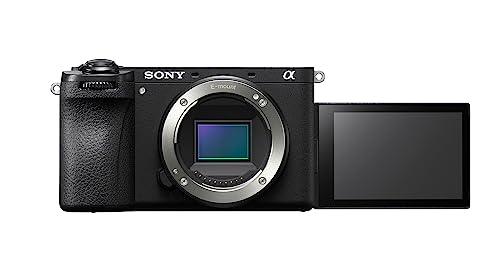
Compact Cameras That Easily Beat Your Phone’s Zoom
The Sony ZV-1 II is our top pick for creators who want a wide zoom and flip screen for video. Street photographers should choose the Ricoh GR IIIx for its sharp fixed lens, while the Canon PowerShot G7 X Mark III wins for all-round stills.
The Sony ZV-1 II fits most everyday creators with a wide 18 to 50mm zoom, a side-flip screen, and quick face and eye autofocus for video. Photographers who care more about still-image sharpness than vlogging features will prefer a fixed-lens or larger-sensor option instead.
A compact camera earns its place only when it clearly outdoes a phone, so sensor size and lens quality drive the choice. We compared sensor formats, zoom versus fixed lenses, autofocus behavior, video specs, and owner feedback on handling to match cameras to vlogging, street, travel, and everyday use.
The shortlist, ranked

Sony ZV-1 II
A wider 18 to 50mm equivalent zoom fixes the tight framing of the original ZV-1 for arm-length selfies. The side-flip screen, directional mic, and fast eye autofocus make it a strong all-in-one for video creators.
Pros
- Wide zoom suits handheld selfie video
- Reliable face and eye autofocus
- Built-in directional mic with wind muff
Cons
- No electronic viewfinder
- No in-body stabilization for stills

Canon PowerShot G7 X Mark III
A bright 24 to 100mm zoom and 1-inch sensor deliver flexible, sharp everyday photos in a pocketable body. It records uncropped 4K and streams live, which broadens its use beyond simple point-and-shoot stills.
Pros
- Versatile bright zoom for many scenes
- Uncropped 4K keeps the wide angle
- Fits easily in a jacket pocket
Cons
- Autofocus trails Sony in video tracking
- No viewfinder for bright daylight

Ricoh GR IIIx
A large APS-C sensor behind a sharp 40mm equivalent prime gives this pocket camera image quality close to a DSLR. The quick snap-focus mode and slim body make it a favorite for discreet street shooting.
Pros
- Large APS-C sensor outshines 1-inch rivals
- Sharp prime lens with snap focus
- Truly pocketable for a big sensor
Cons
- Fixed 40mm lens, no zoom
- Modest battery life per charge

Sony RX100 VII
A 24 to 200mm equivalent zoom covers wide landscapes to distant subjects without a lens change. Fast tracking autofocus and a pop-up viewfinder pack serious versatility into a shirt-pocket body for travel.
Pros
- Long zoom range covers most travel needs
- Pop-up viewfinder helps in bright sun
- Fast subject-tracking autofocus
Cons
- Premium price for a compact
- Narrower aperture at the long end

Panasonic Lumix ZS80
A 24 to 720mm equivalent zoom reaches far past any phone for wildlife and events. A built-in viewfinder and tilting selfie screen add flexibility, though the smaller sensor trades some low-light quality for that range.
Pros
- Huge 30x zoom reaches distant subjects
- Electronic viewfinder aids framing
- Lower price than 1-inch travel zooms
Cons
- Small sensor limits low-light quality
- Detail softens at the extreme zoom end

Canon PowerShot SX740 HS
A 24 to 960mm equivalent zoom in a light body makes this an affordable travel companion. It records 4K and flips the screen up for selfies, keeping things simple for casual shooters who want reach on a budget.
Pros
- 40x zoom for a low price
- Light and simple for casual use
- Flip-up screen for self-portraits
Cons
- No viewfinder or touchscreen
- Small sensor struggles in dim light

Fujifilm X100V
A hybrid optical and electronic viewfinder pairs with an APS-C sensor and a fixed 35mm equivalent lens for classic image quality. Fujifilm’s film simulations produce distinctive color straight from the camera without editing.
Pros
- APS-C sensor and sharp fast prime
- Hybrid viewfinder suits any lighting
- Film simulations give ready-to-share color
Cons
- High price and often limited stock
- Fixed 35mm lens with no zoom
How to pick the right one
What makes a compact camera worth buying The reason to carry a compact over a phone is a bigger sensor and a real lens. A 1-inch sensor gathers far more light than a phone chip, and an APS-C sensor gathers more still. Decide between a zoom for flexibility and a fixed prime for sharpness and low-light strength. Autofocus speed, video specs, and whether it fits your pocket round out the choice.
Sensor size versus zoom range There is a direct tradeoff between reach and image quality. Superzoom compacts like the ZS80 and SX740 use small 1/2.3-inch sensors to fit huge zoom lenses, which softens low-light shots. Cameras with 1-inch or APS-C sensors keep zoom ranges shorter but produce cleaner, sharper images. Pick reach if you shoot distant subjects, and sensor size if you value quality.
Best compact cameras for video and vlogging For video, prioritize a flip-out screen, dependable autofocus, and a wide lens for handheld selfies. The Sony ZV-1 II is built around these needs with a directional mic and eye tracking. Uncropped 4K, as on the Canon G7 X Mark III, keeps your framing wide. Skip fixed-screen models like the Ricoh GR IIIx if talking to the camera is your main use.
Choosing for street, travel, or everyday carry Street shooters value discretion and a fixed prime, which suits the Ricoh GR IIIx or Fujifilm X100V. Travelers who want to cover wide scenes and distant landmarks in one camera should look at the RX100 VII’s zoom. For an everyday grab-and-go that handles most situations, the G7 X Mark III balances zoom, quality, and pocket size without leaning to one extreme.
Compared at a glance
| # | Model | Sensor | Best for | Score | Price |
|---|---|---|---|---|---|
| 1 | Sony ZV-1 II | 1-inch 20MP | Best for vlogging | 9.2 | Check price |
| 2 | Canon PowerShot G7 X Mark III | 1-inch 20MP | Best all-round stills | 9.1 | Check price |
| 3 | Ricoh GR IIIx | APS-C 24MP | Best for street photography | 9.0 | Check price |
| 4 | Sony RX100 VII | 1-inch 20MP | Best travel zoom | 9.0 | Check price |
| 5 | Panasonic Lumix ZS80 | 1/2.3-inch 20MP | Best superzoom value | 8.6 | Check price |
| 6 | Canon PowerShot SX740 HS | 1/2.3-inch 20MP | Best budget zoom | 8.3 | Check price |
| 7 | Fujifilm X100V | APS-C 26MP | Best premium everyday | 9.1 | Check price |
Questions worth asking
Are compact cameras better than smartphones?
For image quality in many situations, yes. A larger sensor and a real optical zoom give compacts an edge in low light, at distance, and with background blur. Phones win on convenience and computational tricks. The gap is largest with APS-C compacts like the Ricoh GR IIIx and smallest with tiny-sensor superzooms.
What sensor size should a compact camera have?
A 1-inch sensor is the sweet spot for most buyers, offering clearly better quality than a phone in a pocketable body. APS-C compacts like the GR IIIx and X100V go further for image quality. Smaller 1/2.3-inch sensors appear in superzooms and trade low-light performance for extra reach.
Which compact camera is best for vlogging?
The Sony ZV-1 II leads for vlogging thanks to its wide zoom, side-flip screen, directional mic, and quick eye autofocus. The Canon G7 X Mark III is a strong alternative with uncropped 4K. Both handle handheld talking-to-camera far better than fixed-screen cameras aimed at photographers.
Do I need optical zoom or is a fixed lens fine?
It depends on your subjects. A zoom covers wide scenes and distant subjects without moving, which suits travel and events. A fixed prime lens is sharper and better in low light, which street and everyday shooters value. The Ricoh GR IIIx and Fujifilm X100V show how good a single-focal-length compact can be.
Can compact cameras shoot 4K video?
Many current models do. The Sony ZV-1 II, Canon G7 X Mark III, RX100 VII, and both Panasonic and Canon superzooms record 4K. Check whether the 4K is cropped, since some cameras narrow the field of view in 4K while the G7 X Mark III keeps it uncropped.
Are compact cameras good in low light?
The larger-sensor models are. A 1-inch or APS-C sensor with a bright lens handles dim scenes well, while small-sensor superzooms get noisy quickly. For low light, favor the Ricoh GR IIIx, Fujifilm X100V, or a fast 1-inch camera, and be realistic about superzoom limits after dark.
Do compact cameras have viewfinders?
Some do and some do not. The Sony RX100 VII has a pop-up finder, the Panasonic ZS80 has a built-in one, and the Fujifilm X100V uses a hybrid finder. The Sony ZV-1 II and Canon G7 X Mark III rely on the rear screen only, which can be hard to see in bright sun.
Which compact camera has the longest zoom?
Among these, the Canon SX740 HS reaches 960mm equivalent and the Panasonic ZS80 reaches 720mm, both far beyond any phone. That reach comes from small sensors, so image quality at full zoom is softer than a shorter zoom on a 1-inch camera like the RX100 VII.
Final word
For creators who split time between stills and video, the Sony ZV-1 II is the most capable all-in-one, with a wide zoom, flip screen, and dependable autofocus that a phone cannot match. Street and everyday photographers chasing pure image quality should skip the vlogging features and choose the APS-C Ricoh GR IIIx, while travelers who want one lens to cover everything are best served by the long-zoom RX100 VII.