6 Composting Methods for Yards, Balconies and Kitchens
FCMP Outdoor’s IM4000 Tumbling Composter wins overall because dual chambers let one batch cure while the other keeps taking scraps. Gardeners with space and patience get more volume from the Geobin Compost Bin, and the Vitamix FoodCycler FC-50 is the workable answer for flats with no outdoor area.
FCMP Outdoor’s IM4000 tops this list because its two chambers solve home composting’s biggest practical problem: one side finishes while the other keeps accepting scraps. Households with more garden waste than time should choose the Geobin Compost Bin instead. For flats with no outdoor space, the Vitamix FoodCycler FC-50 is the realistic route.
Four completely different systems share the name composting, which is why the category confuses people. Tumblers aerate quickly, static bins hold huge volumes slowly, worm bins process kitchen scraps indoors, and electric machines dehydrate and grind food waste into a soil amendment rather than true compost. Each fits a different home. We compared capacity, turning method, time to a usable result and placement needs, then weighed owner reports on smell and pests.
How to pick the right one
Tumbler, static bin, worms or electric: how to pick Space and schedule decide this. Tumblers like the FCMP IM4000 aerate with a spin and finish in weeks, but capacity is limited and full drums get heavy. Static bins such as the Geobin swallow huge volumes of garden waste for almost no effort, then take months. Worm bins convert kitchen scraps into premium castings indoors, at the cost of keeping livestock alive. Electric machines need only a counter and a power outlet, producing a dried amendment in hours. Match the system to the waste you actually generate.
What mix of greens and browns makes compost work? Nitrogen rich greens, meaning kitchen scraps, grass clippings and coffee grounds, must balance against carbon rich browns like dry leaves, cardboard and straw. Aim for roughly two to three parts browns to one part greens by volume. Excess greens create a wet, smelly sludge; excess browns leave a pile that sits inert for months. Nearly every composting complaint, from odor to stalled decomposition, traces back to this single ratio.
How do moisture, air and particle size change speed? A healthy pile feels like a wrung out sponge, damp without dripping. Drier than that and decomposition stalls; wetter and the pile turns anaerobic and starts to stink. Oxygen feeds the aerobic bacteria doing the work, which is why turning, whether by drum rotation or garden fork, speeds everything up. Particle size matters just as much: chopping or shredding material multiplies surface area, and a shredded pile visibly outpaces a coarse one.
What should never go in a home compost bin? Meat, fish, dairy, oily food and pet waste stay out of conventional systems, because home piles rarely get hot enough to kill the pathogens involved and the smell draws rodents. Bokashi buckets and some electric machines handle those materials safely, which is their main reason to exist. Diseased plants, weeds carrying seed heads and anything treated with persistent herbicides also stay out, since all three can survive composting and resurface in your garden beds.
The top picks, ranked

FCMP Outdoor IM4000 Dual Chamber Tumbling Composter
Two chambers change the workflow entirely: one side cures toward finished compost while fresh scraps keep feeding the other, producing a continuous supply instead of one annual batch. Deep internal fins break up clumps and pull air through the mix on every rotation. Owners report usable compost in weeks when greens and browns stay balanced. Budget an afternoon for the flat pack assembly and its many small fasteners.
Pros
- Dual chambers keep finished compost coming continuously
- Sealed drum locks out rodents and larger pests
- Rotating replaces shovel turning entirely
Cons
- Assembly involves many small parts and real time
- A full chamber takes effort to rotate
Miracle-Gro Dual Chamber Compost Tumbler
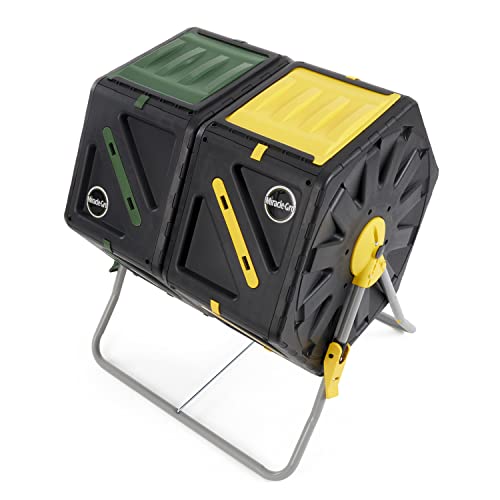
Similar dual chamber logic arrives here on a powder coated steel frame, with an internal aeration bar mixing material as the drum turns. Large sliding doors make loading and emptying straightforward, though debris in the tracks can jam them. Owners consistently call this the easier mainstream tumbler to assemble, a point that matters more than it sounds after an hour with an instruction sheet.
Pros
- Assembles faster than most rival tumblers
- Wide doors simplify loading and emptying
- Steel frame stays stable under a full load
Cons
- Holds less than the FCMP IM4000 overall
- Door tracks jam when debris builds up
Geobin Compost Bin
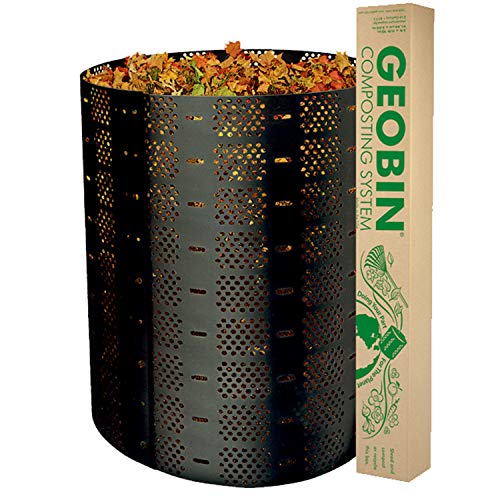
One perforated plastic sheet clips into a circle anywhere from roughly 2 to 4 feet across, and setup ends there. Capacity dwarfs every tumbler here, reaching up to 216 gallons fully expanded, which suits autumn leaf drops and hedge trimmings in quantity. Turning happens by garden fork, decomposition runs at its own slow pace, and the open base offers rodents an easy way in.
Pros
- Swallows garden waste by the barrow load
- Sets up in minutes with zero assembly
- Diameter expands as volume grows
Cons
- Open base gives rodents access
- Turning means manual fork work

VermiHut Plus 5-Tray Worm Composting Bin
Worms migrate upward through five stacked trays as they finish each layer, so harvesting castings means lifting off the bottom tray rather than sorting a pile by hand. Liquid drains to a base spigot for use as diluted plant feed, and coconut coir bedding comes included to start the colony. Fed correctly, the bin runs without noticeable smell, which is what makes a kitchen corner or utility room viable.
Pros
- Worm castings rank among the best soil amendments
- Runs odor free indoors when fed correctly
- Bottom tray harvesting avoids messy sorting
Cons
- Live worms need buying and ongoing care
- Garden waste and large volumes are off the menu

Vitamix FoodCycler FC-50
Strictly speaking this machine does not compost: it dries and grinds food waste into a dry, odorless material for mixing into soil. What it delivers is a huge cut in kitchen waste volume with no smell, no flies and no outdoor space needed, all within a 2 liter bucket and a 4 to 8 hour cycle. Flat dwellers report it as the only option that actually works for them, with replaceable carbon filters keeping the kitchen fresh.
Pros
- Processes food waste entirely indoors
- Shrinks waste volume dramatically per cycle
- No odor, flies or pest problems
Cons
- Output is a soil amendment, not finished compost
- Electricity use plus filter replacements add up

Lomi by Pela Electric Kitchen Composter
Three modes span a short express run through a 20 hour Grow cycle intended for material headed into garden beds. Noise stays low for a machine that grinds food waste, a real advantage in an open plan kitchen, and the 3 liter bucket takes some compostable packaging alongside scraps. Owners report leaning on the quick cycles day to day, and activated charcoal filters join the list of ongoing consumables.
Pros
- Quiet enough for open plan living
- Three cycle modes match different outputs
- Accepts some compostable packaging
Cons
- Filters and pods are recurring consumables
- Grow mode occupies the machine most of a day

SCD Probiotics All Seasons Indoor Composter
Bokashi fermentation works anaerobically with inoculated bran, which is why this sealed 5 gallon bucket accepts meat, dairy and cooked food that every conventional system refuses. Liquid drains off for dilution into plant feed while the bucket sits under a sink. One step trips up beginners: fermented output is pickled, not finished, so it still needs burying in soil or adding to a conventional pile to break down fully.
Pros
- Takes meat, dairy and cooked food safely
- Sealed bucket tucks under a kitchen sink
- Drained liquid dilutes into plant feed
Cons
- Output needs finishing in soil or another system
- Bokashi bran is an ongoing purchase
Compared at a glance
| # | Model | Capacity | Best for | Score | Price |
|---|---|---|---|---|---|
| 1 | FCMP Outdoor IM4000 Dual Chamber Tumbling Composter | 37 gallons total, two chambers | Best overall | 9.4 | Check price |
| 2 | Miracle-Gro Dual Chamber Compost Tumbler | 27.7 gallons, two chambers | Best value tumbler | 9.2 | Check price |
| 3 | Geobin Compost Bin | Up to 216 gallons expanded | Best value | 9.0 | Check price |
| 4 | VermiHut Plus 5-Tray Worm Composting Bin | Five stacking trays | Best for kitchen scraps indoors | 8.8 | Check price |
| 5 | Vitamix FoodCycler FC-50 | 2 litre bucket | Best for flats | 8.6 | Check price |
| 6 | Lomi by Pela Electric Kitchen Composter | 3 litre bucket | Best for quiet operation | 8.3 | Check price |
| 7 | SCD Probiotics All Seasons Indoor Composter | Bokashi anaerobic fermentation | Best for meat and dairy scraps | 8.0 | Check price |
Questions worth asking
How long does composting take?
A well managed tumbler with balanced greens and browns produces usable compost in six to eight weeks. Static bins left alone need six months to a year. Worm bins yield castings continuously after the colony establishes, and electric machines finish a cycle in hours.
Does a compost bin smell?
A balanced aerobic pile smells earthy rather than unpleasant. Sour or ammonia odors signal too much nitrogen or too much moisture, fixed by mixing in dry browns and turning for air. Sealed tumblers and worm bins run essentially odor free when managed well.
Can you compost in winter?
Yes, though decomposition slows sharply or pauses in freezing weather. Insulating the bin, siting it in sun and adding extra nitrogen rich material all help. Many people keep adding through the cold months and let the pile restart in spring. Indoor worm bins and electric machines run unaffected.
Will a compost bin attract rats?
It can, especially when meat, dairy or cooked food goes in, or when the bin has an open base. Sealed tumblers resist rodents best. In areas with known rat pressure, skip open designs like the Geobin and use a fully enclosed tumbler or an indoor system.
Do electric composters make real compost?
Not strictly. Machines like the FoodCycler and Lomi dehydrate and grind food waste into a dry material that must still break down in soil before plants can use its nutrients. It is a genuine soil amendment and waste reducer, but not finished compost.
How do you know when compost is ready?
Finished compost turns dark brown and crumbly, smells like forest floor and shows no recognizable scraps. Temperature should match the surroundings rather than feel warm. Material you can still identify needs longer, and using it early can pull nitrogen from your soil.
Can you compost paper and cardboard?
Yes, and both count as excellent brown material. Shred or tear pieces small and strip off plastic tape and glossy coatings first. Skip heavily printed glossy stock and plastic laminated board, which leave residue instead of breaking down.
What is bokashi and how is it different from composting?
Bokashi ferments waste anaerobically in a sealed bucket using inoculated bran, pickling material instead of rotting it. That chemistry is why it handles meat and dairy. Fermented output then needs burying in soil or adding to a conventional pile to finish.
Can you compost in an apartment with no outdoor space?
Yes, three ways. An electric unit like the Vitamix FoodCycler FC-50 processes scraps on a countertop, a worm bin such as the VermiHut Plus runs odor free in a utility corner, and a bokashi bucket ferments under the sink. Only the finishing step needs soil, which a friend’s garden or a community plot can supply.
Our pick
Households with garden space and steady kitchen scraps should buy the FCMP Outdoor IM4000, because its dual chambers keep finished compost flowing continuously. Gardeners with more waste than time will do better letting the huge, effortless Geobin Compost Bin work slowly. No outdoor space at all points to the Vitamix FoodCycler FC-50, the one system that keeps food waste out of the trash from a countertop.