Match Your Grip Style to the Right Computer Mouse
Logitech MX Master 3S handles all-day desk work with an 8000 DPI sensor that tracks on glass. Razer DeathAdder V3 favors competitive gamers with a 59 gram shell built for fast flicks. Logitech G304 Lightspeed covers tight budgets with reliable 2.4GHz wireless under 100 grams.
Logitech MX Master 3S leads for office use with quiet clicks and three-device Bluetooth pairing. Razer DeathAdder V3 leads for gaming with a 59 gram shell built for fast flicks. Logitech G304 Lightspeed leads for tight budgets with dependable 2.4GHz wireless under 100 grams.
Grip style splits buyers into palm, claw, and fingertip camps. A shell built for one grip often feels wrong under another hand. We compared sensor specs, shell weight, and connection type across models built for different desks and games.
What we recommend

Logitech MX Master 3S
Palm grip users get a tall curved shell paired with an 8000 DPI Darkfield sensor that tracks on glass. Clicks stay quiet enough for shared offices, and an electromagnetic scroll wheel adds precision for spreadsheets. USB-C fast charging returns three hours of runtime from one minute plugged in.
Pros
- Tracks on glass and glossy surfaces
- Quiet click switches for shared spaces
- Pairs to three devices at once
Cons
- Heavier than gaming-focused mice
- Costs more than a basic wired mouse

Logitech G304 Lightspeed
Weighs just 99 grams and runs on a single AA battery rated for 250 hours. The Hero 12000 DPI sensor delivers accurate tracking well above its price point. Six programmable buttons cover basic macro and shortcut needs.
Pros
- Very light shell for the price
- Long runtime from one AA battery
- Stable 2.4GHz Lightspeed connection
Cons
- No Bluetooth pairing option
- Plastic shell feels less premium

Razer DeathAdder V3
Fast flick shots suit this 59 gram shell built for competitive shooters. Focus Pro 30000 DPI sensor tracks movement up to 750 inches per second. Right-handed ergonomics favor claw and fingertip grips over a palm rest.
Pros
- Extremely light for rapid movement
- High polling rate for competitive play
- Comfortable claw grip shape
Cons
- Right-hand only shape
- Fewer side buttons than office mice

Apple Magic Mouse
Gesture swipes replace a scroll wheel on this flat multitouch surface. Bluetooth pairing connects instantly to macOS and matches Apple keyboard styling. A Lightning port charges the internal battery for roughly a month per charge.
Pros
- Multitouch gestures for scrolling and swipes
- Matches Apple desk setups visually
- Long battery life per charge
Cons
- Charging port sits on the bottom
- Flat shape unsuited to palm grips
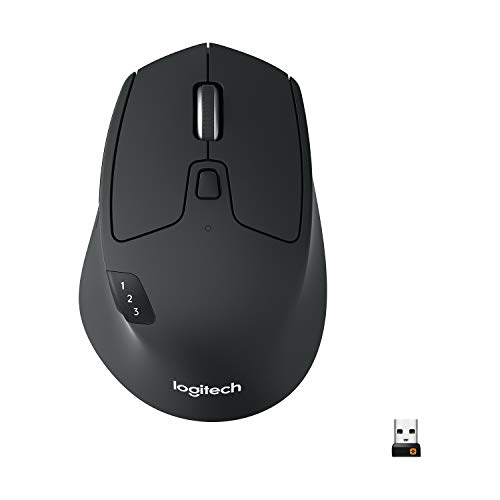
Logitech M720 Triathlon
One button press switches this mouse between three paired computers. Spreadsheet and document work benefit from an ergonomic right-hand shape built for long sessions. A rubberized thumb rest reduces fatigue during extended use.
Pros
- Switches across three paired devices instantly
- Runs up to 24 months on one AA
- Comfortable shape for extended sessions
Cons
- Lower DPI ceiling than gaming mice
- Larger shape suits palm grip only

Logitech G Pro X Superlight 2
Symmetrical shape at 60 grams fits both claw and fingertip grips equally well. Hero 2 sensor reaches 32000 DPI for high-sensitivity flick aim. Zero side lighting keeps battery draw low during long matches.
Pros
- Symmetrical shape fits both hands
- Extremely low weight for fast flicks
- No lighting drains less battery
Cons
- Few onboard programmable buttons
- Costs more than the standard G304

Logitech MX Anywhere 3S
Slips into a laptop bag side pocket without giving up the Darkfield sensor found in larger Logitech mice. Glass tables in cafes and hotel desks still track accurately. USB-C charging matches most modern laptop chargers.
Pros
- Compact enough for a laptop bag
- Tracks accurately on glass surfaces
- Fast USB-C charging on the go
Cons
- Smaller shape strains larger hands
- Fewer buttons than the MX Master line
Compared at a glance
| # | Model | Sensor | Best for | Score | Price |
|---|---|---|---|---|---|
| 1 | Logitech MX Master 3S | 8000 DPI Darkfield | Best overall | 9.4 | Check price |
| 2 | Logitech G304 Lightspeed | Hero 12000 DPI | Best budget | 8.9 | Check price |
| 3 | Razer DeathAdder V3 | Focus Pro 30000 DPI | Best for gaming | 9.2 | Check price |
| 4 | Apple Magic Mouse | Optical, fixed DPI | Best for Mac users | 8.4 | Check price |
| 5 | Logitech M720 Triathlon | 1000 DPI optical | Best for multi-device use | 8.7 | Check price |
| 6 | Logitech G Pro X Superlight 2 | Hero 2 32000 DPI | Best for competitive shooters | 9.0 | Check price |
| 7 | Logitech MX Anywhere 3S | 8000 DPI Darkfield | Best for travel | 8.8 | Check price |
What to look for
What to look for in a computer mouse Sensor type, grip shape, and connectivity affect daily comfort more than any single spec. Optical sensors handle most desks without issue. Laser sensors track glossy surfaces better when glass or metal desks are involved. DPI above 4000 rarely matters outside gaming, since office work rewards precision over raw speed. Battery type, replaceable AA versus internal rechargeable, changes how often you think about charging.
How grip style changes which shape fits Palm grip users rest their whole hand on the shell and need a taller, curved body like the MX Master 3S. Claw grip users arch their fingers and prefer a lower profile such as the DeathAdder V3. Fingertip grip touches only the tips, which suits lightweight symmetrical shells like the G Pro X Superlight 2. Testing grip type before buying avoids a shape that cramps the hand during long sessions.
Wireless versus wired: which is better for gaming? Modern 2.4GHz wireless mice match wired latency for most players, closing a gap that mattered a decade ago. Bluetooth multi-device switching helps office users more than a higher polling rate would. Competitive gamers still lean toward 2.4GHz dongles over Bluetooth for the lowest input delay. Casual users rarely notice any difference between the two connections.
Best mouse for small hands or heavy daily use Smaller shells like the MX Anywhere 3S or G Pro X Superlight 2 suit smaller hands better than bulky palm-grip designs. Heavy daily use favors rechargeable models such as the MX Master 3S, since AA swaps interrupt long typing sessions. Frequent travelers benefit from compact shapes that still track on glass in cafes and hotels. Multi-device workers should prioritize Bluetooth pairing over raw sensor specs.
Questions worth asking
What DPI do I actually need for a computer mouse?
Most office tasks need only 800 to 1600 DPI. Fast shooter gamers often prefer 400 to 800 effective DPI with a higher sensor ceiling in reserve.
Is a wireless mouse as good as a wired one for gaming?
Current 2.4GHz wireless mice like the DeathAdder V3 and G Pro X Superlight 2 match wired latency closely enough that most players notice no difference.
Which mouse is best for small hands?
Compact shells like the MX Anywhere 3S or the lightweight G Pro X Superlight 2 fit smaller hands better than larger palm-grip mice.
Can I use an Apple mouse on Windows?
The Magic Mouse works on Windows over Bluetooth, though gesture features are limited without extra software.
Do gaming mice work well for office tasks?
Yes, though gaming mice like the DeathAdder V3 skip ergonomic thumb rests and multi-device switching found on office models like the MX Master 3S.
How long do rechargeable mouse batteries last?
The MX Master 3S and MX Anywhere 3S both rate up to 70 days per charge, dropping faster under heavy Bluetooth use.
What is the difference between palm, claw, and fingertip grip?
Palm grip rests the full hand on the shell. Claw grip arches the fingers with the palm lifted. Fingertip grip touches only with the fingertips while the palm floats above the mouse.
Is a heavier or lighter mouse better for gaming?
Lighter mice under 70 grams, like the G304 or G Pro X Superlight 2, suit fast flick movements. Heavier mice over 120 grams, like the MX Master 3S, feel more stable for precise cursor control.
Which mouse switches between multiple computers?
The Logitech M720 Triathlon and MX Master 3S both pair to three devices and switch with a single button press.
Do I need a high polling rate for everyday use?
No, polling rate mainly matters for competitive gaming. Office work depends more on sensor accuracy and grip comfort than refresh speed.
Final word
Logitech MX Master 3S remains the strongest all-around pick for desk work across multiple surfaces. Gamers chasing competitive accuracy should choose the Razer DeathAdder V3 or the lighter G Pro X Superlight 2 instead. Buyers on a tight budget lose little by picking the Logitech G304 Lightspeed, since its sensor still outperforms its price point. Mac-only households should skip straight to the Magic Mouse for tighter OS integration.


