How to Pick a Cooler That Actually Keeps Ice for Days
YETI Tundra 45 leads on ice retention with thick rotomolded walls and a full gasket seal. RTIC 52 QT Ultra-Light matches much of that performance at a lighter weight. Coleman Xtreme 70 Quart remains the budget benchmark for weekend outings and family trips.
YETI Tundra 45 wins when ice retention matters most, thanks to rotomolded walls and a full-length gasket. RTIC 52 QT Ultra-Light delivers close performance at noticeably less weight. Coleman Xtreme 70 Quart covers weekend trips for a fraction of the cost.
Quoted capacity assumes an empty box, so a standard two-to-one ice ratio leaves far less room for food than the number suggests. Insulation thickness and gasket design vary widely between rotomolded and injection-molded builds. We compared insulation, lid gaskets, latch systems, drain placement and empty weight, then weighed what owners report about real ice life in hot weather.
The shortlist, ranked

YETI Tundra 45 Hard Cooler
Rotomolded construction with pressure-injected insulation holds ice for days rather than hours. A full-length freezer-style gasket and interlocking lid resist the flexing that lets cold air escape on cheaper boxes. T-Rex latches keep the seal tight, though the empty cooler is already heavy before loading.
Pros
- Multi-day ice retention in hot weather
- Extremely durable rotomolded body
- Gasket and latches seal reliably
Cons
- Heavy even before loading
- Thick walls reduce interior volume for the size

RTIC 52 QT Ultra-Light Hard Cooler
RTIC’s Ultra-Light line trims real weight from a traditional rotomolded shape while keeping thick insulation and a proper gasket. Carrying it from a parking lot to a beach feels noticeably easier. Ice retention trails premium leaders by hours over a weekend, not days.
Pros
- Easier to carry than rotomolded rivals
- Ice retention close to premium leaders
- Large usable capacity for its footprint
Cons
- Lighter body flexes more under load
- Latches feel less robust than top models

Coleman Xtreme 70 Quart Wheeled Cooler
Coleman Xtreme has stayed the default family cooler for years, holding several days of ice in moderate conditions at a modest price. Wheels and a telescoping handle matter here, since seventy quarts of ice and drinks gets heavy fast. Thinner insulation than rotomolded coolers means performance drops in extreme heat.
Pros
- Strong capacity for the price
- Wheels handle a heavy loaded cooler
- Lid doubles as a seat
Cons
- Ice life drops sharply in extreme heat
- Basic seal with no gasket
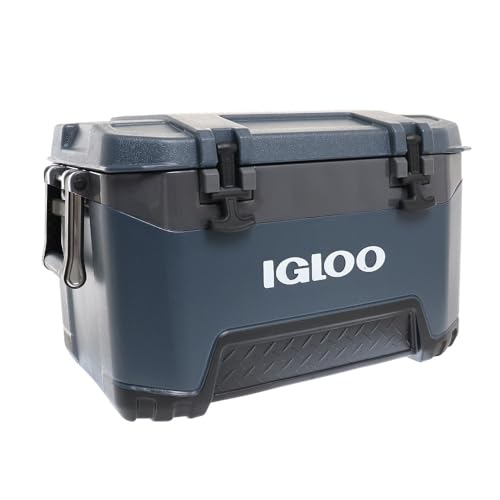
Igloo BMX 52 Quart Cooler
Reinforced blow-molded construction puts the BMX between budget coolers and full rotomolded builds. A rubber trim and moulded fish ruler on the lid add practical touches for anglers. Ice retention beats basic coolers clearly, without the added weight of a rotomolded box.
Pros
- Tougher build without rotomolded weight
- Threaded drain empties cleanly
- Tie down loops for trucks and boats
Cons
- Ice life trails true rotomolded coolers
- Handles feel less comfortable when loaded

Pelican Elite 30 Quart Cooler
Pelican applies its case-building background to coolers, with thick insulation and press-and-pull latches backed by a lifetime guarantee on the box. Thirty quarts suits one or two people for a day trip or overnight stay. Exterior dimensions run large relative to the interior space, as with most thick-walled coolers.
Pros
- Excellent ice life for a compact box
- Latches operate with one hand
- Backed by a strong warranty
Cons
- Bulky exterior for the interior volume
- Heavy for a 30-quart cooler

ORCA 40 Quart Cooler
ORCA pairs a rotomolded body with flexible moulded handles that stay comfortable for two people over uneven ground. A rear cargo net keeps dry goods out of melt water. Ice retention matches other rotomolded coolers here, along with the usual weight that construction adds.
Pros
- Comfortable handles for two-person carries
- Cargo net keeps dry goods dry
- Strong multi-day ice retention
Cons
- Heavy like other rotomolded coolers
- Cargo net offers little security

Arctic Zone Titan Deep Freeze Zipperless Cooler
A zipperless lid removes the usual failure point and weakest thermal link found on most soft coolers. Carrying it over a shoulder suits beach walks, picnics and day trips where a hard box is overkill. Cold holds for hours rather than days, so plan around single-day use.
Pros
- Zipperless lid avoids a common failure point
- Light, easy shoulder carry
- Removable liner simplifies cleaning
Cons
- Holds cold for hours, not days
- Cannot be sat on or stacked
Before you buy
Rotomolded or injection molded: which cooler fits your trip? Rotomolded coolers use thick walls and a gasket seal to hold ice for multiple days, suiting camping trips and hot climates. Injection-molded coolers like Coleman Xtreme weigh far less and cost a fraction of that price, fitting weekend picnics and day trips well. Buying a heavy premium cooler for a car-boot picnic is a common overspend.
How do you get the longest ice life from any cooler? A warm cooler spends its first hours cooling its own walls instead of your food. Chilling it overnight with a sacrificial bag of ice speeds that process up. Aiming for roughly two parts ice to one part contents by volume extends ice life further. Block ice lasts longer than cubes, and combining both fills gaps that would otherwise speed melting.
How much usable capacity does a cooler really have? A 45-quart cooler packed at a proper ice ratio leaves around a third of that volume for food and drinks. Manufacturers often quote can counts with no ice included at all, which does not match real use. Sizing up matters most when choosing between two capacities for a multi-day trip.
What cooler features actually matter day to day? A threaded drain plug lets you empty melt water without lifting a fully loaded cooler. A proper gasket keeps cold air in, explaining most of the gap between budget and premium coolers. Latches need to work with cold, wet hands, which is where recessed rubber T-latches usually beat small plastic clips.
The lineup, side by side
| # | Model | Construction | Best for | Score | Price |
|---|---|---|---|---|---|
| 1 | YETI Tundra 45 Hard Cooler | Rotomoulded with pressure injected insulation | Best overall | 9.4 | Check price |
| 2 | RTIC 52 QT Ultra-Light Hard Cooler | Around 30 percent lighter than rotomoulded rivals | Best value premium cooler | 9.2 | Check price |
| 3 | Coleman Xtreme 70 Quart Wheeled Cooler | 70 quarts, around 100 cans | Best value | 9.0 | Check price |
| 4 | Igloo BMX 52 Quart Cooler | 52 quarts | Best for rough handling | 8.8 | Check price |
| 5 | Pelican Elite 30 Quart Cooler | 30 quarts | Best for solo trips | 8.6 | Check price |
| 6 | ORCA 40 Quart Cooler | Rotomoulded | Best for boat and truck use | 8.3 | Check price |
| 7 | Arctic Zone Titan Deep Freeze Zipperless Cooler | Soft sided cooler | Best soft cooler | 8.0 | Check price |
Common questions
How long do coolers actually keep ice?
Premium rotomolded coolers commonly hold ice for several days in moderate conditions when precooled and packed well. Budget coolers usually manage one to two days, depending on ambient temperature and how often the lid opens.
Is a rotomolded cooler worth the extra cost?
For multi-day camping, boating or hot climates, yes, since better insulation and sealing extend ice life noticeably. For day trips and weekend picnics, a Coleman Xtreme or soft cooler delivers performance you will actually use.
Should you drain melt water from a cooler or leave it?
Cold water keeps contents cold and fills air gaps, so leaving it helps in the short term. Drain it once food packaging sits in standing water, or before carrying the cooler anywhere.
Block ice or cubes: which keeps a cooler colder longer?
Block ice melts slower due to less surface area, while cubes cool contents faster and pack tightly around food. Using both, block ice on the bottom and cubes filling the gaps, gives the best result.
How do you stop a cooler from smelling bad?
Empty and dry it fully after every trip, then store it with the lid propped open for airflow. For existing odors, wash with baking soda and warm water, and avoid bleach near gaskets, which degrades rubber over time.
Can you put dry ice in a hard cooler?
Many rotomolded coolers are rated for dry ice, but manufacturer guidance should confirm it first, since some plastics cannot handle the temperature. Never seal a cooler airtight with dry ice inside, since the gas needs somewhere to vent.
Do wheels make a cooler less durable?
A wheeled housing adds a potential failure point and slightly reduces insulation on that side. For large capacities like 70 quarts, the trade off is usually worth it, since few people can lift that weight comfortably anyway.
Can a cooler keep food hot instead of cold?
Yes. The same insulation that holds cold in also holds heat, so a preheated cooler works well for transporting hot dishes. Warming the interior with hot water first, then draining it before loading food, extends the hold time.
What size cooler do you need for a weekend camping trip?
A 45 to 52 quart cooler covers food and drinks for two to four people over a weekend, assuming a proper ice ratio. Larger groups or longer trips need more volume than the can-count numbers suggest.
Hard cooler vs soft cooler: which one should you buy?
Hard coolers hold ice longer and handle rough transport better, while soft coolers pack lighter for beach walks and short outings. Choose based on trip length rather than price alone.
The bottom line
YETI Tundra 45 remains the benchmark for ice retention and durability on multi-day trips in hot weather. RTIC 52 QT Ultra-Light delivers most of that performance in a cooler you can actually carry. Coleman Xtreme 70 Quart stays the sensible choice for weekends and family outings.
You might also need

How to Pick a Fish Finder That Actually Reads Deep Water

How to Pick Lawn Edging That Actually Holds Its Line
Pack a Cooler the Right Way and Keep Ice for Days
