Cordless Tire Inflators for Cars, Bikes and Trailers
The DEWALT DCC020IB 20V MAX Corded/Cordless Air Inflator wins this comparison for all-around versatility and high volume output. Tight spaces favor the Milwaukee 2475-20 M12 Compact Inflator. Value-focused shoppers already on the Ryobi platform should pick the Ryobi P737D 18V ONE+.
A cordless inflator that still tops up tires five years from now needs more than a headline pressure rating. The DEWALT DCC020IB 20V MAX Corded/Cordless Air Inflator earns the overall pick here. Tight engine bays and wheel arches favor the Milwaukee 2475-20 M12 Compact Inflator. Existing Ryobi owners get the strongest value from the Ryobi P737D 18V ONE+ Portable Inflator.
Inflator listings lead with a headline pressure figure that almost nobody needs. Gauge accuracy decides whether you are inflating to the right number at all. Auto shutoff decides whether you can walk away mid-fill. A separate high volume port decides whether an air bed or paddling pool gets filled in a reasonable time. We compared pressure ratings, output modes, gauge behaviour and battery platforms, and weighed what owners report about runtime and heat.
How to choose
Why the headline psi number rarely matters Almost every inflator advertises 120 to 160 psi, while almost no car tyre needs more than about 40. The number that matters for cars is how fast a unit moves air at low pressure, not the maximum it can eventually reach. High pressure ratings matter more for road bike tyres, some trailers and light truck applications. Treat the headline figure as marketing rather than a buying criterion.
Auto shutoff and gauge accuracy A preset gauge with auto shutoff changes the job completely: set the target, connect the hose and walk away instead of watching a needle. Gauge accuracy varies between units, so checking a new inflator once against a decent pencil gauge is worth the minute it takes. Note any offset and work around it rather than trusting the digital display blindly.
Tool battery platform or a built in pack Owning cordless tools already makes a bare inflator on the same platform the cheapest route, with swappable batteries when one runs down. No existing tools means a self contained inflator with an integrated battery suits a glovebox better. That convenience comes with a catch: it needs charging every few months even when unused, and the battery cannot be swapped mid job.
High pressure vs high volume: two different jobs Tyres need moderate volume at higher pressure. Air beds, paddling pools and boat fenders need large volume at almost no pressure. An inflator with only a high pressure outlet will eventually fill an air bed, just slowly enough to be genuinely annoying. Anyone filling inflatables regularly should choose a model with a separate high volume port.
The top picks, ranked

DEWALT DCC020IB 20V MAX Corded/Cordless Air Inflator
A 20V MAX battery, a 12V car socket or mains power all run this inflator, so a roadside, garage or campsite each work fine. A high pressure hose handles tyres, while a separate high volume outlet takes on inflatables. Owners report the digital gauge with auto shutoff reads accurately enough that they stopped double checking with a separate gauge.
Pros
- Three power options cover every situation
- High volume port handles air beds and toys
- Reliable auto shutoff at the set pressure
Cons
- Bulky compared with compact inflators
- Battery is sold separately in bare tool form
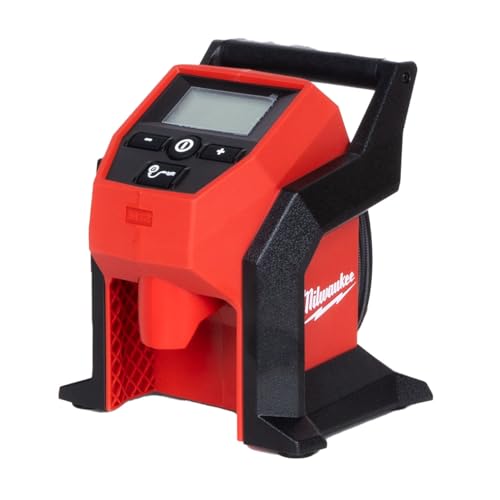
Milwaukee 2475-20 M12 Compact Inflator
Small enough to fit between a bike frame and wheel, or inside a tight wheel arch, this inflator solves the access problem full size units create. It still reaches high pressure for its size and shuts off automatically at the target. Running on the M12 platform means it shares batteries across a large tool range.
Pros
- Fits places larger inflators cannot reach
- Accurate gauge and dependable shutoff
- Shares batteries across the M12 range
Cons
- No high volume port for inflatables
- Slower on large truck tyres

Ryobi P737D 18V ONE+ Portable Inflator
Owners already on Ryobi ONE+ batteries get a very inexpensive way to add an inflator to the collection. It handles car tyres, bike tyres and sports balls without complaint. A digital gauge lets you set a target and walk away, though owners report it suits topping up more than reviving a fully flat tyre.
Pros
- Very low cost as a bare tool
- Works across a huge battery platform
- Preset and walk away operation
Cons
- Slower on a fully deflated tyre
- Gets warm during long runs

Fanttik X8 APEX Cordless Tire Inflator
An integrated rechargeable battery replaces a tool platform here, making this a self contained unit that lives in the glovebox. Small pressure top ups go quickly, and a built in light helps with roadside work at night. Charging happens over USB C, the same cable that charges a phone.
Pros
- Self contained, no tool battery required
- Charges from a common USB C cable
- Work light helps at the roadside
Cons
- Battery cannot be swapped when flat
- Needs periodic charging even when unused
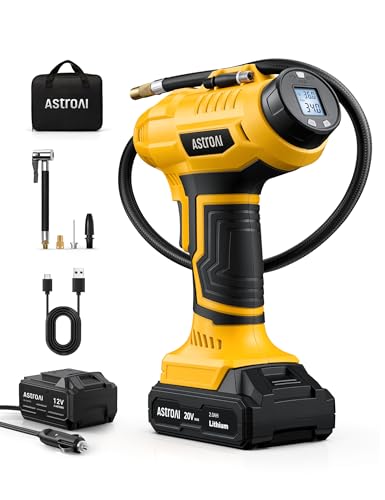
AstroAI Cordless Tire Inflator
A built in battery, a digital preset gauge and a set of nozzle adaptors for bikes and sports gear cover the basics at the lowest price in this group. It suits occasional top ups rather than daily workshop use. Owners report letting it rest between tyres, since sustained running heats the motor noticeably.
Pros
- Cheapest self contained option
- Small enough for a glovebox
- Adaptors for bikes and sports balls
Cons
- Heats up on sustained runs
- Slower than tool platform inflators

Makita MP100DZ 12V max CXT Inflator
A 12V max CXT slide battery powers this compact inflator, built with the same tool grade fit and finish as the rest of that line. The gauge lets you set a target pressure in your choice of units. Sold as a bare tool, it suits existing CXT owners best.
Pros
- Tool grade build quality
- Compact and easy to handle
- Multiple pressure units on the display
Cons
- Lower maximum pressure than rivals
- Only worthwhile if you own CXT batteries

VacLife Cordless Tire Inflator
A wide adaptor set, including Presta and Schrader fittings, needles and cones, makes this the easiest inflator here to use across bikes, balls and inflatables. The preset gauge stops automatically at the target. Owners report treating it as a bike and small item inflator rather than a primary car tool.
Pros
- Widest adaptor set in the group
- Handles Presta valves without an extra fitting
- Compact and light to carry on a ride
Cons
- Runtime limited on full car tyres
- Build feels less rugged than tool brands
Side by side
| # | Model | Max pressure | Best for | Score | Price |
|---|---|---|---|---|---|
| 1 | DEWALT DCC020IB 20V MAX Corded/Cordless Air Inflator | 160 psi | Best overall | 9.4 | Check price |
| 2 | Milwaukee 2475-20 M12 Compact Inflator | 120 psi | Best for tight spaces | 9.2 | Check price |
| 3 | Ryobi P737D 18V ONE+ Portable Inflator | 150 psi | Best value | 9.0 | Check price |
| 4 | Fanttik X8 APEX Cordless Tire Inflator | 150 psi | Best for quick top ups | 8.7 | Check price |
| 5 | AstroAI Cordless Tire Inflator | 150 psi | Best budget | 8.5 | Check price |
| 6 | Makita MP100DZ 12V max CXT Inflator | 120 psi | Best for compact cordless kits | 8.2 | Check price |
| 7 | VacLife Cordless Tire Inflator | 150 psi | Best for bikes and sports gear | 8.0 | Check price |
Frequently asked questions
How much pressure do I actually need?
Most car tyres sit between about 30 and 40 psi, listed on a sticker inside the driver’s door. Road bike tyres are the outlier, sometimes needing 100 psi or more.
Can a cordless inflator fill a completely flat tyre?
Yes, but slowly, and it drains the battery doing it. Compact inflators are built for topping up. Anyone who regularly deals with fully flat tyres should keep a mains or 12 volt backup.
How accurate are the built in gauges?
Good ones stay close enough for everyday use, though accuracy varies between units. Checking yours once against a separate pencil or dial gauge reveals any offset worth adjusting for.
Will an inflator overheat?
Small units can get hot during long continuous runs, which is why most list a duty cycle. Letting the inflator rest a few minutes between tyres keeps the motor within its intended range.
Do these work on bicycle tyres?
Most do, though Presta valves need either a compatible chuck or a small adaptor. Checking what ships in the box matters, since some models include Presta fittings and others assume you already own one.
Which inflators handle air beds and pool toys?
Only models with a separate high volume outlet, which moves far more air at low pressure. A high pressure only inflator will fill an air bed, just impractically slowly.
Should I check pressure when tyres are hot or cold?
Cold, meaning before driving or at least a few hours afterward. Driving heats the air inside a tyre and raises the reading, leaving you underinflated once things cool down.
How often should I check my tyre pressure?
Roughly monthly, and before any long journey. Tyres lose pressure naturally over time, faster in cold weather, and underinflation increases wear and fuel use.
Final word
Buy the DEWALT DCC020IB for one tool that covers tyres, air beds and roadside emergencies, backed by three power options and a separate high volume port. Tight access and precise work favor the Milwaukee 2475-20 M12. Existing ONE+ owners get excellent value from the Ryobi P737D.


